
Shree Cement’s decision to grow organically makes it an oddball during unprecedented consolidation in the cement sector. Can it fight back?
Shree Cement’s decision to grow organically makes it an oddball during unprecedented consolidation in the cement sector. Can it fight back?
Shree Cement's decision to grow organically makes it an oddball during unprecedented consolidation in the cement sector. Can it fight back against its deep-pocketed rivals?
Krishna Gopalan
- May 15, 2025,
- Updated May 15, 2025 10:00 AM IST
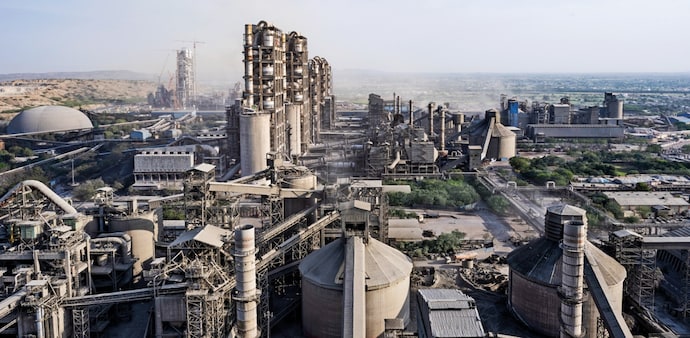
It’s barely 7 am and the sun is already making its presence felt at Ras. The village, in Rajasthan’s Pali district, is home to a Shree Cement plant. There are eight imposing kilns that are operating, as we make our way around the large tract of land. It is hard to miss the limestone mines or the water bodies or the multiple heavy vehicles at the site. For the workers here, this—with all the din and dust—is just another day at work.
Hey!
Already a subscriber? Sign In
THIS IS A PREMIUM STORY FROM BUSINESS TODAY.
Subscribe to Business Today Digital and continue enjoying India's premier business offering uninterrupted
only FOR
₹999 / Year
Unlimited Digital Access + Ad Lite Experience
Cancel Anytime
-
 Unlimited access to Business Today website
 -
 Exclusive insights on Corporate India's working, every quarter
 -
 Access to our special editions, features, and priceless archives
 -
 Get front-seat access to events such as BT Best Banks, Best CEOs and Mindrush
It’s barely 7 am and the sun is already making its presence felt at Ras. The village, in Rajasthan’s Pali district, is home to a Shree Cement plant. There are eight imposing kilns that are operating, as we make our way around the large tract of land. It is hard to miss the limestone mines or the water bodies or the multiple heavy vehicles at the site. For the workers here, this—with all the din and dust—is just another day at work.
Advertisement
That we chose to visit a Shree Cement plant in northern India is for a reason. This region is the company's biggest market and accounts for 40-41% of its sales. Another 28-29% comes from the east, 16-17% from central India, while the west and south contribute 9-10% and 5%, respectively. In India’s intensively competitive cement business, Shree is the third-largest company after the A.V. Birla Group’s UltraTech Cement and the Adani Group-owned Ambuja Cements (ACC is a subsidiary).
However, Shree Cement’s growth story is remarkably different from that of its peers. About 25 years ago, the company was not only on the verge of bankruptcy, but also had limited understanding of how to keep costs under control. According to data from Ace Equity, in the financial year ended March 2002, its profit after tax (PAT) was `1.5 crore as against a total debt of `307 crore, indicating that its earnings were not sufficient to cover liabilities. In FY24, it posted a PAT of `2,396 crore against a total debt of `1,475 crore, reflecting a significant improvement in financial strength.
Advertisement
We benchmark ourselves against the industry and not individual players. Some will grow faster, but we choose to remain patient.
-Hari Mohan Bangur, Chairman, Shree Cement
The crisis that began around 2000 forced the company to become more prudent with money and develop an ability to innovate. It took far-reaching decisions such as importing coal from Indonesia (quality was better at a lower cost), replacing coal with petroleum coke (a by-product of refining crude oil) wherever possible and setting up a captive power plant that cut costs by over half. Aggressive cost optimisation through fuel diversification and in-house power generation were strategies that till then had not been widely adopted in the industry.
The company soon figured out waste heat recovery (recovering thermal energy and reusing it) and set up split grinding units to come closer to user markets. A split grinding unit is a cement grinding plant that is physically separate from the clinker production facility. Traditionally, cement plants operated with a single large facility serving nearby areas. By adopting split grinding units, the company brought production closer to the market, cutting transport costs and expanding its reach. Many of these initiatives were new to the industry. Competition followed over time.
Advertisement
If all these strategies made Shree an exception as a company, nothing has perhaps been more surprising than the decision to grow organically at a time when mergers and acquisitions (M&As) in the sector have reached an unprecedented high. An ambitious expansion and bringing in a professional CEO to lead the next round of growth are the other big developments laying the base for a transformation of Shree Cement.
BREAKING DOWN STRATEGY
From the scorching, dry notherwestern sun, the scene shifts to the humid eastern sun, as we prepare to meet Hari Mohan Bangur, Chairman of Shree Cement, at his office in Kolkata’s Strand Road. The large and modern structure stands in stark contrast to the location, marked by history and dotted with much older structures.
Bangur, who has seen many ups and downs in his long career, explains the opportunity in India’s cement industry. “The per capita consumption (of cement) globally is 550 kg, and India is at 330 kg. Indian cement industry will double in the next decade, and that makes it exciting,” he tells Business Today.
Advertisement
Overall, Shree has grown around 1.2x the industry average, which has a compound annual growth rate of 5-7%. “We benchmark ourselves against the industry and not individual players. Some will grow faster, but we choose to remain patient,” he says. A key component of his strategy is to create capacity in advance.
This is in stark contrast to what competitors such as UltraTech and Ambuja-ACC are doing—buying assets and increasing market share.
In the domestic market, barring the purchase of Jaypee Group’s 1.5-million tonne grinding unit at Panipat for `360 crore (in mid-2014), growth has been organic. Shree believes having a tight cost structure enables it to build new plants at competitive costs. It views M&As—especially at recent steep valuations—unjustifiable.
India is a developing market and offers a lot of choice. We must make that process easy, and technology plays a big role in doing that.
-Prashant Bangur, Vice Chairman, Shree Cement
In 2022, the cement industry saw its biggest M&A deal ever when the Adani Group acquired Ambuja Cements and ACC from Switzerland’s Holcim for $10.9 billion. It gave the buyer, till then a name in ports, power, shipping, airports and natural gas, a big foothold in cement, and made it the second-largest player after UltraTech. Since then, both Ambuja and UltraTech have been actively picking up assets across regions. The former bought Sanghi, Penna, and Orient, while the latter acquired Kesoram Industries, India Cement, and, most recently, a minority stake in Star Cement.
Advertisement
Bangur, reflecting on the scenario today, weighs his words carefully. “There is a lot of consolidation, and it was to be expected with the entry of a new player.” He reflects on how the situation in the cement industry today is similar to what happened at the turn of the century when global biggies Lafarge, CRH, Holcim, Heidelberg, Italcementi, and Vicat bought into or completely acquired Indian companies. Around 40% of the capacity was owned by European companies at one point. “Many have exited, and it is clear that the Indian players will never be irrelevant. They have only become larger and sturdier,” he says.
Global companies failed to understand the complexities of the Indian market. They also suffered due to slow decision-making, cost control issues, and viewing India as one large homogeneous market. In contrast, Indian companies were far more agile and responsive to local complexities.
According to Bangur, an understanding of these helped the company in withstanding global competition then. The company has a captive thermal power plant of 503 MW and another 522 MW of renewable power (solar and wind) capacity, making it not just self-sufficient but also a leader in cost control.
Advertisement
“We are the third-largest player in the industry but have never spoken about capacity,” says Bangur. The company is on track to reach 68 million tonnes per annum (mtpa) by September. Just in the last two years, it has added 20 mtpa capacity. The target is to hit 80 mtpa by 2028 from the present nearly 63 mtpa. The consolidated capex for FY25-27 is expected to be `12,000 crore. Shree believes it has internal capabilities to achieve its target without M&As. The management is not comfortable paying a high premium to just acquire market share. The approach is to not be over-leveraged and maintain net cash.
There is a solid rationale for Shree’s preference to grow organically. Just in terms of numbers, setting up a new plant will cost around $75 per tonne compared to recent acquisitions at $110 per tonne, a difference of $35–40 per tonne in enterprise value. Moreover, organic expansion allows for greater control, better integration with logistics and energy strategies (like captive power plants and waste heat recovery), and ensures that the business remains debt-light. Shree is betting on its ability to build smarter and cheaper, reinforcing its financial philosophy that long-term value creation comes from discipline, not just speed. “It’s not as if we are closed to that option and could buy something in the future,” says Bangur.
Uttamkumar Srimal, senior research analyst (cement) at Axis Securities, says that when an asset is acquired, there are multiple complexities, with the cost playing a critical role. “If there is an issue with its operations, production costs can escalate and negatively impact the performance. Shree Cement appears to be more comfortable with an organic growth strategy,” he says.
PROFESSIONAL APPROACH
In October 2022, Shree Cement appointed Neeraj Akhoury, an old Lafarge and later Ambuja hand, as managing director. “CEOs are sharper since they handle multiple responsibilities. We wanted someone who had worked in a larger organisation and had a good understanding of systems and processes,” says Bangur. In the same breath, he speaks of how this is the “newborn Shree Cement” that is far more efficient.
Bangur’s unwillingness to accept the status quo stands out. “We have to regenerate ourselves every ten years, and now is the age of digital. It facilitates order booking, for example, and we want to be the one with the newest technology,” he says.
His son, Prashant Bangur, the company’s vice chairman, chips in by outlining how customer interface is increasingly more about technology. “India is a developing market and offers a lot of choice. We must make that process easy, and technology plays a big role in doing that,” he says. The company is using artificial intelligence (AI) for demand forecasting, improving the supply chain, and determining more cost-efficient structures, among other things.
To that extent, it is not a surprise when Akhoury draws out his mobile and shows you a picture of his latest offering—it is a premium product called Marble, which was launched this February in Bihar, Jharkhand, and West Bengal. This is part of a larger strategy to go premium with cement, not an easy proposition in the commodity space.
Premiumisation in cement is especially hard because it’s a price-sensitive, low-differentiation, and influencer-driven market where branding and product “experience” have limited impact. Only in niche segments— like white cement, decorative cement, or large commercial projects—does premiumisation have a substantial play.
For Akhoury, the shift to premiumisation is in line with the changing Indian demographic. “Affluence has brought a marked preference for high-performance products and building materials,” he says.
Last January, the company launched a new brand identity, with “Bangur” as the master brand. With actor Sunny Deol as the ambassador, it unveiled Bangur Magna, a premium offering. “From three brands earlier (Shree, Bangur, and Rockstrong), a master brand allows us to combine three separate sales organisations and manage costs more effectively,” says Akhoury.
Magna, and now Marble, are the key pillars of Shree’s premiumisation journey. “Now, we are doing some real marketing with a segment-wise approach. Bangur Concrete, for instance, has a play in ready-mix as a high-performance product.”
On the face of it, the premiumisation story seems to be working. “From 8%, the contribution of premium products to Shree Cement’s sales is 15% now. The company has been actively driving premiumisation with Bangur Magna as its key brand,” says Axis Securities’ Srimal.
This also has a positive impact on revenues and margins, as these brands sell for `30-40 more per bag than standard cement. “However, premium cement has a natural sales ceiling due to higher cost. That said, the company’s focus on that segment continues to gain traction, supported by stronger brand awareness and promotional efforts,” says Srimal.
NEW FRONTIERS
Many players in India’s cement industry have regional strongholds. To that extent, it is not difficult to find a well-run operation restricted to, say, a state. If costs are in control, with a good brand, the business can be good.
Akhoury repeatedly emphasises the need to maintain cost leadership. He narrates a recent conversation with his team, where a suggestion to relocate a godown by a few kilometres led to a saving of `100 per tonne on freight costs. Also, building a low-speed rail track within the Purulia plant (in West Bengal), linking the plant to the nearest railway station, resulted in a price drop of `200 per tonne. The earlier plan was to use road transport. Shree is now also planning similar connectivity at its Kodla plant in Karnataka. Entering new markets with an existing robust cost structure helps.
We are strong in the north and getting strong in the east. It is with that confidence that we are looking at the south.
-Neeraj Akhoury, Managing Director, Shree Cement
For Shree, the foray into the south, a difficult market in the best of times, is also an important part of the strategy. The south is challenging to crack because of the fragmented nature of the market, with multiple players having small to very large plants. According to Akhoury, buying behaviour across the south varies quite distinctly and it cannot be viewed as one homogeneous market. “We are strong in the north and getting stronger in the east. It is with that confidence that we are looking at the region,” he says. The company has two integrated plants in Karnataka and Andhra Pradesh. “We have started in a small way with Kodla and, more recently, in Guntur. While Kodla (located in Gulbarga district in Karnataka) can service parts of Maharashtra, Guntur gives us an opportunity in Hyderabad and potentially Amravati (Andhra Pradesh’s capital that is expected to see big-ticket infrastructure development) and Chennai as well.”
Understandably, the approach to this region has to be very different. The area has high quantities of limestone and moving there is a logical step. “However, oversupply is huge, and the strategy of being a cost leader and prioritising volume growth that worked in north India is unlikely to work in the south. The focus has to be on value over volume and going slow on market share gains,” says Rakesh Arora, Managing Partner, Go India Advisors, an investor relations company.
He says the thrust on premium products is a consequence of the company’s approach to value.
“Fortunately for them, both UltraTech and Ambuja have recently made big acquisitions in the south, and that might help in maintaining supply discipline in the region,” says Arora.
For now, Shree Cement has embarked on a journey that will push it to the limit. The competition has deep pockets and can match it on both patience and perseverance.
Maybe Bangur would consider a few buyouts in the south or do more in the overseas markets (there is a presence in the UAE). What is obvious is that it would strategise as per the company's understanding of the Indian market and requirements, and not simply follow the crowd.
@krishnagopalan
Read more!