
Small Wonder Amongst Banking Giants
For Karur Vysya Bank, growth stems from pairing its enviable legacy with an enthusiastic embrace of technology.
Prashun Talukdar
- Mar 2, 2026,
- Updated Mar 2, 2026 10:11 PM IST
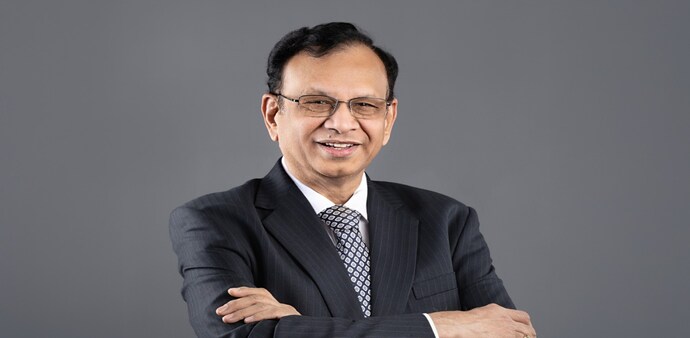
Ramesh Babu , Managing Director & Chief Executive Officer of the 110-year-old Karur Vysya Bank (KVB), swears by the maxim that “success is not owned; it is rented.”
Hey!
Already a subscriber? Sign In
THIS IS A PREMIUM STORY FROM BUSINESS TODAY.
Subscribe to Business Today Digital and continue enjoying India's premier business offering uninterrupted.
only FOR
₹999 / Year
Unlimited Digital Access + Ad Lite Experience
Cancel Anytime
-
 Unlimited access to Business Today website
 - Exclusive insights on Corporate India's working, every quarter
- Access to our special editions, features, and priceless archives
- Get front-seat access to events such as BT Best Banks, Best CEOs and Mindrush
Ramesh Babu , Managing Director & Chief Executive Officer of the 110-year-old Karur Vysya Bank (KVB), swears by the maxim that “success is not owned; it is rented.”
Building on its legacy, the bank, which has been adjudged the Best Small Bank in the BT-KPMG Survey of India's Best Banks and NBFCs, has embraced technology to stay ahead of the competition. KVB has been steadily deploying artificial intelligence (AI) to improve operational efficiency, strengthen controls and support risk management.
Advertisement
On the operations side, the bank has centralised back-office processes and introduced automation and AI-led checks for voucher processing and reconciliation. Branches now scan vouchers and route them to a centralised unit, where they are read and transactions matched with the core banking system. Babu says processing levels, which were initially around 5% due to handwriting and format-related challenges, have improved to 50–55% via straight-through processing as the models were refined.
In credit monitoring, the bank uses analytics and predictive models to identify accounts that may become stressed over the next one to one-and-a-half years. Based on historical data of accounts that became non-performing assets (NPAs), these models flag early warning signals with an accuracy rate of around 70%, says Babu. Separate teams track Special Mention Accounts supported by call centres and field follow-ups, enabling engagement with borrowers before stress escalates.
Advertisement
Babu says the bank is also evaluating additional use cases for AI, particularly in customer profiling and identifying potential product needs earlier in the relationship lifecycle. The focus is on improving accuracy, efficiency and service.
KVB’s financial performance reflects a set of changes that have been unfolding across growth strategy, risk management, cost discipline and technology adoption. In FY25, its profit grew by around 21%, and that performance has continued into the new fiscal. It reported a nearly 39% year-on-year (YoY) rise in profit in the third quarter of FY26. “We always work on three basic parameters—business growth, asset quality and profitability,” says Babu.
Around 20–25% of deposits were repriced during Q3, lowering deposit costs by about 22 basis points (bps) and overall cost of funds by roughly 16 bps. Babu notes that such repricing benefits may not recur in every quarter.
Advertisement
Alongside this, the bank stepped up its focus on non-interest income, including third-party distribution and guarantee-related income, to provide balance when interest income fluctuates.
At the same time, the bank has sought to reduce fresh slippages. Lending processes were tightened through digitisation and reduced manual intervention. Approval rates declined to about 45% from over 90% earlier, reflecting stricter filters rather than lower sourcing.
The results are visible in asset quality metrics. Gross NPA, which was above 9% at one stage, has declined to 0.71%, while net NPA is 0.19%. Stress levels in digitally originated portfolios are significantly lower than in older vintages, Babu said.
Strategically, KVB has been rebalancing away from large corporate lending towards retail, agriculture and MSME—the RAM segment. Corporate loans, once about 35% of the book, are now in the mid-teens. Babu says the shift reflects a move towards granular assets that offer better yields and align with the bank’s relationship-led model.
While the bank’s strongest presence remains in southern India, Babu outlines a phased geographic expansion strategy. Over the past two years, KVB has opened about 50 branches a year, prioritising new districts in the South, where brand familiarity enables quicker traction.
Advertisement
The bank is also expanding selectively through partnerships, including co-lending and business correspondent arrangements in segments such as affordable housing and microfinance.
However, despite the improved profitability, Babu says the bank continues to operate conservatively. Capital adequacy stands at 16–17% and is expected to rise to 18% with a profit plough-back.
With return on asset (RoA) above 1.7% over the past two years and reaching around 2% in Q3, the emphasis, he says, is on sustaining performance within the stated risk appetite.
Analysts remain largely positive on KVB. “The Q3 numbers are very impressive, with the highest growth among its peer set,” says market veteran Arun Kejriwal.
It has been among the outstanding performers in the banking sector, says Kranthi Bathini, Equity Strategist at WealthMills Securities. “Its order book remains stable and the longer-term prospects look robust.”
@prashuntalukdar
Read more!