
Sustainability Pivot: Pharma Companies Are Shifting To Cleaner Practices
Sustainability Pivot: Pharma Companies Are Shifting To Cleaner Practices
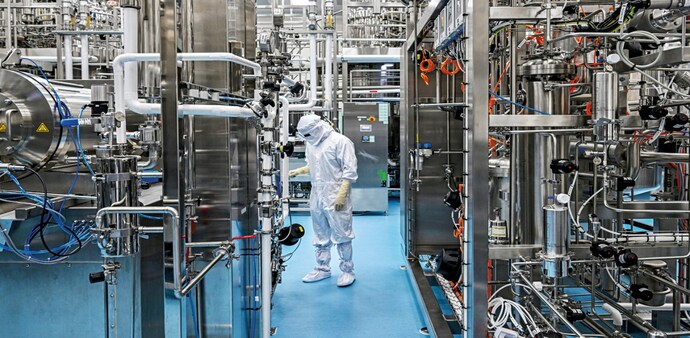
India's pharmaceutical sector supplies more than 60% of the world's vaccines and 40% of the generic drugs used in the US. But that comes at an ecological cost, prompting pharma companies to shift to cleaner practices.
Neetu Chandra Sharma
- Jun 17, 2025,
- Updated Jun 20, 2025 10:28 AM IST
At dawn in Hyderabad’s pharmaceutical belt, technician Ravi Kumar, responsible for maintaining the power utilities of a private firm, steps onto a rooftop that once echoed with the growl of diesel generators. It is a lot quieter these days—and cleaner. Rows of solar panels glint in the morning sun.
Hey!
Already a subscriber? Sign In
THIS IS A PREMIUM STORY FROM BUSINESS TODAY.
Subscribe to Business Today Digital and continue enjoying India's premier business offering uninterrupted
only FOR
₹999 / Year
Unlimited Digital Access + Ad Lite Experience
Cancel Anytime
-
 Unlimited access to Business Today website
 -
 Exclusive insights on Corporate India's working, every quarter
 -
 Access to our special editions, features, and priceless archives
 -
 Get front-seat access to events such as BT Best Banks, Best CEOs and Mindrush
At dawn in Hyderabad’s pharmaceutical belt, technician Ravi Kumar, responsible for maintaining the power utilities of a private firm, steps onto a rooftop that once echoed with the growl of diesel generators. It is a lot quieter these days—and cleaner. Rows of solar panels glint in the morning sun.
Advertisement
Below, wastewater generated from the manufacturing of drugs circulates through a zero-liquid discharge (ZLD) system, which ensures that no contaminated water leaves the facility. “I’ve seen this place go from fumes and waste to something cleaner, smarter,” says 59-year-old Ravi.
This reflects a reckoning across India’s pharma sector that supplies more than 60% of the world’s vaccines and nearly 40% of the generic drugs consumed in the United States, where environmental responsibility is beginning to match business ambition.
Pharmaceutical manufacturing uses large amounts of water and energy. It also produces chemical waste that can harm the environment if not treated properly. In a country like India, this creates a challenge of meeting the growing demand without damaging local ecosystems or contributing to climate change.
Advertisement
But this growth carries a cost. The manufacture of active pharmaceutical ingredient (API)—the backbone of drug production—is one of the most resource-intensive activities. According to the global non-profit Carbon Disclosure Project’s (CDP’s) India Pharma Sector Report 2023–24, the sector contributes nearly 1% of global greenhouse gas emissions—a footprint comparable to that of the global aviation industry.
The Green Revolution
Several Indian pharma firms are taking decisive steps to mitigate their environmental impact. Sun Pharmaceutical Industries, for instance, sourced 38% of its energy from renewable sources in FY24, a significant increase from about 22% in FY20, reduced Scope 1 and 2 GHG emissions by 18% from 2020 levels, and cut water consumption by 21%—surpassing its 2025 sustainability goals. Scope 1 and 2 emissions refer to direct and energy-related emissions a company controls; Scope 3 includes emissions in its value chain.
Advertisement
Dr. Reddy’s Laboratories, too, has upped the quantum of renewable energy in its consumption of power, deriving 48% from renewables. It says it has lowered emissions by 14%, and reduced freshwater use by 7% year-on-year. Lupin, meanwhile, reported that 33.8% of energy used is derived from renewable sources, and it has reduced emissions by 21%, and recycled 44% of its total water consumption. It says renewable fuel constituted more than 40% of its total energy mix in FY25, and achieved an approximate 23% reduction in Scope 1 & 2 emissions.
“We are committed to managing all our waste streams… in a way that minimises our environmental impact and aligns with our circular economy goals,” Ramesh Swaminathan, Executive Director, Global CFO & Head of API+, Sustainability and IT at Lupin, explains.
Cipla Ltd also aims to significantly reduce its environmental footprint. “Cipla has goals of achieving 50% renewable electricity, zero waste to landfill, and water neutrality by [year end],” Achin Gupta, Global Chief Operating Officer at Cipla, states. Cipla says its renewable energy consumption has touched 29% from 27% the previous year, and wastewater recycling stands at 84%.
Advertisement
Anupam Rasayan India Ltd is another company that is aligning its growth trajectory with ambitious sustainability goals, underscoring how environmental responsibility can drive long-term business success.
“Our sustainability strategy is deeply intertwined with our business growth plans,” says Anand Desai, Managing Director of Anupam Rasayan. “We have achieved an 89.4% reduction in waste sent to landfill, increased the share of renewable energy in our consumption to 39.5%, and now recycle 35% of our wastewater.”
Package That
Going beyond power and water, packaging—another major source of waste—is seeing a sustainability overhaul. The ecofriendly pharma packaging market in India, currently valued at over Rs 5,000 crore, is growing at an annual rate of 15%, per a McKinsey & Company report in 2024. Companies are investing in biodegradable materials, reducing plastic, and adopting circular packaging models.
Wastewater treatment is also being prioritised. Firms have installed ZLD systems and upgraded effluent treatment plants to limit harmful discharge—especially important in manufacturing clusters that face intense pollution-related scrutiny.
Yet, the shift is not industry-wide. Contract research, development, and manufacturing organisations (CRDMOs)—which form a significant part of the supply chain—still have a ways to go. A report by Boston Consulting Group and the Indian Pharmaceutical Supply Chain Organisation notes that Indian CRDMOs trail global peers in environmental, social, and governance (ESG) performance due to a lack of awareness, access to capital, and technical expertise. The report recommends that CRDMOs adopt clear ESG targets and invest in Scope 3 emissions reductions.
Advertisement
The CDP’s pharma report adds that the growth of the sector must align with environmental responsibility. “Sustainability intelligence and climate resilience are emerging as key drivers of competitive advantage for the Indian pharmaceutical sector. Industry leaders are increasingly prioritising impact pillars such as green chemistry, circularity, energy transition, water stewardship, and equitable access to affordable healthcare,” says Nitesh Mehrotra, Partner, Sustainability & Resilience at EY India. But the winds of change are evident, he adds.
Growth Push
The pressure is mounting on multiple fronts. Domestic policy is slowly but surely nudging the sector toward compliance. The National Action Plan on Climate Change (NAPCC), revised Plastic Waste Management Rules, and the Central Pollution Control Board’s Extended Producer Responsibility (EPR) norms are all contributing to a more accountable manufacturing landscape.
Investors are also turning up the heat. According to the International Finance Corporation, ESG compliance is fast becoming a prerequisite for access to global capital.
At the same time, the Indian government’s Production Linked Incentive Scheme — with an outlay of Rs 15,000 crore from 2020–21 to 2028–29—includes sustainability benchmarks. Another Rs 1,000 crore has been earmarked in FY25 to establish bulk drug parks aimed at reducing import dependence.
Advertisement
Challenges apart, the sector’s momentum is strong. According to the India Brand Equity Foundation, the Indian pharma market was valued at $31 billion in FY24 and is expected to grow at a CAGR of 12% through 2028. The sector, which accounts for nearly 3% of India’s GDP, is working hard to aid in the country in the sustainability journey.
@neetu_csharma
Read more!