
Sustainable Finance: Why India's average climate finance flows have been low
Sustainable Finance: Why India's average climate finance flows have been low
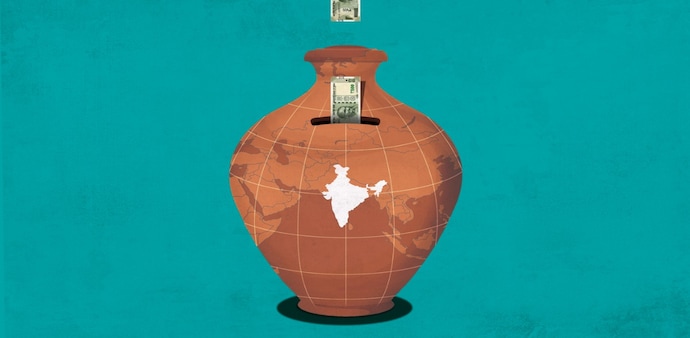
India requires about $170 billion annually in climate investments, but average climate finance flows have only been around $44 billion per year.
Nachiket Kelkar
- Jun 18, 2026,
- Updated Jun 18, 2026 6:52 PM IST
India is rapidly changing. Look around there is construction everywhere. New metro and railway lines are being built, swanky new airports are rising, mega highways are expanding and new factories are being built. The central government has set a vision to become a developed nation by 2047.
As more people migrate from rural to urban areas, cities are growing, many bursting to their seams. At the same time new micro markets are emerging. All this will need a massive infrastructure investment.
Advertisement
According to Brickwork Ratings, the country will require nearly Rs 80 lakh crore in urban infrastructure investments by 2037 to support rapid urbanisation and economic growth.
It estimates urban areas are expected to contribute nearly 70% of India’s GDP by 2036 and that makes sustainable urban financing a “national priority.”
The central government earlier this year launched the Urban Challenge Fund (UCF), with Rs 1 lakh crore total central assistance. The scheme envisages that at least 50% of the funding for the project would have to be raised via market-based instruments such as municipal bonds, public-private partnerships, loans, etc.
Advertisement
Manu Sehgal, CEO, Brickwork Ratings, agrees that UCF could significantly deepen India’s municipal funding ecosystem by expanding participation. However, he pointed that since FY2018, only 17 cities have issued municipal bonds amounting to Rs 4,540 crore, which highlighted the large untapped financing opportunity in the sector.
The Economic Survey this year pointed that despite sustained global efforts, the gap between sustainable development ambitions and available financing has continued to widen, particularly for developing countries, reaching an estimated $4 trillion. India requires about $170 billion per year in climate investments, but average climate finance flows have historically only been around $44 billion per year, over 70% short.
According to Nikunj Dube, chief ratings officer at CAREEdge ESG Ratings, the global green funding gap is only widening. The shortfall, he says, does not arise from an absence of global capital, but from a profound mismatch between where capital is concentrated and where it is most urgently needed.”
Advertisement
India aspires to achieve net zero emission targets by 2070, and therefore, the implications of the widening green finance gap may be existential. “Achieving net-zero will require a cumulative investment of $10 trillion to $22.7 trillion by 2070, depending on the policy pathway. Against current annual investment of approximately $135 billion, the financing gap is not a technicality. It is the central challenge of India’s green transition,” said Dube.
There are three key issues fuelling the funding crisis—developed markets dominate global climate finance, even as developing countries bear the heaviest climate burden; international public finance to developing economies remains structurally limited, with multilateral development banks constrained by capital adequacy norms and risk aversion; and capital flows remain concentrated in a few large sectors like solar, wind and energy efficiency, which leaves other areas like climate adaption, biodiversity finance and urban infra severely under-funded.
Developing a new green developmental model for achieving Viksit Bharat will require structural interventions including support for driving research and development and piloting new technologies.
-Niranjan Banodkar,,Group CFO, Yes Bank
According to a recent paper by the NITI Aayog, India can mobilise approximately $16.2 trillion for its net zero transition by 2070 through targeted reforms in its financial system and stronger integration with global capital markets.
Advertisement
“On the domestic side this requires deeper capital markets, greater channeling of household savings into productive assets, and a shift by institutions towards high-quality corporate and green investments. Credible transition plans and a robust project pipeline can attract sustained foreign capital. Together, these measures can significantly scale the financing available for India’s net zero pathway,” it said.
Over the years, regulators as well as the government have initiated several steps to boost sustainable finance. For instance, in 2025, the Reserve Bank of India revised its priority sector lending norms, under which the definition and loan limits for renewable energy projects were increased, a move aimed at boosting loans to green energy projects.
In 2023, the Securities and Exchange Board of India (SEBI) modified the initial continuous disclosure requirements for issue and listing of green debt securities. In December 2024, it expanded the scope of sustainable finance in the Indian capital markets to include social bonds and sustainability-linked bonds. Then in June 2025, it specified the operational framework for ESG (environmental, social and governance) debt securities, prescribing initial and continuous disclosure requirements and requirements relating to appointment of an independent third-party reviewer or certifier.
Earlier this year, the norms around appointing third-party reviewers or certifiers were revised. According to these norms, the reviewer shall be independent of the issuer, its directors or senior management personnel; the reviewer would have to be remunerated in a way to prevent conflict of interest and the reviewer would need to have expertise in assessing ESG debt.
Advertisement
Data from Climate Bonds, in 2025, shows green, social, sustainability and sustainability-linked (GSS+) debt reached $1 trillion, the third year that aligned annual volume surpassed the $1 trillion mark. Green bonds accounted for 60% of the deals. Cumulative since 2006, green bond issuances have topped $6.75 trillion.
India’s cumulative aligned GSS+ debt issuances reached $55.9 billion by December 2024, a 186% increase over the $21.4 billion in issuances in 2021. India now ranks the fourth largest emerging market source of aligned GSS+ debt globally, behind only China, South Korea and Chile.
According to CAREEdge, India’s sovereign green bond programme launched in 2022-23 under the Ministry of Finance’s Sovereign Green Bond Framework has been the single most important catalyst for market development.
About Rs 57,697 crore has been cumulatively raised through green bond issues between 2022-23 and 2024-25.
Historically, public sector undertakings in infrastructure, railways and energy have dominated India’s sustainable debt market. However, experts note the market is rapidly diversifying with private companies, banks and NBFCs also raising sustainable finance. Several municipal bodies have raised green bonds in recent years too. However, that market is still nascent, although promising.
Dube of CAREEdge ESG says India still lacks a published, legally operative national green taxonomy.
Advertisement
“There are three fundamental challenges that we need to address systemically. First, the absence of a nationally notified green taxonomy creates ambiguity—for issuers who do not know what qualifies as green, for investors who cannot independently verify claims, and for regulators who cannot enforce standards without a legal definition. The draft Climate Finance Taxonomy is a critical and welcome development, but its notified operationalisation is overdue,” he says.
“India’s domestic institutional investors—insurance companies, pension funds, mutual funds—are governed by mandates that do not explicitly reward or incentivise green investments. Without institutional mandates or regulatory incentives linking green instruments to portfolio requirements, sustainable instruments must compete on yield alone—which is structurally disadvantageous,” says Dube.
While SEBI has defined what constitutes a green bond, a detailed comprehensive framework backed by the RBI is needed to help lenders confidently define and build their green portfolios.
-Apurva Rathod,Chief Sustainability Officer at L&T Finance
Apurva Rathod, chief sustainability officer at L&T Finance, also says India needs a clear standardised green taxonomy.
“While SEBI has defined what constitutes a green bond, a detailed comprehensive framework backed by the RBI is needed to help lenders confidently define and build their green portfolios. Right now, every lender defines ‘green’ differently, which makes it difficult to measure real outcomes,” says Rathod.
Many rural and semi-urban borrowers do not understand green finance products, and many lenders do not have the tools to assess climate risk properly. Regulators, industry bodies and financial institutions all need to invest in fixing this together.
Citing an independent study by the Council on Energy, Environment and Water (CEEW), Niranjan Banodkar, group CFO at Yes Bank, says India could attract approximately $4.1 trillion in cumulative green investments, create 48 million jobs, and unlock a $1.1 trillion annual green market by 2047, covering emerging value chains across energy transition, circular economy, bio-economy and nature-based solutions.
“Unlocking this potential and developing a new green developmental model for achieving Viksit Bharat will require structural interventions including support for driving research and development and piloting new technologies,” he says.
Green finance is clearly growing, but there remains a significant gap and filling that may require concerted efforts if India is to meet its developmental and sustainability goals.
@TheNachiket
India is rapidly changing. Look around there is construction everywhere. New metro and railway lines are being built, swanky new airports are rising, mega highways are expanding and new factories are being built. The central government has set a vision to become a developed nation by 2047.
As more people migrate from rural to urban areas, cities are growing, many bursting to their seams. At the same time new micro markets are emerging. All this will need a massive infrastructure investment.
Advertisement
According to Brickwork Ratings, the country will require nearly Rs 80 lakh crore in urban infrastructure investments by 2037 to support rapid urbanisation and economic growth.
It estimates urban areas are expected to contribute nearly 70% of India’s GDP by 2036 and that makes sustainable urban financing a “national priority.”
The central government earlier this year launched the Urban Challenge Fund (UCF), with Rs 1 lakh crore total central assistance. The scheme envisages that at least 50% of the funding for the project would have to be raised via market-based instruments such as municipal bonds, public-private partnerships, loans, etc.
Advertisement
Manu Sehgal, CEO, Brickwork Ratings, agrees that UCF could significantly deepen India’s municipal funding ecosystem by expanding participation. However, he pointed that since FY2018, only 17 cities have issued municipal bonds amounting to Rs 4,540 crore, which highlighted the large untapped financing opportunity in the sector.
The Economic Survey this year pointed that despite sustained global efforts, the gap between sustainable development ambitions and available financing has continued to widen, particularly for developing countries, reaching an estimated $4 trillion. India requires about $170 billion per year in climate investments, but average climate finance flows have historically only been around $44 billion per year, over 70% short.
According to Nikunj Dube, chief ratings officer at CAREEdge ESG Ratings, the global green funding gap is only widening. The shortfall, he says, does not arise from an absence of global capital, but from a profound mismatch between where capital is concentrated and where it is most urgently needed.”
Advertisement
India aspires to achieve net zero emission targets by 2070, and therefore, the implications of the widening green finance gap may be existential. “Achieving net-zero will require a cumulative investment of $10 trillion to $22.7 trillion by 2070, depending on the policy pathway. Against current annual investment of approximately $135 billion, the financing gap is not a technicality. It is the central challenge of India’s green transition,” said Dube.
There are three key issues fuelling the funding crisis—developed markets dominate global climate finance, even as developing countries bear the heaviest climate burden; international public finance to developing economies remains structurally limited, with multilateral development banks constrained by capital adequacy norms and risk aversion; and capital flows remain concentrated in a few large sectors like solar, wind and energy efficiency, which leaves other areas like climate adaption, biodiversity finance and urban infra severely under-funded.
Developing a new green developmental model for achieving Viksit Bharat will require structural interventions including support for driving research and development and piloting new technologies.
-Niranjan Banodkar,,Group CFO, Yes Bank
According to a recent paper by the NITI Aayog, India can mobilise approximately $16.2 trillion for its net zero transition by 2070 through targeted reforms in its financial system and stronger integration with global capital markets.
Advertisement
“On the domestic side this requires deeper capital markets, greater channeling of household savings into productive assets, and a shift by institutions towards high-quality corporate and green investments. Credible transition plans and a robust project pipeline can attract sustained foreign capital. Together, these measures can significantly scale the financing available for India’s net zero pathway,” it said.
Over the years, regulators as well as the government have initiated several steps to boost sustainable finance. For instance, in 2025, the Reserve Bank of India revised its priority sector lending norms, under which the definition and loan limits for renewable energy projects were increased, a move aimed at boosting loans to green energy projects.
In 2023, the Securities and Exchange Board of India (SEBI) modified the initial continuous disclosure requirements for issue and listing of green debt securities. In December 2024, it expanded the scope of sustainable finance in the Indian capital markets to include social bonds and sustainability-linked bonds. Then in June 2025, it specified the operational framework for ESG (environmental, social and governance) debt securities, prescribing initial and continuous disclosure requirements and requirements relating to appointment of an independent third-party reviewer or certifier.
Earlier this year, the norms around appointing third-party reviewers or certifiers were revised. According to these norms, the reviewer shall be independent of the issuer, its directors or senior management personnel; the reviewer would have to be remunerated in a way to prevent conflict of interest and the reviewer would need to have expertise in assessing ESG debt.
Advertisement
Data from Climate Bonds, in 2025, shows green, social, sustainability and sustainability-linked (GSS+) debt reached $1 trillion, the third year that aligned annual volume surpassed the $1 trillion mark. Green bonds accounted for 60% of the deals. Cumulative since 2006, green bond issuances have topped $6.75 trillion.
India’s cumulative aligned GSS+ debt issuances reached $55.9 billion by December 2024, a 186% increase over the $21.4 billion in issuances in 2021. India now ranks the fourth largest emerging market source of aligned GSS+ debt globally, behind only China, South Korea and Chile.
According to CAREEdge, India’s sovereign green bond programme launched in 2022-23 under the Ministry of Finance’s Sovereign Green Bond Framework has been the single most important catalyst for market development.
About Rs 57,697 crore has been cumulatively raised through green bond issues between 2022-23 and 2024-25.
Historically, public sector undertakings in infrastructure, railways and energy have dominated India’s sustainable debt market. However, experts note the market is rapidly diversifying with private companies, banks and NBFCs also raising sustainable finance. Several municipal bodies have raised green bonds in recent years too. However, that market is still nascent, although promising.
Dube of CAREEdge ESG says India still lacks a published, legally operative national green taxonomy.
Advertisement
“There are three fundamental challenges that we need to address systemically. First, the absence of a nationally notified green taxonomy creates ambiguity—for issuers who do not know what qualifies as green, for investors who cannot independently verify claims, and for regulators who cannot enforce standards without a legal definition. The draft Climate Finance Taxonomy is a critical and welcome development, but its notified operationalisation is overdue,” he says.
“India’s domestic institutional investors—insurance companies, pension funds, mutual funds—are governed by mandates that do not explicitly reward or incentivise green investments. Without institutional mandates or regulatory incentives linking green instruments to portfolio requirements, sustainable instruments must compete on yield alone—which is structurally disadvantageous,” says Dube.
While SEBI has defined what constitutes a green bond, a detailed comprehensive framework backed by the RBI is needed to help lenders confidently define and build their green portfolios.
-Apurva Rathod,Chief Sustainability Officer at L&T Finance
Apurva Rathod, chief sustainability officer at L&T Finance, also says India needs a clear standardised green taxonomy.
“While SEBI has defined what constitutes a green bond, a detailed comprehensive framework backed by the RBI is needed to help lenders confidently define and build their green portfolios. Right now, every lender defines ‘green’ differently, which makes it difficult to measure real outcomes,” says Rathod.
Many rural and semi-urban borrowers do not understand green finance products, and many lenders do not have the tools to assess climate risk properly. Regulators, industry bodies and financial institutions all need to invest in fixing this together.
Citing an independent study by the Council on Energy, Environment and Water (CEEW), Niranjan Banodkar, group CFO at Yes Bank, says India could attract approximately $4.1 trillion in cumulative green investments, create 48 million jobs, and unlock a $1.1 trillion annual green market by 2047, covering emerging value chains across energy transition, circular economy, bio-economy and nature-based solutions.
“Unlocking this potential and developing a new green developmental model for achieving Viksit Bharat will require structural interventions including support for driving research and development and piloting new technologies,” he says.
Green finance is clearly growing, but there remains a significant gap and filling that may require concerted efforts if India is to meet its developmental and sustainability goals.
@TheNachiket
Read more!