
The fault lines in Jensen Huang’s AI empire
Jensen Huang built NVIDIA into a powerhouse of the AI revolution. But infidelity, questions over China-linked chip sales, and vast financial commitments underpinning the AI boom have exposed the risks of an empire built around one man.
Palak Agarwal
- Nov 26, 2026,
- Updated Nov 26, 2026 1:04 PM IST
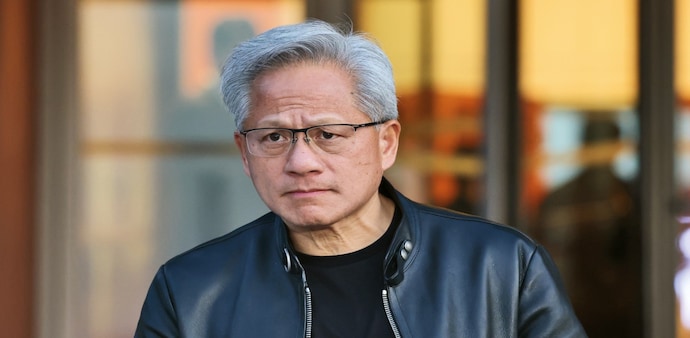
THE BLACK leather jacket became a uniform, keynote presentations became theatre, and the man who once ran a graphics-chip company from the margins of Silicon Valley became the face of an industry that reshaped the world.
Hey!
Already a subscriber? Sign In
THIS IS A PREMIUM STORY FROM BUSINESS TODAY.
Subscribe to Business Today Digital and continue enjoying India's premier business offering uninterrupted.
only FOR
₹999 / Year
Unlimited Digital Access + Ad Lite Experience
Cancel Anytime
-
 Unlimited access to Business Today website
- Exclusive insights on Corporate India's working, every quarter
- Access to our special editions, features, and priceless archives
- Get front-seat access to events such as BT Best Banks, Best CEOs and Mindrush
THE BLACK leather jacket became a uniform, keynote presentations became theatre, and the man who once ran a graphics-chip company from the margins of Silicon Valley became the face of an industry that reshaped the world.
For Jensen Huang, NVIDIA was never just about making faster chips. It was about persuading the world to build its future around them. Over three decades, he turned that conviction into a business worth trillions of dollars, forged an ecosystem that developers and cloud companies depend on, and made himself one of the most powerful figures in technology.
Advertisement
Then, in a matter of days, the narrative changed.
Reports of relationships involving Huang, including one with a Singapore-based businesswoman suspected by US officials of having links to Chinese intelligence, another involving a subordinate, and a third one still surfacing, triggered a leadership crisis. The company’s board accepted his resignation as President and Chief Executive on November 11, appointing Chief Financial Officer Colette Kress as interim CEO while it begins searching for a successor.
NVIDIA shares fell sharply, around 13% over five trading sessions, as the company lost over $500 billion in market value. The shock travelled well beyond Wall Street. For a company at the centre of the global AI buildout, the departure of its founder raised a question—what happens to the NVIDIA machine without the man who crafted its ambitions?
Advertisement
And then came another twist. Media reports say Huang is considering a return and has discussed the possibility with confidants. Supporters are reportedly mobilising influential technology executives like Elon Musk to lobby the board. Employees are posting on social media demanding Huang’s comeback. Even Huang took to X indicating that if the Board decides, he “would be honoured to return as the CEO”.
The report has revived hopes among some investors, but the board has ruled out a comeback. The succession process and investigation into circumstances of his departure remain central to the company’s next steps. But the larger story is about the future of the extraordinary business architecture he leaves behind.
Advertisement
More Than A Chip
Huang’s most consequential achievement is not the GPU itself but the ecosystem he built around it. NVIDIA’s competitive advantage rests on a combination of hardware, software and developer loyalty. At its heart is CUDA, the proprietary software platform that allows programmers to use its GPUs for parallel computing. Over the years, researchers, start-ups and large technology companies have built applications, libraries and workflows around it.
Leaders of one of the big four consulting firms say this has created a formidable switching cost. A customer moving away from NVIDIA cannot replace one chip with another. It may have to rewrite code, adapt applications, retrain teams, and test systems on a different architecture, requiring enormous investment and new skill sets. For companies running heavy AI workloads, the disruption can be expensive and time-consuming.
The result is a web of interdependence, say tech experts in India, adding that cloud companies buy NVIDIA chips and rent computing capacity to AI developers. Model makers use that capacity to train and run their systems. Enterprises access those models through cloud platforms and applications, generating further demand for computing power. NVIDIA is present at several points in this chain—as supplier, investor and infrastructure partner.
Advertisement
Srikanth Velamakanni, Chairperson, Nasscom and Co-Founder, Group Chief Executive and Executive Vice-Chairman of Fractal, sees the depth of this ecosystem as a source of resilience. He says NVIDIA’s long-standing relationships with manufacturing partners, software advantage and customer base make it difficult for others to displace it quickly. Even if the leadership changes, the underlying technology and infrastructure do not vanish overnight.
That distinction matters. NVIDIA may be closely identified with Huang, but the company is now embedded in the operations of a global industry. Its influence is structural, not merely personal. Yet, the scale of that influence comes with a price.
When Supplier Becomes A Financier
NVIDIA’s latest financial disclosures offer a glimpse of how much capital is being committed to keep the AI ecosystem expanding.
In its filing for the quarter ended November 26, the company reported $390 billion in supply and capacity commitments, compared with $279 billion in the preceding quarter and $119 billion before that. These largely relate to memory and manufacturing capacity. It also disclosed $28 billion in AI cloud agreements, generally structured over six years, and $20 billion in equity investment commitments. NVIDIA’s existing identifiable equity portfolio stood at approximately $105.9 billion as of October 2026, comprising $44.2 billion in publicly held equities and $61.65 billion in privately held equity securities. Separately, it has another $20 billion in future equity investment commitments disclosed. Together with other categories, including data-centre leases and capital expenditure, NVIDIA’s future commitments totalled about $518 billion.
Advertisement
More striking is how these arrangements connect NVIDIA to the fortunes of its customers and partners. The company has entered into agreements with AI cloud providers under which those partners procure NVIDIA infrastructure products while NVIDIA commits to cloud services. It has also disclosed guarantees supporting land, power and data-centre construction for selected partners. In August 2026, it gave guarantees, capped at $105 billion, relating to a large Ohio data-centre project involving SB Energy and an OpenAI affiliate. These are phased, conditional guarantees linked to specified lease and power obligations, and not a $105-billion loan or an immediate cash outflow.
NVIDIA has also described arrangements intended to mobilise third-party capital for AI infrastructure. The company says such funding is independently underwritten and subject to definitive agreements.
NVIDIA’s reported total balance-sheet liabilities were approximately $105 billion.
“This (the exit) is an unequivocal negative for NVIDIA and the entire AI ecosystem,” said Joe Gilbert at Integrity Asset Management in a Bloomberg report. “He is not only the face of AI but arguably the architect of the AI infrastructure. It will be difficult if not impossible to replicate Jensen’s vision.” But the underlying question is difficult to ignore. When a company supplies the technology, invests in the ecosystem and enters into agreements that help customers secure infrastructure, how independent is the demand being created?
Advertisement
According to analysts, this is the financial loop at the heart of the AI boom. NVIDIA’s customers need capital to build data centres and buy chips. NVIDIA benefits when those facilities are built and its products are deployed. The customers, in turn, need paying users to generate revenue from the computing capacity they have acquired.
Such arrangements can help an industry scale faster. They can also concentrate risk. If a major cloud provider struggles to fill capacity, or an AI developer fails to turn usage into revenue, the consequences may travel through the network. NVIDIA itself acknowledges that its results depend partly on the performance of customers and partners, and that constraints involving land, power and capital could affect the buildout.
Kress, in the recent quarterly results call, also emphasised that NVIDIA will remain “disciplined and selective” in extending financial commitments, guarantees, and capital support to neocloud providers and AI start-ups, rather than providing unconditional financial backing.
The China Tightrope
China is a large potential market for advanced computing, but it is also at the centre of Washington’s concerns over the strategic use of AI. Huang had earlier argued that denying China access to US technology will not necessarily stop its progress but could instead accelerate the development of domestic alternatives.
Washington, however, sees advanced processors through a national-security lens. US export policy has evolved repeatedly. In January 2026, the Department of Commerce revised its licensing policy to consider applications for exports of NVIDIA’s H200 and certain comparable chips to China on a case-by-case basis, subject to security conditions. That is not a blanket permission to sell unrestricted advanced chips, and the authorities in the course of days will examine if China had access to the most advanced chips. This is where the allegations involving a Singapore-based businesswoman have raised questions about corporate safeguards and the scrutiny of business relationships connected to sensitive technology sales.
Who's Paying?
There is no shortage of demand for AI computing today. Technology companies are racing to train larger models, build AI assistants and integrate generative AI into products. Governments are investing in sovereign computing capacity, while enterprises are moving from experimentation to deployment.
But the economics are still evolving. Data centres require enormous upfront investment in land, electricity, cooling, networking and specialised chips. Their returns depend on sustained utilisation and customers willing to pay for the computing capacity.
The risk is that infrastructure spending may run ahead of the revenue that AI applications can generate. If enterprise adoption takes longer than expected, or the economics of model development and deployment prove less attractive than projected, some operators could be left with expensive capacity and insufficient paying demand.
Velamakanni’s more optimistic view is that the transformation of enterprises through AI is still at an early stage. The current infrastructure buildout, he says, is preparing for a much broader wave of adoption. NVIDIA’s software ecosystem and established industry relationships give it an advantage as that adoption spreads.
But even a genuine technology revolution does not guarantee that every investment made in anticipation will earn an adequate return. The question is not whether AI will matter; it is whether the companies financing its expansion can make the numbers work.
Huang’s departure has exposed a paradox. NVIDIA has become so central to the AI industry that the uncertainty surrounding one executive can unsettle an entire market. Yet the company is too deeply embedded in the technology ecosystem to be reduced to one individual.
A return by Huang may restore a measure of confidence, but it cannot by itself resolve questions around governance, succession, export controls, financing or sustainability of AI demand. Nor can a new chief executive simply inherit the relationships and instinct that helped Huang turn NVIDIA into the industry’s indispensable supplier.
For more than 30 years, Huang’s bet has been that accelerated computing would become the foundation of the next technological era. The world has largely bought into that vision. Now comes the test of proving that the vast network of companies, capital and infrastructure built around it can generate lasting economic value.
The empire may outlast its founder. But ensuring that it does, and that the bill for building it can be paid, could prove a costly affair.
@palakagarwal64
Read more!