
Why are companies like Reliance Industries, the Tata Group, and Aditya Birla Group expanding aggressively in Indian luxury
Why are companies like Reliance Industries, the Tata Group, and Aditya Birla Group expanding aggressively in Indian luxury
Indian luxury is booming, with conglomerates like Reliance Industries, Tata Group, and Aditya Birla Group expanding aggressively. The $10 billion market is projected to triple by 2030. Reliance leads with global brands and luxury malls; Tata is growing through Titan and Tata Cliq Luxury. At the same time, Aditya Birla is focusing on fashion and ethnic wear, each using unique strategies to capture this flourishing segment. Will the fight for market dominance unlock India's true luxury potential?
Krishna Gopalan
- Oct 8, 2025,
- Updated Oct 15, 2025 3:23 PM IST
Gopal Asthana is soft-spoken and picks his words carefully. It suits the slow-paced business he runs well. As CEO of Tata Cliq, he explains, the concept is to “encourage consumers to pause, reflect and engage meaningfully with the stories and heritage behind every brand and product.
Hey!
Already a subscriber? Sign In
THIS IS A PREMIUM STORY FROM BUSINESS TODAY.
Subscribe to Business Today Digital and continue enjoying India's premier business offering uninterrupted
only FOR
₹999 / Year
Unlimited Digital Access + Ad Lite Experience
Cancel Anytime
-
 Unlimited access to Business Today website
 -
 Exclusive insights on Corporate India's working, every quarter
 -
 Access to our special editions, features, and priceless archives
 -
 Get front-seat access to events such as BT Best Banks, Best CEOs and Mindrush
Gopal Asthana is soft-spoken and picks his words carefully. It suits the slow-paced business he runs well. As CEO of Tata Cliq, he explains, the concept is to “encourage consumers to pause, reflect and engage meaningfully with the stories and heritage behind every brand and product.
Tata Cliq Luxury was launched in 2016 when the management realised there was a fundamental gap in India’s luxury retail landscape. “While the demand for luxury products was growing steadily across the country, access remained limited due to the scarcity of premium retail spaces,” he says. That was enough for the conglomerate to create a differentiated platform to bridge this gap. Asthana recalls that the timing was significant, since Indian consumers were becoming more digitally savvy, with growing confidence in shopping for high-value categories online.
Advertisement
The more important part was in customers coming not just from the metros but across the country. Today, the platform has over 1,500 premium, luxury global and Indian brands across a slew of categories that include accessories, beauty and fragrance, fashion, jewellery, home, fitness, and watches.
India’s luxury market is gradually moving away from catering specifically to generational affluence to tap into the rising aspirational section of the population. This rising class of consumers is well-travelled and has more spending power.
India is home to the largest share of the world’s youth population, and a large chunk of that is first-time luxury buyers. The older segment, with high disposable incomes, forms another critical part of the luxury story. Be it fancy malls, expensive gadgets, new-age automobiles, phones, jewellery, sprawling homes, and apparel, there is no indication of it abating. Unsurprisingly, our own conglomerates have made interesting moves to get a rightful share of the consumer wallet. Indian luxury is at a point where growth is set to take off quite dramatically, and the big boys are drawing up interesting strategies.
Advertisement
From an Indian point of view, luxury has been around for long. “Diamonds were first found in the Golconda mines, and silk was exported. The maharajas and princely states always promoted luxury goods and lifestyle,” Ashok Som, Professor of Global Strategy, ESSEC Business School, says. Cartier, in fact, used to come from Paris to take orders. “For Indian consumers, luxury is not new compared to other markets that either came out of poverty (Singapore and Hong Kong) or where it was not allowed for religious reasons (in more conservative nations) or geopolitical ones (communism in China or the effects of war in Germany and Japan).”
The luxury businesses of the Tata Group, the Aditya Birla Group (ABG), and the Reliance Industries are remarkably different. The critical question is the extent of synergy with the existing portfolio. Abhay Gupta, Founder & CEO, Luxury Connect Business School, cites the case of the Tata group, where the “play is on heritage and trust” and how that syncs well with businesses like Taj Hotels, Tanishq, and Jaguar Land Rover. “They have a very long-term approach, and the trust factor helps in having a presence across every possible sector that exists in luxury,” he says.
Advertisement
A key part of the ABG’s luxury foray is The Collective, a multi-brand retail concept. Given its long association with fashion and retail (the buyout of Madura Garments in 1999 gave it a big presence in apparel), there is a robust distribution network. “They have a very good understanding of the business and are well-positioned to get a healthy share of the consumer who is moving up,” explains Gupta. Investing in Indian names like Masaba Gupta, Tarun Tahiliani, Shantnu & Nikhil has aided the process of getting the best out of its distribution network. “The opportunity lies in a large part of premium fashion being fragmented. The group wants to formalise that market.” To spread its luxury brand, Aditya Birla Fashion & Retail has entered a strategic partnership with France’s Galeries Lafayette to open luxury department stores in India.
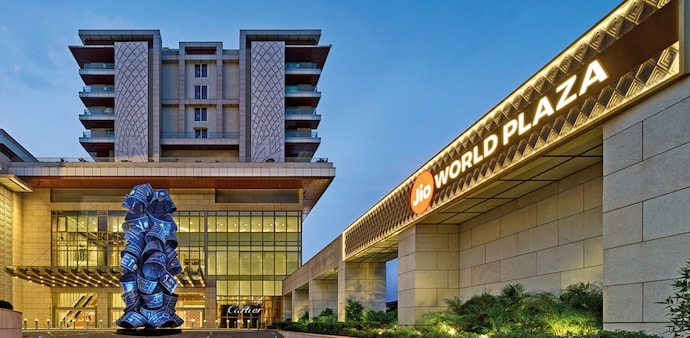
Reliance Industries, the largest Indian company, made a big move by acquiring Genesis Colors, the company that then distributed brands such as Jimmy Choo and Armani. Gupta says they have adopted a “capital-heavy approach” to acquire brands. Today, the conglomerate has over 50 international brands in the luxury business. Apart from that, the presence in real estate—through its retail luxury destinations, Jio World Plaza and One Jio Drive—has added heft. “They are the LVMH of India with a portfolio that cuts across brands and real estate,” he adds.
Advertisement
In its annual report for FY25, Reliance said the overall retail business across formats had a gross revenue of Rs 3.3 lakh crore. “Reliance Retail is India’s largest fashion and lifestyle retailer. It operates multiple retail formats tailored to meet varied consumer preferences across segments, providing a world-class shopping experience,” it stated. On the premium brands part, the business “enriched its portfolio with new brand partnerships while focusing on global expansion of owned intellectual properties.” Among the luxury brands in its stable are Valentino, Tiffany, Bottega Veneta, Giorgio Armani, Zegna, Abu Jani Sandeep Khosla, Burberry, Diesel, Satya Paul, Steve Madden, and Bally.
Clearly, there is an Indian way to luxury. Som says consumers here are rational buyers and look for value-for-money. “If you remove cosmetics, perfume, or some specific wine and champagne or watches that are not made here, Indian consumers are not lured by the luxury world,” he explains. He emphasises the point that Western haute couture will not lure Indian consumers. Given there is no inheritance tax here, consumers spend on their home, education, weddings, travel, and save. “There is really no urgency to buy luxury goods for status seeking or just to show off.”
Advertisement
He thinks the move into luxury by the three conglomerates is a logical step. “It is based on the assumption that Indian consumers would spend on luxury goods as the GDP/capita of India rises, as it did in Japan and China,” he says. The route followed by the big three is clearly different. Obviously, as a country gets richer and spending power increases, luxury goods stand to gain. All three conglomerates have invested heavily in Indian designer-led brands. Prominent examples are the ABG investing in Sabyasachi and Reliance in Manish Malhotra, Raghavendra Rathore, Ritu Kumar, or the Tatas in e-commerce through Tata Cliq. “One reason to tie up with luxury brands through joint ventures or licensing, while investing in Indian-born designer brands, could be to learn from the foreign brands and grow the Indian brands,” Som says.
Asthana points out that for Indian consumers, luxury goes beyond access to global brands. “It is about authenticity, cultural relevance, and the meaning attached to a purchase,” he says. The moment it is personalised and with immersive storytelling, there is a clear reason to engage and eventually buy. “Tailoring the message to the Indian market is crucial to establishing a deeper connection, and that could be through collaborations with local designers or narratives to link products to Indian traditions or occasions. For instance, Bvlgari introduced the kada and mangalsutra for Indian consumers,” adds Asthana.
Advertisement
It is an indication of how much India matters and why the strategy must be different. Anurag Mathur, Partner & Head of Bain & Company’s retail practice in India, says unlocking significant growth requires creating aspiration and relevance specifically to Indian consumers. Within this is an appreciation of assets like jewellery and luxury real estate, or the experience that comes with it. “Recognising this, global brands have started taking the Indian consumer more seriously and now tailor their offerings and marketing campaigns,” he says. For instance, Louis Vuitton has launched Rani Pink and Dior held a fall show in Mumbai. Indian celebrities, like Alia Bhatt and Deepika Padukone, have become brand ambassadors for Gucci and Louis Vuitton.
At a time when India’s growth has seen unprecedented consumer spending, for companies, it is an unmissable story. Take the case of luxury jewellery.
According to Sandeep Kohli, CEO (Indriya), Aditya Birla Jewellery, the market is projected to reach $11.6 billion by 2025 and expand at a compound annual growth rate of 6.4% through 2030. “It is fuelled by rising disposable incomes, a growing affluent consumer base and a cultural affinity for gold and diamond jewellery, particularly in weddings,” he says. Launched last year, Indriya (meaning five senses in Sanskrit), while being a jeweller for all occasions, has a strong focus on bridal jewellery. “Beyond just the numbers, what excites us is the market’s transformative spirit. It is one where tradition and modernity converge,” says Kohli, for whom jewellery is not just bought but cherished “as an enduring expression of identity, heritage, and a love for it.”
The approach to luxury is vastly different from that of other sectors. A lot of time goes into understanding consumer insights and then getting it right on the product offering. “It’s not solely about large investments but more about creating the right levels of quality, aspiration, and trust,” says Bain’s Mathur. Emphasising how homegrown brands have performed well in categories deeply rooted in Indian culture, he outlines examples such as jewellery, weddings, and hospitality. “This is by delivering relevant products, highly personalised service, and customisation suited specifically to Indian tastes and preferences. More recently, brand insurgents like Nappa Dori, Mokobara, and incumbents like Titan have started to build into luggage and watches on the back of creating relevance, aspiration, and high-quality tech with an Indian design language,” he points out.
That said, the steady flow of more global brands into India continues—Valentino, Balenciaga, and Galeries Lafayette being some of them, apart from Elle Décor and Pottery Barn in the home décor space.
Specifically, for the three biggies in India, what has transpired in the luxury story in the last decade or so has opened a world of opportunities. Pushpa Bector, Senior ED, DLF Retail (the company owns DLF Emporio and The Chankaya in Delhi, both luxury shopping destinations), speaks of how the initial phase of luxury saw global brands take the franchise route. “Now, they are making a direct entry or through a JV (joint venture), meaning there is more skin in the game,” she outlines. In the present day, shopping for luxury in India is more affordable compared to, say, Dubai, Singapore, or London, which used to be the mecca for big brands. The customer experience in India, she explains, is as good, if not better.
Easily, the clincher is the profile of the shopper. “A new India now has millennials who are aspirational from the word go. The luxury consumer is younger and feels very comfortable buying a pair of Golden Goose sneakers,” says Bector. Even the transition to branded jewellery was out of bounds for decades, but “the millennials want it.”
Luxury is no longer merely about the ability to spend. K.T. Jithendran, MD & CEO, Birla Estates, talks of a shift in luxury real estate that is interesting because buyers are investing in experiences, identity, and legacy. “With rising wealth, global exposure, and heightened lifestyle aspirations, the Indian buyer is far more selective and thoughtful. It is no longer just about acquiring prime addresses or large homes but finding spaces that embody who they are and how they want to live,” he says. His company is primarily focused on premium and luxury residential housing, targeting high-net-worth individuals.
From a demographic point of view, the story is compelling. Bector says the India of today is confident with its citizens wanting and enjoying a good life. “The median age is 29, compared to 50 in Japan. For the youngsters, personal gratification is a big part of India’s story, and they are not awestruck by anything.”
Mathur explains that Indian brands are in the early stages of competing in the global markets. “All the relatively large brands have less than 20% of business coming from global markets and are currently not listed among the top 5 or 10 brands in any luxury category,” he says. The recipe for success revolves around consistent high-quality product delivery and marketing effort, along with wider work by the government. It is an arduous task, but one that is achievable to ensure Indian luxury makes it big on the global map. There is no reason why it cannot be done.
@krishnagopalan
Read more!