
Why Corporate India is investing in personalised welfare programmes for employees
Why Corporate India is investing in personalised welfare programmes for employees
Corporate India is investing in personalised welfare programmes for a healthier, more productive workforce.
Karan Dhar
- Aug 18, 2026,
- Updated Aug 18, 2026 5:02 PM IST
India Inc’s tryst with employee welfare dates back to 1947 when J.R.D. Tata created India’s first corporate personnel (HR) department at Tata Steel to prioritise worker welfare and safety. The steelmaking arm of India’s biggest conglomerate has not looked back since. Tata Steel now has a chief wellness officer whose job is to ensure the company’s wellness budget (Rs 168 crore in FY26) delivers maximum results.
Advertisement
For decades, employee wellness in corporate India followed a familiar template: annual health check-ups, medical insurance, and occupational health services that largely met regulatory requirements. That model is rapidly changing.
Employers are increasingly treating health and wellbeing as a strategic investment, linking wellness to productivity, lower absenteeism, retention, engagement, and operational performance.
Tata Steel began rethinking its wellness strategy in 2023. “We deliberately shifted to an outcome-based wellness model,” says Mukesh Agarwal, Chief Wellness Officer, Tata Steel. “The question was not whether we were providing benefits, but whether employees were actually becoming healthier.”
The company has partnered weight loss start-up Fitterfly, diabetes care platform Freedom from Diabetes, and yoga lessons start-up Habuild to offer lifestyle transformation programmes targeting obesity, diabetes, and other lifestyle diseases.
Advertisement
Tata Steel employs 41,307 people in India while its total workforce, including contract workers and vendors, across multiple plants and mining operations is around 1,50,000. “We have crafted a complete wellness ecosystem that is location-agnostic, personalised and addresses white-collar employees, blue-collar workers, and contract workers,” says Agarwal.
Employees cite examples of how these programmes have helped them navigate difficult phases in their lives. In August 2024, Dhilip Kumar R., who works in the Product Application Group at Tata Steel, hit a low point. “My blood sugar levels were dangerously high, I weighed 96 kg, and I felt like my health was slipping out of my control. It was hard to imagine finding a way back. That’s when I was introduced to the Freedom from Diabetes programme through Tata Steel’s wellness team. With their tailored plan, my HbA1c reduced dramatically, and I shed over 30 kgs in just three months. I now wake up energised, feeling like a college student again. This incredible journey has even inspired ten of my colleagues to join. I’m truly grateful for this life-empowering initiative,” says Dhilip.
Advertisement
One distinctive feature is the company’s joint consultative system, where union representatives and management jointly decide wellness action plans. Tata Steel has 32 unions, including the Tata Workers’ Union—its largest.
Every department has a manager-led wellness committee, says Agarwal. “In each department, we have wellness committees led and driven by a manager, and they are also evaluated in our annual reward and recognition function,” he explains.
At Hyundai Motor India Ltd., the country’s second-largest passenger vehicle producer by volume, wellness extends well beyond factory gates.
“Wellness is not limited to employees. It extends to their families,” says Natwar Kadel, AVP & Vertical Head, People Strategy, Hyundai Motor India Ltd. (HMIL). According to him, lack of wellness has a direct or indirect impact on the way a person works. Mental wellness impacts physical wellness and an employee’s productivity.
The need for counsellors is high in plant locations. There is a taboo around speaking to a counsellor when one is dealing with marital or financial issues.
-NATWAR KADEL,NATWAR KADEL AVP & Vertical Head—People Strategy, Hyundai Motor India
For factory workers at its manufacturing facility in Chennai, Hyundai has engaged employee welfare counsellors. Where required, counsellors visit employees’ homes to understand family situations and provide support.
Advertisement
“About 32 employee welfare counsellors are available at our Chennai plant. The need for such counsellors is very high in plant locations. There is a taboo around speaking to a counsellor when one is dealing with marital or financial issues, and it impacts productivity on the shop floor. Employee welfare counsellors visit homes and try to help. These visits are completely anonymous,” says Kadel.
Tata Steel, too, has deployed on-site counsellors at mining locations to provide one-on-one support to employees and their families. “These initiatives increased counselling utilisation while also helping reduce the stigma around mental health as senior leaders openly discussed seeking therapy,” says Agarwal.
For white-collar employees, Tata Steel has added wellness retreats and Vipassana programmes at Atmantan and Fazlani Resorts in Maharashtra.
At Hyundai, an internal review found that only around 1% of employees were using Leave Travel Allowance.
“We looked at how many people were availing leave and found LTA usage was just 1%. We felt it was important that employees rejuvenate once every year, so we mandated five days of leave,” says Kadel. “If they don’t take it, their leaves lapse,” he adds.
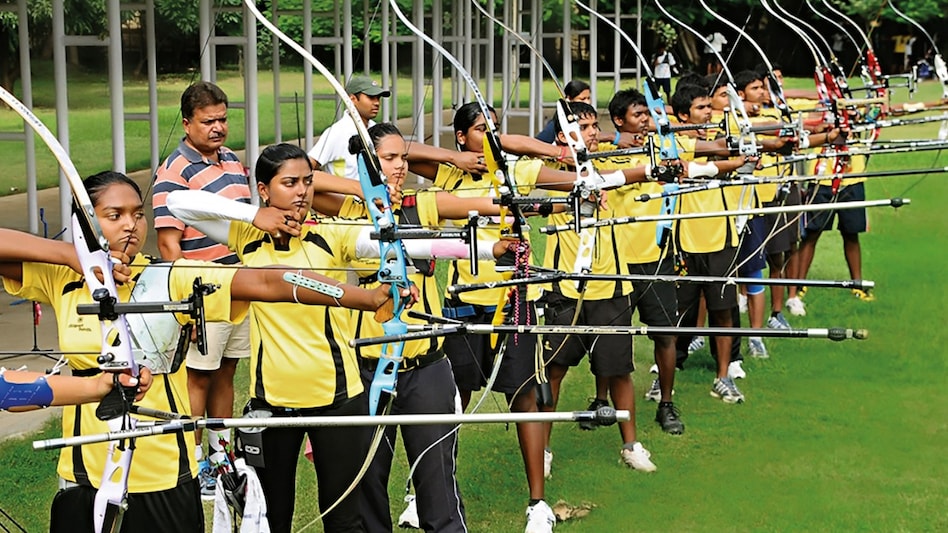
The carmaker also introduced a 100-day fitness challenge to encourage a healthy lifestyle. At its manufacturing facilities, employees participate in annual cricket tournaments.
Advertisement
“We have seen a phenomenal response to the fitness challenge at manufacturing plants. This is one activity where the union asks us when we will start,” says Kadel.
Tata Steel, too, has invested extensively in sports infrastructure across locations, including Jamshedpur, Kalinganagar, and mining sites in Odisha.
The steel giant also organises leagues and championships to make sport a continuous part of workplace culture.
Tata Steel also operates hospitals across major locations, including a 1,000-bed hospital in Jamshedpur and several smaller hospitals near manufacturing operations. It manages around 80 medical centres across India, including clinics, hospitals, occupational health services and colleges.
After finding that Tata Steel’s Employee Assistance Programme, launched in 2013, had a utilisation rate of just 0.5%, Tata Steel introduced chat-based counselling, a wellness app with personalised resources, and deployed on-site counsellors at mining locations to provide one-on-one support to employees and their families.
Agarwal says these initiatives increased counselling utilisation to around 2%, while also helping reduce the stigma around mental health.
“For a manufacturing organisation like Tata Steel, spread across multiple remote locations, we need strategies to reach every individual with wellness offerings,” adds Agarwal.
Hyundai has similarly set up a three-storey occupational health centre inside the Chennai plant, offering round-the-clock support.
Advertisement
Coming to energy technology company Schneider Electric, which employs 38,000 people across 31 manufacturing sites in India, including 6,000 in R&D, has introduced a ‘Wellness Wallet’.
One of our biggest differentiators is the wellness wallet. Every employee receives a fixed wellness allowance as an additional benefit.
-NIHARIKA MOHAN,CHRO, Greater India Zone, Schneider Electric
“One of our biggest differentiators is the wellness wallet. Every employee receives a fixed wellness allowance as an additional benefit,” says Niharika Mohan, CHRO, Greater India Zone, Schneider Electric.
Wellness is showing up on shop floors and in boardrooms, as companies increasingly view employee wellbeing as a strategic investment with measurable returns.
@karandhar11
India Inc’s tryst with employee welfare dates back to 1947 when J.R.D. Tata created India’s first corporate personnel (HR) department at Tata Steel to prioritise worker welfare and safety. The steelmaking arm of India’s biggest conglomerate has not looked back since. Tata Steel now has a chief wellness officer whose job is to ensure the company’s wellness budget (Rs 168 crore in FY26) delivers maximum results.
Advertisement
For decades, employee wellness in corporate India followed a familiar template: annual health check-ups, medical insurance, and occupational health services that largely met regulatory requirements. That model is rapidly changing.
Employers are increasingly treating health and wellbeing as a strategic investment, linking wellness to productivity, lower absenteeism, retention, engagement, and operational performance.
Tata Steel began rethinking its wellness strategy in 2023. “We deliberately shifted to an outcome-based wellness model,” says Mukesh Agarwal, Chief Wellness Officer, Tata Steel. “The question was not whether we were providing benefits, but whether employees were actually becoming healthier.”
The company has partnered weight loss start-up Fitterfly, diabetes care platform Freedom from Diabetes, and yoga lessons start-up Habuild to offer lifestyle transformation programmes targeting obesity, diabetes, and other lifestyle diseases.
Advertisement
Tata Steel employs 41,307 people in India while its total workforce, including contract workers and vendors, across multiple plants and mining operations is around 1,50,000. “We have crafted a complete wellness ecosystem that is location-agnostic, personalised and addresses white-collar employees, blue-collar workers, and contract workers,” says Agarwal.
Employees cite examples of how these programmes have helped them navigate difficult phases in their lives. In August 2024, Dhilip Kumar R., who works in the Product Application Group at Tata Steel, hit a low point. “My blood sugar levels were dangerously high, I weighed 96 kg, and I felt like my health was slipping out of my control. It was hard to imagine finding a way back. That’s when I was introduced to the Freedom from Diabetes programme through Tata Steel’s wellness team. With their tailored plan, my HbA1c reduced dramatically, and I shed over 30 kgs in just three months. I now wake up energised, feeling like a college student again. This incredible journey has even inspired ten of my colleagues to join. I’m truly grateful for this life-empowering initiative,” says Dhilip.
Advertisement
One distinctive feature is the company’s joint consultative system, where union representatives and management jointly decide wellness action plans. Tata Steel has 32 unions, including the Tata Workers’ Union—its largest.
Every department has a manager-led wellness committee, says Agarwal. “In each department, we have wellness committees led and driven by a manager, and they are also evaluated in our annual reward and recognition function,” he explains.
At Hyundai Motor India Ltd., the country’s second-largest passenger vehicle producer by volume, wellness extends well beyond factory gates.
“Wellness is not limited to employees. It extends to their families,” says Natwar Kadel, AVP & Vertical Head, People Strategy, Hyundai Motor India Ltd. (HMIL). According to him, lack of wellness has a direct or indirect impact on the way a person works. Mental wellness impacts physical wellness and an employee’s productivity.
The need for counsellors is high in plant locations. There is a taboo around speaking to a counsellor when one is dealing with marital or financial issues.
-NATWAR KADEL,NATWAR KADEL AVP & Vertical Head—People Strategy, Hyundai Motor India
For factory workers at its manufacturing facility in Chennai, Hyundai has engaged employee welfare counsellors. Where required, counsellors visit employees’ homes to understand family situations and provide support.
Advertisement
“About 32 employee welfare counsellors are available at our Chennai plant. The need for such counsellors is very high in plant locations. There is a taboo around speaking to a counsellor when one is dealing with marital or financial issues, and it impacts productivity on the shop floor. Employee welfare counsellors visit homes and try to help. These visits are completely anonymous,” says Kadel.
Tata Steel, too, has deployed on-site counsellors at mining locations to provide one-on-one support to employees and their families. “These initiatives increased counselling utilisation while also helping reduce the stigma around mental health as senior leaders openly discussed seeking therapy,” says Agarwal.
For white-collar employees, Tata Steel has added wellness retreats and Vipassana programmes at Atmantan and Fazlani Resorts in Maharashtra.
At Hyundai, an internal review found that only around 1% of employees were using Leave Travel Allowance.
“We looked at how many people were availing leave and found LTA usage was just 1%. We felt it was important that employees rejuvenate once every year, so we mandated five days of leave,” says Kadel. “If they don’t take it, their leaves lapse,” he adds.
The carmaker also introduced a 100-day fitness challenge to encourage a healthy lifestyle. At its manufacturing facilities, employees participate in annual cricket tournaments.
Advertisement
“We have seen a phenomenal response to the fitness challenge at manufacturing plants. This is one activity where the union asks us when we will start,” says Kadel.
Tata Steel, too, has invested extensively in sports infrastructure across locations, including Jamshedpur, Kalinganagar, and mining sites in Odisha.
The steel giant also organises leagues and championships to make sport a continuous part of workplace culture.
Tata Steel also operates hospitals across major locations, including a 1,000-bed hospital in Jamshedpur and several smaller hospitals near manufacturing operations. It manages around 80 medical centres across India, including clinics, hospitals, occupational health services and colleges.
After finding that Tata Steel’s Employee Assistance Programme, launched in 2013, had a utilisation rate of just 0.5%, Tata Steel introduced chat-based counselling, a wellness app with personalised resources, and deployed on-site counsellors at mining locations to provide one-on-one support to employees and their families.
Agarwal says these initiatives increased counselling utilisation to around 2%, while also helping reduce the stigma around mental health.
“For a manufacturing organisation like Tata Steel, spread across multiple remote locations, we need strategies to reach every individual with wellness offerings,” adds Agarwal.
Hyundai has similarly set up a three-storey occupational health centre inside the Chennai plant, offering round-the-clock support.
Advertisement
Coming to energy technology company Schneider Electric, which employs 38,000 people across 31 manufacturing sites in India, including 6,000 in R&D, has introduced a ‘Wellness Wallet’.
One of our biggest differentiators is the wellness wallet. Every employee receives a fixed wellness allowance as an additional benefit.
-NIHARIKA MOHAN,CHRO, Greater India Zone, Schneider Electric
“One of our biggest differentiators is the wellness wallet. Every employee receives a fixed wellness allowance as an additional benefit,” says Niharika Mohan, CHRO, Greater India Zone, Schneider Electric.
Wellness is showing up on shop floors and in boardrooms, as companies increasingly view employee wellbeing as a strategic investment with measurable returns.
@karandhar11
Read more!