
Why organised diagnostic players are targeting small-town India
Small town India is turning out to be a powerful magnet for organised diagnostic players. they are contributing a significant part of revenues, outpacing metros in growth. Will the ride continue?
Neetu Chandra Sharma
- May 6, 2025,
- Updated May 6, 2025 5:30 PM IST
Last month, metropolis Healthcare Ltd said it was buying Agra-based Scientific Pathology Pvt Ltd to strengthen its presence in western Uttar Pradesh. Valued between Rs 55 crore and Rs 83 crore based on adjusted Ebita for a defined period, the deal will allow Metropolis to take over Scientific Pathology’s laboratories and sample collection centres in the prosperous region.
Hey!
Already a subscriber? Sign In
THIS IS A PREMIUM STORY FROM BUSINESS TODAY.
Subscribe to Business Today Digital and continue enjoying India's premier business offering uninterrupted
only FOR
₹999 / Year
Unlimited Digital Access + Ad Lite Experience
Cancel Anytime
-
 Unlimited access to Business Today website
 -
 Exclusive insights on Corporate India's working, every quarter
 -
 Access to our special editions, features, and priceless archives
 -
 Get front-seat access to events such as BT Best Banks, Best CEOs and Mindrush
Last month, metropolis Healthcare Ltd said it was buying Agra-based Scientific Pathology Pvt Ltd to strengthen its presence in western Uttar Pradesh. Valued between Rs 55 crore and Rs 83 crore based on adjusted Ebita for a defined period, the deal will allow Metropolis to take over Scientific Pathology’s laboratories and sample collection centres in the prosperous region.
Advertisement
In April, Metropolis followed that up with the acquisition of Dr. Ahujas’ Pathology and Imaging Centre, a diagnostics network based in Uttarakhand, for Rs 35 crore in an all-cash deal. This was the third purchase in five months by Mumbai-based Metropolis Healthcare. In December 2024, it expanded its footprint in northern and eastern India by buying Gurugram-based Core Diagnostics for Rs 246.8 crore, broadening its advanced care diagnostics portfolio.
Both Agra and Gurugram, a city in Haryana on the outskirts of New Delhi, are classified as Tier II cities, recognised for the lucrative business opportunities and relatively cost-effective operational base compared to metros like New Delhi and Mumbai.
Advertisement
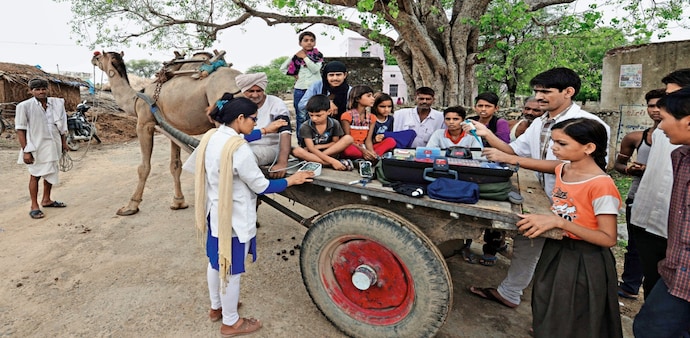
According to the Healthcare Federation of India, over 50% of the so-called “aspirational districts” identified by the government think tank NITI Aayog are now being served by diagnostic chains. Public-private partnerships (PPPs) have improved access to diagnostic services in Tier II and Tier III cities, it says.
An upwardly mobile middle class that’s propelling the rapid growth of small cities. Diagnostic firms are expanding both organically and inorganically through mergers and acquisitions (M&As) in an industry that is expected to more than double in revenue between 2024 and 2030.
Companies like Dr Lal PathLabs have their sights set on further expansion, having gauged the potential of Tier I and Tier II cities. The company says that it is spreading its reach with the opening of 15-20 new labs in FY25.
Advertisement
At the same time, their expansion will fill a crucial healthcare gap in the cities that already contribute a significant portion of their revenue.
To fight deadly lifestyle diseases (65% of deaths), diagnostic firms must urgently screen all Indians aged over 30 for diabetes, hypertension, etc
-Arvind Lal, Executive Chairman, Dr Lal PathLabs
“Metropolis Healthcare’s focus on Tier II and Tier III towns stems from the critical need to bridge the gap in organised, high-quality diagnostic services in these regions,” says Chief Executive Officer Surendran Chemmenkotil.
“Historically, these markets have been underserved due to the dominance of unorganised players, limited healthcare infrastructure and low awareness of preventive healthcare. However, this is changing. Rising health awareness, improving infrastructure, and growing demand for specialised diagnostics present vast opportunities for meaningful expansion,” he says.
Chasing M&As
Other diagnostics firms, too, are chasing M&As while pursuing organic growth in small cities—from Agra and Kanpur in the north to Ernakulam and Coimbatore in the south, and Asansol and Bhubaneswar in the east to Nagpur and Navsari in the west.
In July 2024, Thyrocare Technologies Ltd signed a Business Transfer Agreement with Polo Labs Pvt. Ltd to acquire the latter’s pathology diagnostics unit, extending its presence in Northern India and strengthening its position in the industry.
Advertisement
Polo Labs, based in Punjab, operates 14 laboratories across Punjab, Haryana, and Himachal Pradesh.
“This strategic acquisition will enhance our diagnostic capabilities and service offerings, leveraging Polo Labs’ extensive network in North India,” says Rahul Guha, Managing Director and CEO of Thyrocare.
Hyderabad-based Vijaya Diagnostic Centre Ltd acquired a majority stake in Medinova Diagnostic Services as far back as in 2014 and, in 2024, bought the remaining 37.86% that it didn’t own for Rs 13 crore.
Pune-based Krsnaa Diagnostics Ltd, which has been expanding since 2011 through PPPs, broadened its footprint with the purchase in September 2024 of a 23.53% stake in Pune-based Apulki Healthcare Pvt. Ltd, which operates cancer and cardiac care hospitals on the PPP model.
Critical Component
Fortis Healthcare Ltd increased its stake in Agilus Diagnostics Ltd by 31.52% to 89.2% last year, integrating its extensive network with Agilus’s diagnostic capabilities, expanding its services and sample collection centres to underserved regions.
Agilus itself has made key acquisitions such as DDRC, based in Ernakulam, Kerala; Pathocare Diagnostic and Research Center LLP, headquartered in Vadodara, Gujarat; and Dr Ponkshe Path Lab in Nagpur, Maharashtra. These purchases have allowed the company to strengthen its network to 25 states and five union territories.
Advertisement
“Agilus Diagnostics has always focused on building a presence in semi-urban areas and towns. A key driver of business growth in Tier II and III cities is the increasing awareness of diagnostics as a critical component of clinical decision-making,” says Dr Anand K, Managing Director and CEO of Agilus Diagnostics. “There is also growing demand for reliable, accredited test results,” he says.
In 2024, Redcliffe Lifetech Pvt Ltd took over Bengaluru-based Celara Diagnostics Pvt Ltd, a provider of advanced radiology and pathology services, reinforcing its presence in southern India and extending its foothold in small towns that make up 80% of its network. Redcliffe has set apart $20 million from a recent $42 million fund raising to expand in small cities.
Redcliffe CEO Aditya Kandoi says he wants to extend the company’s reach in Tier II, Tier III and Tier IV cities, and to locations beyond.
Manipal HealthMap, an initiative backed by the Manipal Group, acquired iGenetic Diagnostics in October 2024 as part of a plan to reduce pressure on urban healthcare facilities by providing better diagnostic services in smaller cities.
A key driver of business growth in Tier II and III cities is the increasing awareness of diagnostics as a critical component of clinical decision-making.
-Anand K, MD & CEO, Agilus Diagnostics
Advertisement
Timely, Reliable Tests
Back in 2021, New Delhi-based Dr Lal PathLabs expanded its presence in western India with the acquisition of Suburban Diagnostics. And in the same year, Mumbai-based API Holdings (PharmEasy) bought Thyrocare for Rs 4,546 crore, accelerating the shift towards affordable and accessible diagnostics.
“The need to strengthen primary and secondary healthcare infrastructure, especially in rural areas and in cities classified as Tier III, and beyond, has never been more pressing. With increasing prevalence of non-communicable diseases, the role of organised diagnostics in delivering timely and reliable testing is becoming critical. Our national footprint, now at around 280 labs and around 5,700 collection centres, is expanding deeper into Tier III and beyond,” says Executive Chairman Dr. Arvind Lal.
Agilus Diagnostics, which operates a network of 410 labs, 4,000 collection centres and 14,000 touch points, has a strong presence in Tier II and Tier III cities where 70% of its touch points are located. “These regions contribute approximately 60% of our overall revenue,” says CEO Anand K. The company plans to deepen its presence in the 25 states where it currently operates, with 60% of future expansion targeted at these regions.
Touch points include patient service centres that customers can visit for diagnostic services; these centres also collect diagnostic samples from patients’ homes. The website and mobile app serve as digital touch points that patients can use to book tests and access reports.
Also, with a presence in over 700 towns, Metropolis plans to expand its reach to more than 1,000 towns within the next 12–18 months. “Over the past three years, the contribution of smaller cities to our overall revenue has seen significant growth. Tier II and Tier III towns currently contribute around 34% to Metropolis Healthcare’s revenue as of H1FY25, with revenue from Tier III cities growing by 23% YoY,” says Chemmenkotil.
Numbers Game
Why is small-town India turning out to be such a powerful magnet for the medical testing companies? The following numbers may provide an answer. The Indian diagnostic industry was valued at Rs 1.8 lakh crore in 2024 and estimated to expand at a compound annual growth rate (CAGR) of 10.9% from 2024 to 2030, financial information provider GlobeNewswire wrote in a recent research report. By 2030, the industry’s annual revenue is estimated to reach Rs 3.5 lakh crore.
By some industry accounts, Tier 1 and Tier II cities were already contributing around 40% of the diagnostic market’s revenue by 2024. Revenue has been growing 25% year-on-year in small-town India, outpacing the 10% growth in metropolitan markets that had for many years been the comfort zone of diagnostic firms. As 140 million households move into the middle-income bracket and 20 million into the high-income bracket in the years between 2018 and 2030, spending on services will rise significantly, according to the World Economic Forum (WEF).
According to the WEF, India’s healthcare spending is projected to increase three to four times by 2030, driven by a growing middle class. In 2018, India’s total consumption expenditure was around $1.5 trillion. By 2030, this is expected to rise to between $5.7 trillion and $6 trillion, including healthcare spending. Growing healthcare awareness, especially after the coronavirus pandemic of 2020, 2021, and 2022 that boosted diagnostic services, an expanding middle class and rising household incomes in the hinterland are contributing to the shift by diagnostic firms.
Home collection of biological samples and digital reports—popular and growing trends that started with the pandemic—have made medical diagnostics more accessible to households, says Chemmenkoti, the CEO of Metropolis.
Health Burden
Government initiatives like Ayushman Bharat, the flagship health insurance scheme, are reducing financial barriers to diagnostic testing. Apart from the pandemic, a once-in-a-lifetime event, India has plenty of other health problems to worry about, including the growing incidence of non-communicable and lifestyle diseases and rising population of the elderly.
The most common among such diseases are cardiovascular conditions (leading to heart attacks and strokes), cancer, chronic respiratory diseases like asthma, and diabetes.
These conditions make up a significant health burden, requiring early detection, lifestyle changes and improved healthcare interventions to reduce their prevalence.
“As non-communicable diseases continue to dominate, the need for early and accurate diagnostic services will be crucial for the market’s expansion,” says Aryaman Tandon, Managing Partner and co-founder of business consultant Praxis Global Alliance.
And this is where diagnostic chains are stepping up. Facilities such as Redcliffe’s offer both pathology and radiology services, ensuring quick and clinically reliable results. Many diagnostic centres offer state-of-the-art imaging technologies, including MRI, CT scan, X-Ray, and Ultrasound, and molecular and genetic testing.
Job Openings Rise
The expansion of diagnostic chains in small-town India is opening more job opportunities. Take for instance, Anika Desai, 30, who completed her BSc in medical laboratory technology from Gujarat University in 2016 and worked on short-term contracts in New Delhi with some diagnostic chains before moving back to Gujarat, her home state, in early 2024.
Desai is now employed as a pathologist with Agilus in Navsari, earning Rs 6 lakh a year, less than the Rs 7-8 lakh she took home in Delhi, but isn’t complaining. The company’s launch of a sample collection centre in the Gujarat town has, after all, given her a chance to go back home.
“When I learnt about the growing opportunities in my city, I decided to move back to my hometown,” says Desai.
Even so, a shortage of skilled personnel, particularly pathologists, radiologists and lab technicians and the still largely unorganised nature of the diagnostics business pose a significant barrier to expanding diagnostic services in underserved areas. The diagnostics business is tilted heavily in favour of Tier 1 and Tier II cities to the detriment of smaller ones, experts say. “India has roughly 300,000 medical diagnostic laboratories, but only 5,500 qualified pathologists, which is far below global standards,” says Chemmenkotil of Metropolis.
The think tank Aspire Circle says the Indian medical diagnostics industry, which typically is urban-centric, employs about 800,000 people and generates three to four direct jobs and three to six indirect jobs per new diagnostic establishment.
Anand K, the CEO of Agilus, says the government should create a Board of Medical Technology to train and certify lab professionals. “Continuous training, annual assessments and licensing are necessary to standardise and develop credibility in the industry,” he adds.
Metropolis Healthcare, for one, is tackling such challenges by investing in infrastructure and local talent development. To overcome workforce gaps, the company is focusing on telemedicine solutions, such as telepathology, enabling specialists in urban centres to support remote areas more effectively.
“PPPs, along with advocacy for standardised regulations and skill development programmes, will be pivotal in building a robust diagnostics ecosystem,” says Chemmenkotil.
@neetu_csharma
Read more!