
AI sovereignty essential for India: Vishal Dhupar, MD, Asia South, NVIDIA
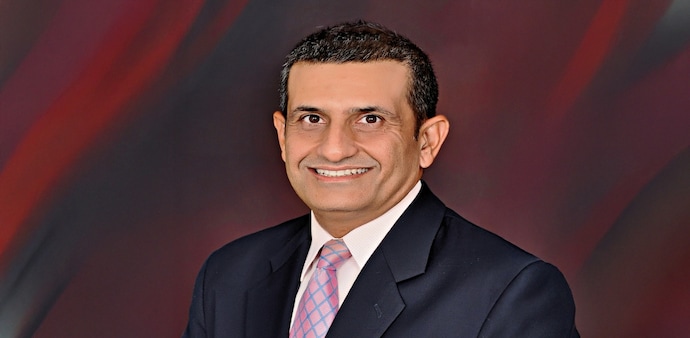
Vishal Dhupar, Managing Director, Asia South, NVIDIA, on the company’s growth, India’s role in AI, and more
- Apr 17, 2025,
- Updated Apr 17, 2025 1:04 PM IST
Vishal Dhupar has held the position of Managing Director of NVIDIA’s South Asia operations since 2010. In an interview with Business Today, Dhupar speaks of NVIDIA’s AI play, India’s participation in the race, and more. Edited excerpts:
-
 Unlimited access to Business Today website
 -
 Exclusive insights on Corporate India's working, every quarter
 -
 Access to our special editions, features, and priceless archives
 -
 Get front-seat access to events such as BT Best Banks, Best CEOs and Mindrush
Vishal Dhupar has held the position of Managing Director of NVIDIA’s South Asia operations since 2010. In an interview with Business Today, Dhupar speaks of NVIDIA’s AI play, India’s participation in the race, and more. Edited excerpts:
How has your experience shaped your vision of AI’s role in India?
My journey with NVIDIA started 15 years ago. What compelled me was its unique mission. Back then, many people saw the company as just a semiconductor chip or graphics card company, primarily focused on gaming and workstations.
However, NVIDIA’s core philosophy was different: If everyone is doing something well, there must be something not being done well. We decided to pursue the “hard problems”, becoming a market creator rather than just chasing market share. This led to innovations in gaming, professional visualisation, and scientific computing. I was attracted to the commitment to tackling difficult, long-term challenges with patience and a clear vision.
Did you foresee this kind of surge in AI?
I understood NVIDIA would impact large enterprises, especially data centres. However, I couldn’t have conceived of a completely different way of computing—an era of manufacturing intelligence where everything in computing would be rephrased. Our leader, Jensen Huang, absolutely could conceive it.
While there was a sense of direction, the full scope and speed of AI’s evolution were driven by a combination of visionary leadership and collaborative breakthroughs.
What are India’s chances of developing a foundational Large Language Model (LLM)? Can the country participate in the ecosystem without an LLM?
India has historically addressed national challenges through focused missions. In 2018, the prime minister invited Jensen to discuss AI’s implications for India, resulting in the “AI for All” strategy paper. The vision was for India to become the “garage of AI”, serving both its own needs and those of the Global South. In 2023, discussions between the prime minister and Jensen emphasised the need for AI sovereignty, which is essential. India has to address its large-scale problems. India has the culture, data, digital transformation momentum, and the need for a foundational model upon which specialised applications can be built. Therefore, India needs its own foundational LLM and specialised models.
With AI automating lower-level tasks, what will the job market look like for the Indian IT sector?
AI will undoubtedly enhance productivity, leading to greater prosperity and economic growth. Humans will remain essential, even in autonomous systems.
Someone needs to build, deploy, and maintain these systems. The key is for India’s workforce to learn to work with machines that are learning to write software. This demand will only increase.
Will some lower-end jobs be disrupted? Absolutely. But the need for productive engineers who can work “under the hood” will be substantially greater, and augmentation through AI companions will enhance everyone’s capabilities.
What changes in education could help us adapt to the global changes in AI? What can the government do immediately?
The government has initiated steps, but critical thinking must become central to education. The curriculum should foster critical thinking, openness, and transparency, not rote learning. Assessment methods must also change.
How do you see AI evolving as a core component of business strategy in the next decade, particularly in India?
AI is upon us. The quicker we embrace it, the better it will be. Every company and individual possess unique intelligence, and AI is crucial for maintaining a competitive edge.
AI is benefiting from three scaling laws. The Foundational Model Scaling has larger datasets fed into foundational models that lead to greater accuracy and intelligence. Fine-tuning Scaling adapts foundational models to specific organisational contexts requires extensive training and tuning. In Inference Scaling, larger GPUs enable real-time, reasoned responses and thoughtful options based on the vast knowledge embedded in the models.
What will be the biggest trend in AI for businesses in India?
Many companies are conducting Proof of Concept. I believe applications will be implemented, focusing on two areas. Firstly, operational cost reduction, customer experience enhancement, and revenue growth opportunities are key areas for AI application development. Also, India is focused on manufacturing. AI can revolutionise that.
India’s relatively small manufacturing sector presents an opportunity to leverage AI for more efficient and competitive production.
What do you see as India’s role in the global AI narrative?
India will leverage its heritage to develop population-scale applications. UPI (Unified Payments Interface) is a prime example of an idea translated into a widely adopted solution. Similar large-scale applications will emerge.