
"Can't give up on agri and dairy": P. Chidambaram
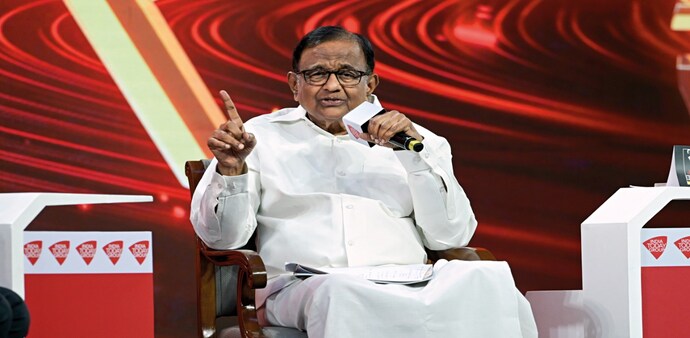
P. Chidambaram, MP and former finance and home minister of India, on the Indian economy and tariff turbulence.
- Aug 25, 2025,
- Updated Sep 6, 2025 6:04 PM IST
The steep tariffs on India are an outcome of the so-called personal friendship between Prime Minister Narendra Modi and US President Donald Trump gone sour, says P. Chidambaram, Member of Parliament and former finance and home minister of India. In a conversation with Archna Shukla, he speaks about the randomness of Trump’s decisions, their impact on the world trade order, the US and the Indian economies. Edited excerpts:
If the steep tariffs, as threatened by the US President, stay, what impact will it have on the Indian economy? Do you agree with the view that this is another 1991 moment for India? If yes, how should India chart a new course?
India in 2025 is not the India that was in 1991. We are much stronger today. We have a large space where we can play our cards that we didn’t have in 1991. We are a large mercantile trading country today. The US accounts for about $45 billion worth of India’s exports. So, the first thing the Indian government should do is to find alternative markets for a big chunk of these exports.
I have often looked back on the last 10 years and thought that we have been pretty lazy. In the last 10-12 years, have we explored and secured new markets? Have we expanded the basket of products that we are exporting? We should now be aggressive, expand the basket of products, and look for new markets.
We should also look for opportunities for bilateral and multilateral trade agreements. I feel we made a mistake by walking out of RCEP (Regional Comprehensive Economic Partnership). Nevertheless, we should diversify our exports basket and markets now.
We should liberalise foreign direct investment. In the short term, we should incentivise exports by, may be, adjusting the exchange rate to compensate our exporters. Now, if this increases the cost of imports, we should cut down on all unnecessary imports such as foreign automobiles or Swiss watches.
The final thing that we should do is that we make it clear to the US that we will not bend, we will negotiate.
How do we negotiate? Should India be more flexible on, say, the agriculture and dairy front to secure deals like Japan and South Korea? What are our bargaining chips?
Our bargaining chip is our large consumer market. No, we can’t give up our policy on agriculture and dairy especially now when the number of workers in the primary sector, which is agriculture and dairy primarily, has risen by 4% under PM Modi. Roughly 45% of our workforce is in these sectors. Their contribution to the GDP may only be 15-17% but the number of people involved is larger than the US population. We can’t jeopardise their lives and livelihoods.
Japan and South Korea are developed markets and they export a lot more than us. They have also been liberalising their imports consistently because they can afford to. We can’t. We have a large population to protect.
I also feel that, temporarily, we may impose stiff tariffs on selected American products while keeping them unchanged for the rest of the world. This will create entry barriers for the American products and their companies will take a hit.
Do you think President Trump’s tariff war is hurting the idea of globalisation and may lead to more protectionism in the world?
The tariffs are definitely hurting globalisation. This is not the path on which the world should move. Tariff war means the WTO is dead, the rule-based world trade order is dead. Globalisation and its framework brought prosperity to the world in the last 15 years. Open economies have flourished more than the closed economies ever did. We should not undo all that hard and good work and I don’t think the rest of the world will let it happen.
I agree that temporary protectionist measures can be taken to stave off a crisis but protectionism can’t be elevated as the official economic policy of a country. Here, I feel that even the NDA government is a bit guilty of promoting protectionism by dressing it up under the garb of what they call “Atmanirbharta”. It has shades of protectionism even though it is projected as the idea of making the country self-reliant.
Why do you think the US is singling out and threatening to penalise India heavily for buying oil from Russia? Do you see some geopolitical strategy or economic ideology at play here?
There are a few factors at play here outside of geopolitics and economics. First of all, President Trump is a man of strong likes and dislikes. He has prejudices. He is transactional and a friend of nobody.
Second, his family is in business with Pakistan’s Crypto Council. In fact, when Operation Sindoor was on, his sons and son-in-law were in Pakistan deliberating upon their crypto business.
Third, he claims that he brought the Pakistan-India conflict to an end. Pakistan has acknowledged it. Asim Munir (the current field marshal of Pakistan), apparently, has said that Trump should be given Nobel Peace Prize for bringing the war between India and Pakistan to end.
India, on the contrary, rebuffed Trump by saying that he had no role to play in the ceasefire. We have refused to bring tariff down on agriculture and dairy. So, he may be feeling let down at the hands of his friend Modi. I always thought and continue to think that this Trump-Modi friendship is a fake.
So, the combination of these circumstances, I think, has led to Trump’s prejudice against India and the consequential threat of such high tariffs.
So, the global governance and trade are currently at the mercy of US President’s personal whim?
Yes. I think President Trump is random. How else can he claim that Canada may become the 51st state of the US or address former PM Trudeau as Governor Trudeau or ask the current PM Mark Carney to ‘never say never’ and so on? He said he wouldn’t rule out military force to gain control of Greenland which is a territory with treaties with Denmark, which is a NATO member and a friend of the US. So, he doesn’t care for geopolitics or global economy. He doesn’t care who is a friend and who is a foe.
And at the moment, I think, he doesn’t regard India as a friend.
What impact do you think President Trump’s current tariff mania will have on the US?
He will reap the fruits of his actions in the next year or two. Inflation is rising in the US. Reshoring, as he describes his efforts of bringing outsourced business back to the US, will not happen. Boards of the US companies are answerable to their shareholders, and not to the President. It’s not easy to relocate labour intensive industries back to the US unless one wants to render them uncompetitive in the global market. So, the inflation will rise, jobs will not increase, consumers will be hit, and the Americans will revolt.
Moreover, the world will not keep quiet. Countries will band together minus the US, and take countermeasures. There is already a conversation of constituting an alternative trade body like the WTO without the US. Of course, it’s an ambitious thought but it’s being spoken about nevertheless.
Do you think the Indian economy is dead, like Trump said?
We are the world’s fourth largest economy well on our way to become the third. We are moderately thriving but my regret is that we could have grown faster but for a few factors. We were knocking on the doors of 8% growth and now, we are stuck at 6-7%. There are many reasons for this but that’s a conversation for another time.
The steep tariffs on India are an outcome of the so-called personal friendship between Prime Minister Narendra Modi and US President Donald Trump gone sour, says P. Chidambaram, Member of Parliament and former finance and home minister of India. In a conversation with Archna Shukla, he speaks about the randomness of Trump’s decisions, their impact on the world trade order, the US and the Indian economies. Edited excerpts:
If the steep tariffs, as threatened by the US President, stay, what impact will it have on the Indian economy? Do you agree with the view that this is another 1991 moment for India? If yes, how should India chart a new course?
India in 2025 is not the India that was in 1991. We are much stronger today. We have a large space where we can play our cards that we didn’t have in 1991. We are a large mercantile trading country today. The US accounts for about $45 billion worth of India’s exports. So, the first thing the Indian government should do is to find alternative markets for a big chunk of these exports.
I have often looked back on the last 10 years and thought that we have been pretty lazy. In the last 10-12 years, have we explored and secured new markets? Have we expanded the basket of products that we are exporting? We should now be aggressive, expand the basket of products, and look for new markets.
We should also look for opportunities for bilateral and multilateral trade agreements. I feel we made a mistake by walking out of RCEP (Regional Comprehensive Economic Partnership). Nevertheless, we should diversify our exports basket and markets now.
We should liberalise foreign direct investment. In the short term, we should incentivise exports by, may be, adjusting the exchange rate to compensate our exporters. Now, if this increases the cost of imports, we should cut down on all unnecessary imports such as foreign automobiles or Swiss watches.
The final thing that we should do is that we make it clear to the US that we will not bend, we will negotiate.
How do we negotiate? Should India be more flexible on, say, the agriculture and dairy front to secure deals like Japan and South Korea? What are our bargaining chips?
Our bargaining chip is our large consumer market. No, we can’t give up our policy on agriculture and dairy especially now when the number of workers in the primary sector, which is agriculture and dairy primarily, has risen by 4% under PM Modi. Roughly 45% of our workforce is in these sectors. Their contribution to the GDP may only be 15-17% but the number of people involved is larger than the US population. We can’t jeopardise their lives and livelihoods.
Japan and South Korea are developed markets and they export a lot more than us. They have also been liberalising their imports consistently because they can afford to. We can’t. We have a large population to protect.
I also feel that, temporarily, we may impose stiff tariffs on selected American products while keeping them unchanged for the rest of the world. This will create entry barriers for the American products and their companies will take a hit.
Do you think President Trump’s tariff war is hurting the idea of globalisation and may lead to more protectionism in the world?
The tariffs are definitely hurting globalisation. This is not the path on which the world should move. Tariff war means the WTO is dead, the rule-based world trade order is dead. Globalisation and its framework brought prosperity to the world in the last 15 years. Open economies have flourished more than the closed economies ever did. We should not undo all that hard and good work and I don’t think the rest of the world will let it happen.
I agree that temporary protectionist measures can be taken to stave off a crisis but protectionism can’t be elevated as the official economic policy of a country. Here, I feel that even the NDA government is a bit guilty of promoting protectionism by dressing it up under the garb of what they call “Atmanirbharta”. It has shades of protectionism even though it is projected as the idea of making the country self-reliant.
Why do you think the US is singling out and threatening to penalise India heavily for buying oil from Russia? Do you see some geopolitical strategy or economic ideology at play here?
There are a few factors at play here outside of geopolitics and economics. First of all, President Trump is a man of strong likes and dislikes. He has prejudices. He is transactional and a friend of nobody.
Second, his family is in business with Pakistan’s Crypto Council. In fact, when Operation Sindoor was on, his sons and son-in-law were in Pakistan deliberating upon their crypto business.
Third, he claims that he brought the Pakistan-India conflict to an end. Pakistan has acknowledged it. Asim Munir (the current field marshal of Pakistan), apparently, has said that Trump should be given Nobel Peace Prize for bringing the war between India and Pakistan to end.
India, on the contrary, rebuffed Trump by saying that he had no role to play in the ceasefire. We have refused to bring tariff down on agriculture and dairy. So, he may be feeling let down at the hands of his friend Modi. I always thought and continue to think that this Trump-Modi friendship is a fake.
So, the combination of these circumstances, I think, has led to Trump’s prejudice against India and the consequential threat of such high tariffs.
So, the global governance and trade are currently at the mercy of US President’s personal whim?
Yes. I think President Trump is random. How else can he claim that Canada may become the 51st state of the US or address former PM Trudeau as Governor Trudeau or ask the current PM Mark Carney to ‘never say never’ and so on? He said he wouldn’t rule out military force to gain control of Greenland which is a territory with treaties with Denmark, which is a NATO member and a friend of the US. So, he doesn’t care for geopolitics or global economy. He doesn’t care who is a friend and who is a foe.
And at the moment, I think, he doesn’t regard India as a friend.
What impact do you think President Trump’s current tariff mania will have on the US?
He will reap the fruits of his actions in the next year or two. Inflation is rising in the US. Reshoring, as he describes his efforts of bringing outsourced business back to the US, will not happen. Boards of the US companies are answerable to their shareholders, and not to the President. It’s not easy to relocate labour intensive industries back to the US unless one wants to render them uncompetitive in the global market. So, the inflation will rise, jobs will not increase, consumers will be hit, and the Americans will revolt.
Moreover, the world will not keep quiet. Countries will band together minus the US, and take countermeasures. There is already a conversation of constituting an alternative trade body like the WTO without the US. Of course, it’s an ambitious thought but it’s being spoken about nevertheless.
Do you think the Indian economy is dead, like Trump said?
We are the world’s fourth largest economy well on our way to become the third. We are moderately thriving but my regret is that we could have grown faster but for a few factors. We were knocking on the doors of 8% growth and now, we are stuck at 6-7%. There are many reasons for this but that’s a conversation for another time.