
Commerce Minister Piyush Goyal on why the US deal is a win-win
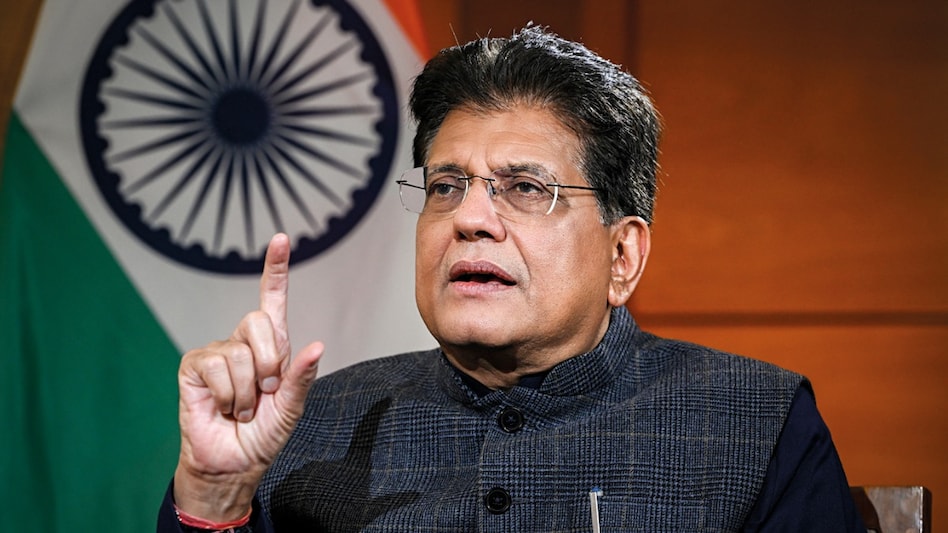
Piyush Goyal, Union Minister for Commerce and Industry, on the India-US trade deal, and what the new pacts signal about India.
- Feb 17, 2026,
- Updated Feb 17, 2026 9:27 AM IST
He is the face of India’s trade diplomacy at a time when global commerce is being re-ordered—by geopolitics, supply-chain realignments, and a sharper contest for markets, capital and technology. So, when India moved decisively on two big-ticket trade deals—one with the European Union and another with the United States—it made sense to speak with Piyush Goyal, Union Minister for Commerce and Industry, and one of the key architects of India’s external economic strategy.
In a freewheeling conversation, with Raj Chengappa, Group Editorial Director, India Today Magazine, Goyal spoke about what these headline agreements signal for Indian exporters, manufacturers and services companies looking to plug into new growth corridors. He also addressed the core questions businesses are asking—what India is willing to open up, where it will hold the line, and how the government plans to convert diplomatic momentum into tangible gains on the ground for the country.
Goyal argues that the new trade push is not just about deals for the sake of it, but about securing India’s interests in a world where trade is increasingly about standards, sustainability norms and strategic alignment. He outlines how India is positioning itself as a reliable partner while protecting sensitive sectors—and why speed, scale and competitiveness will define the next phase of India’s growth story. Edited excerpts:
Q: Let us start with the interim trade agreement with the US. Does the agreement signal a structural shift in India's trade policy, and what, in your view, fundamentally changes after this deal?
A: I think ever since Covid, when Prime Minister Narendra Modi gave the clarion call of a self-reliant India and laid out his vision for the country to achieve developed nation status by 2047, India has reoriented its very approach to the economy. We have started preparing to work on the global stage, finding our position at the high table, rapidly growing the economy, we’ve been the fastest growing large economy for the last four years and I assure you that we will remain the fastest growing economy for the next two decades, at least.
Q: So where do exports fit into this?
A: No country has become developed without significant international engagement. Both exports and imports are important. You export what you are best at, where you have a competitive advantage, and you import what is good for your country.
In India’s case, for example, you import certain ICT (information and communication technology) products, which are very important for our services exports.
Q: If you take a look at the deals with the US and the EU, and earlier with the UK, do they fundamentally change the way we trade?
A: I think it shows that India has emerged out of the shadows. Today, India is a very confident country. It engages with developed nations from a position of strength. Ultimately, free trade agreements are about the future. And as India lays out the road map to a $30-trillion economy, the delta of opportunity is unparalleled. We have decisive leadership, with Prime Minister Modi leading from the front, willing to take risks, taking bold reform decisions, transforming the mindset of the nation. We have the demographic dividend.
A country of 1.4 billion people, who are aspirational, connected through their smartphone to the rest of the world and desiring all the good things of life, is creating a huge demand that is unparalleled.
In every respect, India stands at the threshold of a rapid growth story, and when we engage with partners like the EU, UK, Switzerland, the US, Australia, New Zealand, and the Gulf countries, we are preparing ourselves to engage with the best in terms of quality, to leverage the strengths of our youth’s talent and skills, and we are preparing our women to start contributing much more to the formal economy than in earlier years. In effect, we are making growth inclusive and sustainable.
Q: What has changed that makes India confident that it can open its doors to other countries while also protect our industry?
A: There’s a fundamental mistake that the Congress and the UPA government under former Prime Minister Manmohan Singh made. They negotiated free trade deals or open borders with our competitors. They didn’t have the courage of conviction to be able to talk to the developed world, other than Japan and South Korea. And sadly, both those deals are so badly negotiated that our exports to these two geographies have just not grown in the 15 years we had the FTA. In contrast, every one of the deals that PM Modi has concluded in the past three-and-a-half years is with economies that complement the India growth story.
We are not in competition. We can truly help each other, provide opportunities for their investments to work in India and capture world markets leveraging the innovation and technologies that they have and providing jobs to Indians.
Q:In the Prime Minister’s first term and to some extent in the second term, the feeling was that India was pushing for Swadeshi, which was translated as protectionism. Did you face resistance from within while negotiating these deals?
A: I have no issue whatsoever, and I say this with full confidence because you wouldn’t have heard one criticism, one negative edit about the first eight deals that we struck. I assure you they will not be able to pick one hole in the US deal either, because we have not compromised on any of our national interests in any of the deals.
For example, dairy has not been opened in any FTA. By the way, Switzerland, the EU, UK, Australia, New Zealand, they’ve never struck free trade deals with their dairy. We are the first. We were confident that we would be able to explain to them that we cannot compromise on the interests of our small farmers; they can’t compete with the organised dairy of the developed world.
Thanks to that plain-speaking approach, countries today trust Prime Minister Modi to give them a fair deal and they recognise that India is a trusted partner. Our idea is to capture the low-hanging fruit and not make the perfect the enemy of the good; look for commonalities, I respect their sensitivities, they respect ours.
Q: The concern is that we have compromised on agricultural products like soyabean.
A: We have not compromised on soyabean. We are one of the largest importers in the world of soyabean oil, and we have only given a quota there. But we have not opened the market for soyabean. Wherever there are sensitivities, there is no opening up.
Q: So, you are saying we have made no compromise on agriculture?
A: Absolutely not. It is a win-win. There are areas where we need to import, like fruits that we import from America. Giving a concession there is a zero-sum game. It only helps to get better quality apples than the ones we get from Turkey, for example. So, our approach is we welcome certain things that India needs, whether it is agriculture, industrial goods, ICT, or technology.
Q: Not on maize as well, as they were looking for?
A: No, there is absolutely no compromise on maize; absolutely no compromise on dairy; absolutely no compromise on GM products; absolutely no compromise on cereals like rice and wheat; absolutely no compromise on sugar; absolutely no compromise on a variety of products that are often found to be sensitive in the Indian context. It’s absolutely a win-win for India.
Q: Why was India willing to make permanent tariff concessions in exchange for what Washington itself describes as conditional and reversible relief?
A: There are two things to note here. First, we have not removed tariffs on all industrial goods to zero. Some are calibrated over time, some are quotas, where we have no sensitivity and need them, like NVIDIA chips or products in AI, quantum computing. It’s a very calibrated, well-thought approach from item to item.
Second, the reciprocal tariffs are real. The whole world has acknowledged that. The whole world has negotiated against reciprocal tariffs. So have we. Yet, we have agreed with the US that should the reciprocal tariffs be taken off for everybody, then we would have an opportunity to recalibrate our concessions also, or we would have an opportunity to get further concessions from the US.
So, it’s not as if India has removed the MFN (most-favoured-nation) tariffs against a reciprocal tariff that is temporary. If there is a change in reciprocal tariffs, there will be a corresponding change in our opening up.
Q: How are you planning to ensure the $500 billion worth of purchases from the US over five years? Would we be penalised if we don’t meet that?
A: We’ve analysed this very carefully. The products that we have found the US to be most competitive in are those that are growing very rapidly. For example, ICT or electronic products, where imports were as high as 20% of the total in some years. Our estimates suggest we will need to import about $2 trillion of energy products such as crude oil, LPG, LNG, precious metals, in the next five years.
Now, in that $2 trillion trade pie, I see no reason why Indian importers won’t find an advantage if they import more from the US. In aircraft alone we will require imports of $80-90 billion in the next five years. In such a situation, my approach is very simple. For this set of products, which I have to buy in any case, the more the merrier.
I would like to have more competition amongst suppliers, so that India gets the best deal. And that is good for Indian consumers and the economy, and will spur economic growth in India.
Q: What have you done for labour-intensive industries in the US deal? How will they benefit?
A: The benefit for our textile, home decor, apparel, upholstery, sports shoes, leather shoes, fishermen, handicrafts, handlooms, or toys industries is phenomenal with the 18% reciprocal tariff. And, in many cases, we’ve even been able to get zero tariff on our exports. The competitive edge we have is huge. We are the lowest amongst our competing nations. China is at 35%. So, I think we are in a sweet spot. It’s now up to our exporters to really make the best of this great opportunity.
Q: On pharmaceuticals, the US didn’t impose tariffs because it needed them. Will that continue?
A: Yes, we have institutionalised that in the joint statement. It mentions that our pharmaceuticals will continue to be exempt and enjoy zero duty.
Q: Would you describe all these trade deals as a big economic reform?
A: I would say that particularly in the last six months, Prime Minister Modi has powered on a reform express, which is going at breakneck speed. And the FTAs and our international engagements are an integral part of his reforms. Viksit Bharat is now the collective commitment of 1.4 billion Indians who are all contributing to make India a developed nation.
@rajchengappa
He is the face of India’s trade diplomacy at a time when global commerce is being re-ordered—by geopolitics, supply-chain realignments, and a sharper contest for markets, capital and technology. So, when India moved decisively on two big-ticket trade deals—one with the European Union and another with the United States—it made sense to speak with Piyush Goyal, Union Minister for Commerce and Industry, and one of the key architects of India’s external economic strategy.
In a freewheeling conversation, with Raj Chengappa, Group Editorial Director, India Today Magazine, Goyal spoke about what these headline agreements signal for Indian exporters, manufacturers and services companies looking to plug into new growth corridors. He also addressed the core questions businesses are asking—what India is willing to open up, where it will hold the line, and how the government plans to convert diplomatic momentum into tangible gains on the ground for the country.
Goyal argues that the new trade push is not just about deals for the sake of it, but about securing India’s interests in a world where trade is increasingly about standards, sustainability norms and strategic alignment. He outlines how India is positioning itself as a reliable partner while protecting sensitive sectors—and why speed, scale and competitiveness will define the next phase of India’s growth story. Edited excerpts:
Q: Let us start with the interim trade agreement with the US. Does the agreement signal a structural shift in India's trade policy, and what, in your view, fundamentally changes after this deal?
A: I think ever since Covid, when Prime Minister Narendra Modi gave the clarion call of a self-reliant India and laid out his vision for the country to achieve developed nation status by 2047, India has reoriented its very approach to the economy. We have started preparing to work on the global stage, finding our position at the high table, rapidly growing the economy, we’ve been the fastest growing large economy for the last four years and I assure you that we will remain the fastest growing economy for the next two decades, at least.
Q: So where do exports fit into this?
A: No country has become developed without significant international engagement. Both exports and imports are important. You export what you are best at, where you have a competitive advantage, and you import what is good for your country.
In India’s case, for example, you import certain ICT (information and communication technology) products, which are very important for our services exports.
Q: If you take a look at the deals with the US and the EU, and earlier with the UK, do they fundamentally change the way we trade?
A: I think it shows that India has emerged out of the shadows. Today, India is a very confident country. It engages with developed nations from a position of strength. Ultimately, free trade agreements are about the future. And as India lays out the road map to a $30-trillion economy, the delta of opportunity is unparalleled. We have decisive leadership, with Prime Minister Modi leading from the front, willing to take risks, taking bold reform decisions, transforming the mindset of the nation. We have the demographic dividend.
A country of 1.4 billion people, who are aspirational, connected through their smartphone to the rest of the world and desiring all the good things of life, is creating a huge demand that is unparalleled.
In every respect, India stands at the threshold of a rapid growth story, and when we engage with partners like the EU, UK, Switzerland, the US, Australia, New Zealand, and the Gulf countries, we are preparing ourselves to engage with the best in terms of quality, to leverage the strengths of our youth’s talent and skills, and we are preparing our women to start contributing much more to the formal economy than in earlier years. In effect, we are making growth inclusive and sustainable.
Q: What has changed that makes India confident that it can open its doors to other countries while also protect our industry?
A: There’s a fundamental mistake that the Congress and the UPA government under former Prime Minister Manmohan Singh made. They negotiated free trade deals or open borders with our competitors. They didn’t have the courage of conviction to be able to talk to the developed world, other than Japan and South Korea. And sadly, both those deals are so badly negotiated that our exports to these two geographies have just not grown in the 15 years we had the FTA. In contrast, every one of the deals that PM Modi has concluded in the past three-and-a-half years is with economies that complement the India growth story.
We are not in competition. We can truly help each other, provide opportunities for their investments to work in India and capture world markets leveraging the innovation and technologies that they have and providing jobs to Indians.
Q:In the Prime Minister’s first term and to some extent in the second term, the feeling was that India was pushing for Swadeshi, which was translated as protectionism. Did you face resistance from within while negotiating these deals?
A: I have no issue whatsoever, and I say this with full confidence because you wouldn’t have heard one criticism, one negative edit about the first eight deals that we struck. I assure you they will not be able to pick one hole in the US deal either, because we have not compromised on any of our national interests in any of the deals.
For example, dairy has not been opened in any FTA. By the way, Switzerland, the EU, UK, Australia, New Zealand, they’ve never struck free trade deals with their dairy. We are the first. We were confident that we would be able to explain to them that we cannot compromise on the interests of our small farmers; they can’t compete with the organised dairy of the developed world.
Thanks to that plain-speaking approach, countries today trust Prime Minister Modi to give them a fair deal and they recognise that India is a trusted partner. Our idea is to capture the low-hanging fruit and not make the perfect the enemy of the good; look for commonalities, I respect their sensitivities, they respect ours.
Q: The concern is that we have compromised on agricultural products like soyabean.
A: We have not compromised on soyabean. We are one of the largest importers in the world of soyabean oil, and we have only given a quota there. But we have not opened the market for soyabean. Wherever there are sensitivities, there is no opening up.
Q: So, you are saying we have made no compromise on agriculture?
A: Absolutely not. It is a win-win. There are areas where we need to import, like fruits that we import from America. Giving a concession there is a zero-sum game. It only helps to get better quality apples than the ones we get from Turkey, for example. So, our approach is we welcome certain things that India needs, whether it is agriculture, industrial goods, ICT, or technology.
Q: Not on maize as well, as they were looking for?
A: No, there is absolutely no compromise on maize; absolutely no compromise on dairy; absolutely no compromise on GM products; absolutely no compromise on cereals like rice and wheat; absolutely no compromise on sugar; absolutely no compromise on a variety of products that are often found to be sensitive in the Indian context. It’s absolutely a win-win for India.
Q: Why was India willing to make permanent tariff concessions in exchange for what Washington itself describes as conditional and reversible relief?
A: There are two things to note here. First, we have not removed tariffs on all industrial goods to zero. Some are calibrated over time, some are quotas, where we have no sensitivity and need them, like NVIDIA chips or products in AI, quantum computing. It’s a very calibrated, well-thought approach from item to item.
Second, the reciprocal tariffs are real. The whole world has acknowledged that. The whole world has negotiated against reciprocal tariffs. So have we. Yet, we have agreed with the US that should the reciprocal tariffs be taken off for everybody, then we would have an opportunity to recalibrate our concessions also, or we would have an opportunity to get further concessions from the US.
So, it’s not as if India has removed the MFN (most-favoured-nation) tariffs against a reciprocal tariff that is temporary. If there is a change in reciprocal tariffs, there will be a corresponding change in our opening up.
Q: How are you planning to ensure the $500 billion worth of purchases from the US over five years? Would we be penalised if we don’t meet that?
A: We’ve analysed this very carefully. The products that we have found the US to be most competitive in are those that are growing very rapidly. For example, ICT or electronic products, where imports were as high as 20% of the total in some years. Our estimates suggest we will need to import about $2 trillion of energy products such as crude oil, LPG, LNG, precious metals, in the next five years.
Now, in that $2 trillion trade pie, I see no reason why Indian importers won’t find an advantage if they import more from the US. In aircraft alone we will require imports of $80-90 billion in the next five years. In such a situation, my approach is very simple. For this set of products, which I have to buy in any case, the more the merrier.
I would like to have more competition amongst suppliers, so that India gets the best deal. And that is good for Indian consumers and the economy, and will spur economic growth in India.
Q: What have you done for labour-intensive industries in the US deal? How will they benefit?
A: The benefit for our textile, home decor, apparel, upholstery, sports shoes, leather shoes, fishermen, handicrafts, handlooms, or toys industries is phenomenal with the 18% reciprocal tariff. And, in many cases, we’ve even been able to get zero tariff on our exports. The competitive edge we have is huge. We are the lowest amongst our competing nations. China is at 35%. So, I think we are in a sweet spot. It’s now up to our exporters to really make the best of this great opportunity.
Q: On pharmaceuticals, the US didn’t impose tariffs because it needed them. Will that continue?
A: Yes, we have institutionalised that in the joint statement. It mentions that our pharmaceuticals will continue to be exempt and enjoy zero duty.
Q: Would you describe all these trade deals as a big economic reform?
A: I would say that particularly in the last six months, Prime Minister Modi has powered on a reform express, which is going at breakneck speed. And the FTAs and our international engagements are an integral part of his reforms. Viksit Bharat is now the collective commitment of 1.4 billion Indians who are all contributing to make India a developed nation.
@rajchengappa