
Dubai Real Estate: Boom or Bubble? BNW Developments Chairman Ankur Aggarwal explains
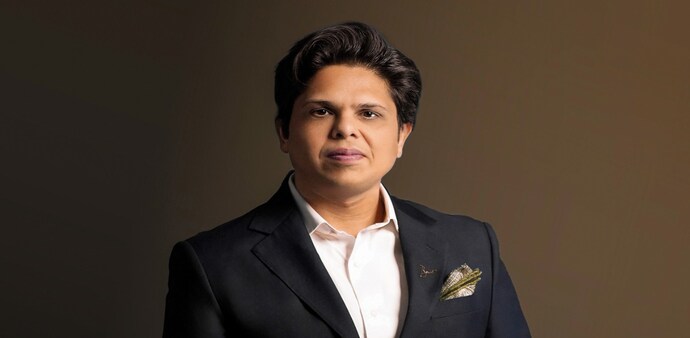
Ankur Aggarwal, Chairman & Founder, BNW Developments, on what's fueling Dubai’s surge, RAK's casino-led upside, his India plans and more.
- Feb 18, 2026,
- Updated Feb 18, 2026 5:13 PM IST
Dubai is in the midst of a sustained real estate upswing, driven by high-net-worth migration, significant global capital inflows, and the combined impact of speculation, investment demand, and end-user buying. The result is a market that continues to expand quickly. Within this landscape, Indian-origin real estate developers are scaling their presence across the UAE. One of the fastest-rising names is BNW Developments. Led by Chairman and Founder Ankur Aggarwal, the company’s last four to five years have seen sharp growth and a rapidly growing profile—further amplified by actor Vivek Oberoi’s association with the venture. Business Today met Agarwal in his Dubai office to understand what is powering BNW’s ambitions, and how it is positioning itself in a competitive market. Edited excerpts:
Why did you get into Dubai and its real estate sector?
Dubai is obvious because of multiple factors. A lot of people are choosing the city as their second home, as it is the safest country in the world. In real estate, particularly post Covid, Dubai has performed the best in the world—prices have gone up two to three times just in five years. It is going up one way, and the government is putting in a lot of effort to make it continue. In my opinion, it will not stop as people want to come here, unlike in the past when it was hard to convince the Western world to come to Dubai.
Is there a bubble or is this structurally different?
It is very simple. The UAE government, and not just Dubai, has taken a lot of initiatives to welcome new population into the country. The current population of Dubai is 3.8 million and given the kind of growth we are witnessing, the population will grow by two million in the next five years. We will need additional supply of around 500,000 houses to accommodate the influx. Supply is lower, and will have to increase.
Who are the buyers—investors, speculators, or end-users?
Basically, it all generates via tourism—last year we welcomed 2.5 times the total population. When people come to visit, they see Dubai as their second home and want to live here and invest in real estate because this is the safest option. There is very high demand for retail units by end-consumers, as well people who are looking to flip and make short-term money. It is a mix.
How do prices compare on a per-square-foot basis with other markets like Mumbai or Delhi NCR?
That is a very interesting question. I will take the example of Gurugram. So, the price per square feet there is on a super area basis. Buyers pay for super area but get a carpet area which is 30% lesser. Over here, it is as per usable area—there is no concept of super or carpet area.
What has the rate of appreciation been in the past three years?
From Covid to now, prices have already gone up two to three times and the kind of supply gap which we are seeing, it will be more. Dubai property prices are less only because it is reaching a saturation level which London, New York, Singapore, Monaco and other markets have already seen. Prices in the Tier 1 zone in London are around 3,000-4,000 pounds per square foot. We don’t have any property in Dubai which is at similar prices, despite the infrastructure here being better than London and New York. This is a journey which Dubai will eventually complete, and the people who buy here will reap the benefit. It was a bubble earlier, but after recent regulatory changes, it has become stable.
People of 200 nationalities buy property in Dubai—I haven’t seen any other place like this in the world. It is a global market.
Is Dubai still a cash market or has that changed?
It is not a cash market, that is a misconception. Dubai is a regulated market and there is a very strong anti-money laundering compliance system that has been implemented in the overall banking system of the UAE. Also, after the implementation of corporate tax and VAT, it has become more regulated.
What are your plans on the emirate of Ras Al Khaimah (RAK)?
The UAE gave permission to open the first casino of Middle East in a place called Al Marjan Island in Ras Al Khaimah. However, the infrastructure isn’t conducive for the expected influx of tourists. In 2022, we went to Ras Al Khaimah and asked the government for a plot that they offered us on a payment plan. We now have nine projects just in Al Marjan Island, and eight more in a new development in the downtown, and five more at Marjan Beach.
What are your India plans?
Our plan is to do all procurement, or as much as is possible, from India and to contribute to the economy and the Make-in-India plan. We are buying marble, tiles, bath and electrical fittings, home automation, etc., from the country.
Dubai is in the midst of a sustained real estate upswing, driven by high-net-worth migration, significant global capital inflows, and the combined impact of speculation, investment demand, and end-user buying. The result is a market that continues to expand quickly. Within this landscape, Indian-origin real estate developers are scaling their presence across the UAE. One of the fastest-rising names is BNW Developments. Led by Chairman and Founder Ankur Aggarwal, the company’s last four to five years have seen sharp growth and a rapidly growing profile—further amplified by actor Vivek Oberoi’s association with the venture. Business Today met Agarwal in his Dubai office to understand what is powering BNW’s ambitions, and how it is positioning itself in a competitive market. Edited excerpts:
Why did you get into Dubai and its real estate sector?
Dubai is obvious because of multiple factors. A lot of people are choosing the city as their second home, as it is the safest country in the world. In real estate, particularly post Covid, Dubai has performed the best in the world—prices have gone up two to three times just in five years. It is going up one way, and the government is putting in a lot of effort to make it continue. In my opinion, it will not stop as people want to come here, unlike in the past when it was hard to convince the Western world to come to Dubai.
Is there a bubble or is this structurally different?
It is very simple. The UAE government, and not just Dubai, has taken a lot of initiatives to welcome new population into the country. The current population of Dubai is 3.8 million and given the kind of growth we are witnessing, the population will grow by two million in the next five years. We will need additional supply of around 500,000 houses to accommodate the influx. Supply is lower, and will have to increase.
Who are the buyers—investors, speculators, or end-users?
Basically, it all generates via tourism—last year we welcomed 2.5 times the total population. When people come to visit, they see Dubai as their second home and want to live here and invest in real estate because this is the safest option. There is very high demand for retail units by end-consumers, as well people who are looking to flip and make short-term money. It is a mix.
How do prices compare on a per-square-foot basis with other markets like Mumbai or Delhi NCR?
That is a very interesting question. I will take the example of Gurugram. So, the price per square feet there is on a super area basis. Buyers pay for super area but get a carpet area which is 30% lesser. Over here, it is as per usable area—there is no concept of super or carpet area.
What has the rate of appreciation been in the past three years?
From Covid to now, prices have already gone up two to three times and the kind of supply gap which we are seeing, it will be more. Dubai property prices are less only because it is reaching a saturation level which London, New York, Singapore, Monaco and other markets have already seen. Prices in the Tier 1 zone in London are around 3,000-4,000 pounds per square foot. We don’t have any property in Dubai which is at similar prices, despite the infrastructure here being better than London and New York. This is a journey which Dubai will eventually complete, and the people who buy here will reap the benefit. It was a bubble earlier, but after recent regulatory changes, it has become stable.
People of 200 nationalities buy property in Dubai—I haven’t seen any other place like this in the world. It is a global market.
Is Dubai still a cash market or has that changed?
It is not a cash market, that is a misconception. Dubai is a regulated market and there is a very strong anti-money laundering compliance system that has been implemented in the overall banking system of the UAE. Also, after the implementation of corporate tax and VAT, it has become more regulated.
What are your plans on the emirate of Ras Al Khaimah (RAK)?
The UAE gave permission to open the first casino of Middle East in a place called Al Marjan Island in Ras Al Khaimah. However, the infrastructure isn’t conducive for the expected influx of tourists. In 2022, we went to Ras Al Khaimah and asked the government for a plot that they offered us on a payment plan. We now have nine projects just in Al Marjan Island, and eight more in a new development in the downtown, and five more at Marjan Beach.
What are your India plans?
Our plan is to do all procurement, or as much as is possible, from India and to contribute to the economy and the Make-in-India plan. We are buying marble, tiles, bath and electrical fittings, home automation, etc., from the country.