
Era of AI-led experimentation is over: Coforge's Sudhir Singh
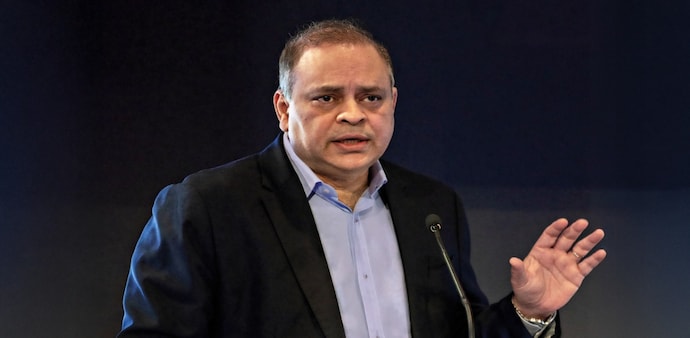
Sudhir Singh, CEO & Executive Director, Coforge, on AI-based innovations, transitions in the IT services industry, and more.
- Feb 2, 2026,
- Updated Feb 5, 2026 12:24 PM IST
AI is shaking up the foundations of India’s $285-billion IT services industry which employs close to six million people. What was once a manpower intensive, labour‑arbitrage model is now being tested by automation, chatbots, robots, AI‑driven engineering and Cloud‑native delivery. Amid this turbulence, a mid-tier Greater Noida & New Jersey headquartered tech services company, Coforge, made a sizeable acquisition—it bought Encora, a Silicon Valley AI‑native engineering firm in December 2025, from private equity firms Advent International and Warburg Pincus, in an all-stock transaction. Advent will join the Coforge board after the deal.
Founded in 1992 as NIIT Technologies, the company missed the outsourcing wave that propelled peers like Infosys and TCS into global prominence. For years, growth was modest, constrained by promoter focus on education. The inflection point came in 2017, when Sudhir Singh—an IIT (BHU) and IIM Calcutta alumnus with stints at Hindustan Lever, Infosys, and Genpact—took over as CEO. Singh’s mandate was clear: transform a mid‑tier player into a top contender.
Under Singh’s leadership, the company rebranded as Coforge in 2020, and the transformation has been striking, with significant growth in revenues (approx. 3.5x) and market cap (nearly 20x).
The Encora acquisition positions Coforge as a strong provider of AI solutions, with AI‑led product engineering, Cloud and data, expected to deliver $2 billion in revenue by FY27. From missing the outsourcing boom to betting big on AI, the company’s journey under Sudhir Singh, CEO and Executive Director, Coforge, is a case study in reinvention. In an interview with Business Today, Singh discusses AI-led disruptions, changing contours of business and more. Edited excerpts:
Sakshi: How do you see Indian IT firms repositioning themselves globally as AI reshapes the outsourcing narrative?
A: We believe the age of AI experimentation that we have all been looking at over the last three years is over. AI driven by Cloud and data is going to be instrumental in driving enterprise reinvention across the world.
We also believe that the next generation enterprises will have their business capabilities defined and executed by a combination of human and AI agents and all of this will have to be underlaid.
We see the industry at an inflection point. And even within that inflection point, we see that the first era of AI-led experimentation is over.
Shelley: Is AI akin to the Y2K opportunity?
A: This is going to be more selective. Y2K was, for lack of a better word, a commoditised opportunity. Speed, scale, and tactical elements were more important. AI is going to centre around two things—create new capabilities and also having the resolve internally for an organisation to change itself.
Sakshi: As far as India is concerned, how will AI impact outsourcing of work?
A: AI is creating three distinct marketplaces. There is a marketplace at the base level, which has frontier models. That’s not a marketplace that tech services firms will attack.
There is a middle market, which is more centered around tools for the AI ecosystem. That again is not a space we would directly like to play in. But it’s an ecosystem that we will have to create very strong relationships with, to create solutions. There is an overarching layer, which is the system integration/services layer.
Shelley: Do you believe AI will eventually replace large parts of IT services or will it augment human expertise in a way that creates new opportunities?
A: Any new technology that has come over the last 20 to 30 years has displaced certain pieces of work. Our belief is that AI plays for technology services from a client expenditure bucket that falls across two axes. There is a ‘run the business’ axis and there is an innovation axis. In the former axis, spending will keep contracting because AI is a very powerful technology. And it can drive efficiencies at scale.
Any CXO, if approached with a proactive solution to an existing business problem using the right AI tool, will always flex today because the innovation tech budget has become elastic. That’s how we see a big change having happened around spends.
Sakshi: In December, Coforge made a massive bet, acquiring Encora for $2.35 billion. Coforge is also targeting a $2 billion revenue from combined AI-led engineering, data and cloud by FY27. So how much of this is driven by AI native spending versus, say, migrating existing legacy budgets?
A: It’s a mix of both. The ground reality in the market, across enterprises, is that the data sets are fragmented and there is a patchwork infrastructure that exists.
Enterprises need someone who can modernise the infrastructure and also implement AI as one integrated approach. That’s where the whole digital native velocity getting married to enterprise-grade delivery maturity comes in. And that’s the space we think is ripe for disruption.
Shelley: Platforms like Anthropic Claude Cowork can help non-coders write code. AI is already writing around 30% of the code. How does that change the IT services narrative?
A: If you were to walk across the operating floor of tech services firms like Coforge and start counting the number of people who are writing bespoke code, which is what AI does exceptionally well, you will find that it is not a very big number. We are in the business of creating business solutions, integrating platforms. We are not, for the most part, into writing bespoke code.
So, I can’t for a second disagree with you around the fact that AI is an exceptional tool when it comes to writing code and the Anthropic example is very relevant.
But my submission is—that’s not all that we do. And second, there are just so many new service offerings that can get created by way of business solutions, by technology services providers that have the capability and, more importantly, the resolve to pivot.
Shelley: AI will shrink the ‘run the business’ budgets, the maintenance kind of tasks, the legacy tasks so to say, which fuel IT firms. How do you ensure that gains from new AI projects outpace the revenue lost to automated efficiencies?
A: By focusing equally on the innovation budget. You’re absolutely right, if the ‘run the business’ stays the same where it is right now, it will shrink. The innovation piece will always keep expanding. It’s the classical conversation that keeps happening around testing. Even if you go back 10 years, people have been saying that testing services revenues will fall. They aren’t falling, they’re growing pretty robustly.
So, the estate is expanding on the run side, and yes, efficiency will keep contracting it. But innovation is a massive spend bucket.
Shelley: We are also seeing geopolitical headwinds, visa issues, tariffs, etc. How are they impacting client spendings and the IT work they outsource to third-party providers?
A: I think there is a natural tendency to watch out for the risks associated with outsourcing and there is therefore the concomitant ask that is coming up for near-shore capabilities, and in many cases for onshore capabilities.
Shelley: How do you see the rise of Global Capability Centres or GCCs?
A: I would not necessarily see it as competition. There is obviously an element of competition, there is also the aspect around co-opting them and potentially looking at ways in which we can work with them.
Shelley: What would you say is the biggest challenge for the IT industry? Is it the GCCs? Is it the AI led disruption? Or is it the tariff-led policy uncertainty?
A: I would flip each of these and look at the opportunity as well. But if it’s only the challenge, then the lens that we’re looking at could possibly be geopolitical.
AI is an incredible opportunity for tech service providers. There are newer markets around the innovation budget, around the services layer, around the industry specialisation that opened up.
Shelley: Given the geopolitical and visa issues, are clients holding back spending? Is it impacting discretionary spending?
A: Discretionary technology budgets in calendar year 2026 seem to be more or less in line. They don’t seem to have contracted over calendar year 2025. If the question is, have they gone up materially, the answer is, no. But they also haven’t contracted. They have gone up possibly marginally. So things aren’t all doom and gloom.
@sakshibatra18
AI is shaking up the foundations of India’s $285-billion IT services industry which employs close to six million people. What was once a manpower intensive, labour‑arbitrage model is now being tested by automation, chatbots, robots, AI‑driven engineering and Cloud‑native delivery. Amid this turbulence, a mid-tier Greater Noida & New Jersey headquartered tech services company, Coforge, made a sizeable acquisition—it bought Encora, a Silicon Valley AI‑native engineering firm in December 2025, from private equity firms Advent International and Warburg Pincus, in an all-stock transaction. Advent will join the Coforge board after the deal.
Founded in 1992 as NIIT Technologies, the company missed the outsourcing wave that propelled peers like Infosys and TCS into global prominence. For years, growth was modest, constrained by promoter focus on education. The inflection point came in 2017, when Sudhir Singh—an IIT (BHU) and IIM Calcutta alumnus with stints at Hindustan Lever, Infosys, and Genpact—took over as CEO. Singh’s mandate was clear: transform a mid‑tier player into a top contender.
Under Singh’s leadership, the company rebranded as Coforge in 2020, and the transformation has been striking, with significant growth in revenues (approx. 3.5x) and market cap (nearly 20x).
The Encora acquisition positions Coforge as a strong provider of AI solutions, with AI‑led product engineering, Cloud and data, expected to deliver $2 billion in revenue by FY27. From missing the outsourcing boom to betting big on AI, the company’s journey under Sudhir Singh, CEO and Executive Director, Coforge, is a case study in reinvention. In an interview with Business Today, Singh discusses AI-led disruptions, changing contours of business and more. Edited excerpts:
Sakshi: How do you see Indian IT firms repositioning themselves globally as AI reshapes the outsourcing narrative?
A: We believe the age of AI experimentation that we have all been looking at over the last three years is over. AI driven by Cloud and data is going to be instrumental in driving enterprise reinvention across the world.
We also believe that the next generation enterprises will have their business capabilities defined and executed by a combination of human and AI agents and all of this will have to be underlaid.
We see the industry at an inflection point. And even within that inflection point, we see that the first era of AI-led experimentation is over.
Shelley: Is AI akin to the Y2K opportunity?
A: This is going to be more selective. Y2K was, for lack of a better word, a commoditised opportunity. Speed, scale, and tactical elements were more important. AI is going to centre around two things—create new capabilities and also having the resolve internally for an organisation to change itself.
Sakshi: As far as India is concerned, how will AI impact outsourcing of work?
A: AI is creating three distinct marketplaces. There is a marketplace at the base level, which has frontier models. That’s not a marketplace that tech services firms will attack.
There is a middle market, which is more centered around tools for the AI ecosystem. That again is not a space we would directly like to play in. But it’s an ecosystem that we will have to create very strong relationships with, to create solutions. There is an overarching layer, which is the system integration/services layer.
Shelley: Do you believe AI will eventually replace large parts of IT services or will it augment human expertise in a way that creates new opportunities?
A: Any new technology that has come over the last 20 to 30 years has displaced certain pieces of work. Our belief is that AI plays for technology services from a client expenditure bucket that falls across two axes. There is a ‘run the business’ axis and there is an innovation axis. In the former axis, spending will keep contracting because AI is a very powerful technology. And it can drive efficiencies at scale.
Any CXO, if approached with a proactive solution to an existing business problem using the right AI tool, will always flex today because the innovation tech budget has become elastic. That’s how we see a big change having happened around spends.
Sakshi: In December, Coforge made a massive bet, acquiring Encora for $2.35 billion. Coforge is also targeting a $2 billion revenue from combined AI-led engineering, data and cloud by FY27. So how much of this is driven by AI native spending versus, say, migrating existing legacy budgets?
A: It’s a mix of both. The ground reality in the market, across enterprises, is that the data sets are fragmented and there is a patchwork infrastructure that exists.
Enterprises need someone who can modernise the infrastructure and also implement AI as one integrated approach. That’s where the whole digital native velocity getting married to enterprise-grade delivery maturity comes in. And that’s the space we think is ripe for disruption.
Shelley: Platforms like Anthropic Claude Cowork can help non-coders write code. AI is already writing around 30% of the code. How does that change the IT services narrative?
A: If you were to walk across the operating floor of tech services firms like Coforge and start counting the number of people who are writing bespoke code, which is what AI does exceptionally well, you will find that it is not a very big number. We are in the business of creating business solutions, integrating platforms. We are not, for the most part, into writing bespoke code.
So, I can’t for a second disagree with you around the fact that AI is an exceptional tool when it comes to writing code and the Anthropic example is very relevant.
But my submission is—that’s not all that we do. And second, there are just so many new service offerings that can get created by way of business solutions, by technology services providers that have the capability and, more importantly, the resolve to pivot.
Shelley: AI will shrink the ‘run the business’ budgets, the maintenance kind of tasks, the legacy tasks so to say, which fuel IT firms. How do you ensure that gains from new AI projects outpace the revenue lost to automated efficiencies?
A: By focusing equally on the innovation budget. You’re absolutely right, if the ‘run the business’ stays the same where it is right now, it will shrink. The innovation piece will always keep expanding. It’s the classical conversation that keeps happening around testing. Even if you go back 10 years, people have been saying that testing services revenues will fall. They aren’t falling, they’re growing pretty robustly.
So, the estate is expanding on the run side, and yes, efficiency will keep contracting it. But innovation is a massive spend bucket.
Shelley: We are also seeing geopolitical headwinds, visa issues, tariffs, etc. How are they impacting client spendings and the IT work they outsource to third-party providers?
A: I think there is a natural tendency to watch out for the risks associated with outsourcing and there is therefore the concomitant ask that is coming up for near-shore capabilities, and in many cases for onshore capabilities.
Shelley: How do you see the rise of Global Capability Centres or GCCs?
A: I would not necessarily see it as competition. There is obviously an element of competition, there is also the aspect around co-opting them and potentially looking at ways in which we can work with them.
Shelley: What would you say is the biggest challenge for the IT industry? Is it the GCCs? Is it the AI led disruption? Or is it the tariff-led policy uncertainty?
A: I would flip each of these and look at the opportunity as well. But if it’s only the challenge, then the lens that we’re looking at could possibly be geopolitical.
AI is an incredible opportunity for tech service providers. There are newer markets around the innovation budget, around the services layer, around the industry specialisation that opened up.
Shelley: Given the geopolitical and visa issues, are clients holding back spending? Is it impacting discretionary spending?
A: Discretionary technology budgets in calendar year 2026 seem to be more or less in line. They don’t seem to have contracted over calendar year 2025. If the question is, have they gone up materially, the answer is, no. But they also haven’t contracted. They have gone up possibly marginally. So things aren’t all doom and gloom.
@sakshibatra18