
Expect further innovation in cancer therapies: AstraZeneca Pharma India’s Praveen Rao Akkinepally
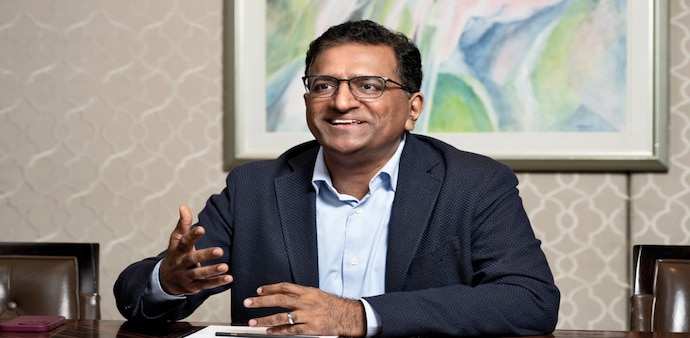
Praveen Rao Akkinepally, Country President and Managing Director, AstraZeneca Pharma India, on new launches, India's expanding role in the global innovation pipeline, and more.
- Nov 13, 2025,
- Updated Nov 25, 2025 12:25 PM IST
Global biopharmaceutical company AstraZeneca is strengthening focus on areas such as oncology, cardiovascular, renal, rare diseases, and the emerging GLP-1 segment. In September, it announced its third tranche of investment in the country over the past two years. Praveen Rao Akkinepally, Country President and Managing Director, AstraZeneca Pharma India, spoke exclusively to Business Today about the policy environment, the company’s priorities, and how India fits into its long-term global plans. Edited excerpts:
Q: How do you see AstraZeneca growing in India over the next three to five years?
A: At AstraZeneca, our mission is to push the boundaries of science to deliver life-changing medicines, and this mission guides everything we do. In India, we see a lot of unmet needs across disease areas that we are already addressing through our existing portfolio. We aim to continue doing so.
Our interest is in addressing those unmet needs, and scientific innovation gives us the confidence to do that. We anticipate being able to bring more innovative, life-saving medicines and indications for patients in India, whether it is oncology, cardiovascular disease, or respiratory conditions. We expect to transform patient outcomes across these therapy areas and expand our reach to serve more patients.
Q: You mentioned oncology. Can you share some innovations specific to India?
A: Our vision is to cure cancer and eliminate it as a cause of death. We are deeply committed because there is tremendous innovation happening in oncology. For example, in immuno-oncology—where the power of the body’s immune system is harnessed to fight cancer—we already have a strong presence. We expect further innovation in this field.
India has significant disease prevalence across major cancers such as lung, breast, and gastrointestinal.
Another exciting area of innovation is antibody-drug conjugates. We have launched one in the context of breast cancer, which remains a huge unmet need in India, and we intend to bring more of these conjugates to address key cancers.
Q: How is the pharma industry responding to the oncology challenge given the rising cancer burden in India?
A: We haven’t cured cancer yet. So, there is always room for more innovation. While there has been strong progress globally, the challenge remains in bringing these innovations to India quickly. Historically, a drug launched in the US would take several years to reach Indian patients, which was a gap we are now trying to close.
We are working hard to accelerate this process. In FY25, we secured nine regulatory approvals, helping us address patient needs. We can and must do even better, and this is a shared goal across the industry, to ensure that Indian patients get faster access to global innovations.
Q: Could you elaborate on the oncology pipeline AstraZeneca has built?
A: There are broadly two key approaches to treating cancer: destroying cancer cells directly and activating the immune system to do so. We have a strong portfolio addressing both.
Another major focus is antibody-drug conjugates, where we have one of the industry’s leading portfolios. Due to their precision, these treatments have shown great promise. We are also developing T-cell engagers and other new modalities.
Almost 90% of our portfolio is precision medicine, where treatments are targeted to patients most likely to benefit. Traditional chemotherapy used a one-size-fits-all approach, which caused severe side effects and limited improvements. Antibody-drug conjugates represent a shift towards precision medicine, and much of our current effort focuses on bringing these advances to oncology care.
Q: Rare diseases are another critical area for AstraZeneca. How do you see this market evolving in India?
A: Our purpose is to address needs, and rare diseases have long been underserved. This led to acquisition of Alexion, a leading rare disease company, in 2021. A key aim of that acquisition was to bring these therapies to emerging markets, including India.
Recently, we also launched Eculizumab, a well-recognised therapy in rare diseases. What is rare in other countries may not be so rare in India due to the large population. Some diseases may affect 30,000–40,000 patients here compared to only hundreds elsewhere.
The National Policy for Rare Diseases is a positive step, and we hope to contribute to such initiatives further.
Q: What are your growth drivers for the next three to five years? Are you planning organic or inorganic expansion?
A: We plan to introduce around 20 new medicines globally by 2030. Many of these will reach India over time depending on clinical progress.
Three major therapy areas will drive growth: oncology; biopharmaceuticals covering cardiovascular, renal, respiratory, and vaccines; and rare diseases, where we are investing for the long term. These three pillars will define our growth path over the next few years.
Q: Indian companies are focusing on biosimilars and generics, but AstraZeneca is investing in high-end therapies. Are there India-specific affordability models or collaborations to widen access?
A: Our strategy is not only to innovate but also to ensure that innovation is accessible. In India, enabling access to new therapies is central to our purpose. We continue to run patient assistance programmes and initiatives to help more patients receive treatment.
We also see value in partnerships. We have collaborated with several Indian pharma companies in the past and remain open to similar partnerships in the future.
Q: What about expanding the manufacturing base in India?
A: Manufacturing has been part of our India footprint for decades. While there are no immediate plans to add capacity, we review the landscape regularly. Our commitment to India remains strong.
Q: How is AstraZeneca using AI and technology in its operations and drug discovery?
A: We are investing significantly in AI across the organisation. In R&D, AI can help shorten discovery timelines by optimising candidate selection. It is already being used to streamline processes.
We are also improving digital literacy across our teams through internal learning programmes focused on understanding AI’s impact on healthcare. Additionally, we are collaborating with partners such as Qure.ai to use AI for detecting diseases such as lung cancer early.
Q: The government recently announced price cuts on several medicines. How do you view policy changes and the regulatory environment in India?
A: We welcome the government’s efforts to improve access to medicines. Recent GST reductions and customs duty changes are positive moves that will directly help patients.
Implementation can take time, but that is natural given the sector’s size. We remain committed to partnering with the government to streamline regulatory processes and accelerate drug availability.
@neetu_csharma
Global biopharmaceutical company AstraZeneca is strengthening focus on areas such as oncology, cardiovascular, renal, rare diseases, and the emerging GLP-1 segment. In September, it announced its third tranche of investment in the country over the past two years. Praveen Rao Akkinepally, Country President and Managing Director, AstraZeneca Pharma India, spoke exclusively to Business Today about the policy environment, the company’s priorities, and how India fits into its long-term global plans. Edited excerpts:
Q: How do you see AstraZeneca growing in India over the next three to five years?
A: At AstraZeneca, our mission is to push the boundaries of science to deliver life-changing medicines, and this mission guides everything we do. In India, we see a lot of unmet needs across disease areas that we are already addressing through our existing portfolio. We aim to continue doing so.
Our interest is in addressing those unmet needs, and scientific innovation gives us the confidence to do that. We anticipate being able to bring more innovative, life-saving medicines and indications for patients in India, whether it is oncology, cardiovascular disease, or respiratory conditions. We expect to transform patient outcomes across these therapy areas and expand our reach to serve more patients.
Q: You mentioned oncology. Can you share some innovations specific to India?
A: Our vision is to cure cancer and eliminate it as a cause of death. We are deeply committed because there is tremendous innovation happening in oncology. For example, in immuno-oncology—where the power of the body’s immune system is harnessed to fight cancer—we already have a strong presence. We expect further innovation in this field.
India has significant disease prevalence across major cancers such as lung, breast, and gastrointestinal.
Another exciting area of innovation is antibody-drug conjugates. We have launched one in the context of breast cancer, which remains a huge unmet need in India, and we intend to bring more of these conjugates to address key cancers.
Q: How is the pharma industry responding to the oncology challenge given the rising cancer burden in India?
A: We haven’t cured cancer yet. So, there is always room for more innovation. While there has been strong progress globally, the challenge remains in bringing these innovations to India quickly. Historically, a drug launched in the US would take several years to reach Indian patients, which was a gap we are now trying to close.
We are working hard to accelerate this process. In FY25, we secured nine regulatory approvals, helping us address patient needs. We can and must do even better, and this is a shared goal across the industry, to ensure that Indian patients get faster access to global innovations.
Q: Could you elaborate on the oncology pipeline AstraZeneca has built?
A: There are broadly two key approaches to treating cancer: destroying cancer cells directly and activating the immune system to do so. We have a strong portfolio addressing both.
Another major focus is antibody-drug conjugates, where we have one of the industry’s leading portfolios. Due to their precision, these treatments have shown great promise. We are also developing T-cell engagers and other new modalities.
Almost 90% of our portfolio is precision medicine, where treatments are targeted to patients most likely to benefit. Traditional chemotherapy used a one-size-fits-all approach, which caused severe side effects and limited improvements. Antibody-drug conjugates represent a shift towards precision medicine, and much of our current effort focuses on bringing these advances to oncology care.
Q: Rare diseases are another critical area for AstraZeneca. How do you see this market evolving in India?
A: Our purpose is to address needs, and rare diseases have long been underserved. This led to acquisition of Alexion, a leading rare disease company, in 2021. A key aim of that acquisition was to bring these therapies to emerging markets, including India.
Recently, we also launched Eculizumab, a well-recognised therapy in rare diseases. What is rare in other countries may not be so rare in India due to the large population. Some diseases may affect 30,000–40,000 patients here compared to only hundreds elsewhere.
The National Policy for Rare Diseases is a positive step, and we hope to contribute to such initiatives further.
Q: What are your growth drivers for the next three to five years? Are you planning organic or inorganic expansion?
A: We plan to introduce around 20 new medicines globally by 2030. Many of these will reach India over time depending on clinical progress.
Three major therapy areas will drive growth: oncology; biopharmaceuticals covering cardiovascular, renal, respiratory, and vaccines; and rare diseases, where we are investing for the long term. These three pillars will define our growth path over the next few years.
Q: Indian companies are focusing on biosimilars and generics, but AstraZeneca is investing in high-end therapies. Are there India-specific affordability models or collaborations to widen access?
A: Our strategy is not only to innovate but also to ensure that innovation is accessible. In India, enabling access to new therapies is central to our purpose. We continue to run patient assistance programmes and initiatives to help more patients receive treatment.
We also see value in partnerships. We have collaborated with several Indian pharma companies in the past and remain open to similar partnerships in the future.
Q: What about expanding the manufacturing base in India?
A: Manufacturing has been part of our India footprint for decades. While there are no immediate plans to add capacity, we review the landscape regularly. Our commitment to India remains strong.
Q: How is AstraZeneca using AI and technology in its operations and drug discovery?
A: We are investing significantly in AI across the organisation. In R&D, AI can help shorten discovery timelines by optimising candidate selection. It is already being used to streamline processes.
We are also improving digital literacy across our teams through internal learning programmes focused on understanding AI’s impact on healthcare. Additionally, we are collaborating with partners such as Qure.ai to use AI for detecting diseases such as lung cancer early.
Q: The government recently announced price cuts on several medicines. How do you view policy changes and the regulatory environment in India?
A: We welcome the government’s efforts to improve access to medicines. Recent GST reductions and customs duty changes are positive moves that will directly help patients.
Implementation can take time, but that is natural given the sector’s size. We remain committed to partnering with the government to streamline regulatory processes and accelerate drug availability.
@neetu_csharma