
“Further rate cuts depend on inflation”, says Economist Nagesh Kumar, external member of RBI’s Monetary Policy Committee
“Further rate cuts depend on inflation”, says Economist Nagesh Kumar, external member of RBI’s Monetary Policy Committee
Economist Nagesh Kumar, external member of the RBI’s Monetary Policy Committee, on why food inflation is more manageable this year but crude could be a concern
Surabhi
- Jul 7, 2025,
- Updated Jul 7, 2025 2:53 PM IST
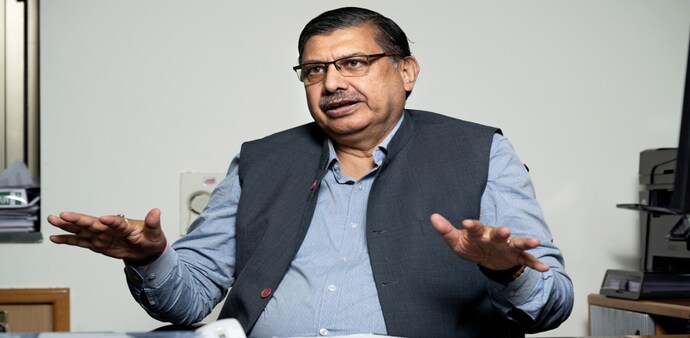
Nagesh kumar, external member of the Monetary Policy Committee of the Reserve Bank of India and Director and Chief Executive of the Institute for Studies in Industrial Development (ISID), says India remains a bright spot in the global economy because of its lower dependence on global trade, strong macro fundamentals and a diversified crude oil basket. In
Advertisement
An interview to Business Today, he explains why 6.5% GDP growth in FY26 remains achievable, despite elevated global crude oil prices. Edited excerpts:
The monetary policy committee has cut rates thrice in 2025, including a 50-basis-point cut in the last policy review. Is there space for further rate cuts, as is being factored in by the markets?
It depends on inflation. If inflation stays within 3% for instance, there would be more space for rate cuts, but if inflation shoots up to 4%, then there may be limited space. A positive real interest rate is needed to ensure that savings are not disincentivised. If you put your money in the bank and you’re not getting any return, whatever you’re getting is being impacted by inflation. Why would anybody put their savings in the bank? It needs to be ensured that a real, positive rate of return on investment is provided, and savings remain incentivised. Keeping that in mind, the repo rate should be higher than the rate of inflation so that there is a net real rate of interest.
Advertisement
Do you think the RBI rate cuts will finally nudge corporate profitability and investment plans in the ongoing fiscal year?
Yes, for some time, the corporate sector has been reporting good profits, but they are using those cash flows to deleverage balance sheets rather than investing. This is largely because of the heightened global uncertainty and some amount of subdued demand in urban areas. Hopefully, the rate cut that the RBI has delivered in the last four or five months of 100 basis points will help reduce the cost of capital, and we hope it will revive demand for consumer durables, housing and other goods; and by lowering the cost of capital, it will also help improve private investments. But it also depends on trade and tariff policies of the US. While the reciprocal tariffs are under suspension for 90 days and India is negotiating a trade agreement with the US, companies are waiting to see the position on July 9 to get more clarity on tariffs.
Advertisement
What do the ongoing conflicts, including the recent US-Iran-Israel war, spell for the economy?
It would certainly impact global economic prospects. The IMF(International Monetary Fund) had in April 2025 downgraded the global economic growth outlook to 2.8% from 3.4% earlier. World trade growth has been downgraded to -1.5% this year. I remember the days when world trade used to grow at 16% to 20% per year. These projections were before the latest war between the US, Israel, and Iran, which has fundamentally affected oil prices, which shot up during the war. We now have to see whether they will come back to the normal rate of $60 -65 per barrel and how soon that happens. There is a bit of uncertainty at this moment whether world trade and the global economic outlook will be further downgraded because of the effect of oil prices going up.
How do you see India’s GDP growth shaping in FY26? Do you think 6.5% GDP growth is achievable given the external uncertainties?
Advertisement
Yes, India continues to remain a bright spot in the global economy due to two to three reasons. One is that, relatively speaking, we are much less dependent on global trade. The Indian economy is largely driven by domestic consumption and domestic investment, which remain resilient. The government has massively boosted capital expenditure in the last couple of years, and it remains a major driver for economic growth. Second, while we are dependent on oil imports, we have managed to diversify our crude oil basket so that the average price for the Indian basket is generally lower than the open market rate. We are also working on domestic crude oil discoveries, and our emphasis on renewable energy is also helping curb the demand for imports. India’s foreign exchange reserves and other macro fundamentals remain robust. Services exports continue to show a promising trend. I do not see major issues in achieving a 6.5% growth rate in the current year, and although there are always some downside risks and upside risks, as things stand today, it should not be a big challenge to achieve 6.5% growth.
With crude prices expected to trend low and prospects of a normal monsoon, are inflationary pressures a thing of the past for now? Do you expect any concerns about vegetable prices that have been a problem of late?
Advertisement
I think food prices should be manageable this year because the monsoon is supposed to be better than normal, or above normal. The only worry about inflation is due to crude oil prices. If they continue to remain high for a long time, they will affect our inflation outlook. Hopefully, the ceasefire will help to bring prices down to a more comfortable level of $60-65 per barrel.
While the reciprocal tariffs by the US are on a 90-day pause for now, how can India make the best of this situation? Do you think a trade deal at all costs is advisable?
It depends on what is on the table, and obviously, the United States has a reputation for being a tough negotiator, and they have several issues that are not easy for a developing country like India to agree to. For instance, TRIPS+ provisions (The Agreement on Trade-Related Aspects of Intellectual Property Rights) can hurt our pharmaceutical sector. They also have genetically modified varieties of some crops that one should be willing to import. We have some concerns on that, as well as on labour standards, capital flows, and agriculture. But there are several things we can easily trade on. If a limited agreement is reached to begin with, focusing on exporting products of mutual interest and gradually expanding the scope, it would be mutually advantageous. For instance, India gets market access for labour-intensive products like textiles, garments, leather goods, gems and jewellery, toys, furniture, and processed foods, which are imported by the US in large quantities and where they do not have a comparative advantage. Our exports will not hurt their industries and jobs. Similarly, India is a major importer of oil, of which the US is a major exporter. There is also a possibility of importing some precious metals like gold from them. Certain goods that we import from other sources can be bought from the US.
Advertisement
India’s investment scenario continues to be seen as challenging by several foreign investors, and foreign direct investment (FDI) inflows have been on a downward trajectory. What can be done on this front to revive FDI inflows?
Gross FDI inflows have increased from $ 71 billion in FY23 and FY24 to $81 billion in FY25, which is impressive against the backdrop of the decline in global FDI inflows. This is a vote of confidence in India’s potential. FDI outflows have increased on two accounts: one is the repatriation of some FDI, and the other is outward investment from India. Outward investment from India should not be subtracted from FDI inflows, because it is a positive trend. It shows that Indian companies are becoming more international in their outlook, and this is the trend that should be encouraged. One should treat FDI inflows and outward FDI as separate categories, and both are good for the Indian economy. So, more FDI coming to India is a good thing. At the same time, more Indian companies investing abroad, expanding their global reach through outward investment, is also a positive thing. However, in the past year, some foreign companies repatriated their capital besides profits. That makes the FDI inflows in net terms seem rather low. But if new inflows continue to come in, there is nothing to worry about.
@surabhi_prasad
Nagesh kumar, external member of the Monetary Policy Committee of the Reserve Bank of India and Director and Chief Executive of the Institute for Studies in Industrial Development (ISID), says India remains a bright spot in the global economy because of its lower dependence on global trade, strong macro fundamentals and a diversified crude oil basket. In
Advertisement
An interview to Business Today, he explains why 6.5% GDP growth in FY26 remains achievable, despite elevated global crude oil prices. Edited excerpts:
The monetary policy committee has cut rates thrice in 2025, including a 50-basis-point cut in the last policy review. Is there space for further rate cuts, as is being factored in by the markets?
It depends on inflation. If inflation stays within 3% for instance, there would be more space for rate cuts, but if inflation shoots up to 4%, then there may be limited space. A positive real interest rate is needed to ensure that savings are not disincentivised. If you put your money in the bank and you’re not getting any return, whatever you’re getting is being impacted by inflation. Why would anybody put their savings in the bank? It needs to be ensured that a real, positive rate of return on investment is provided, and savings remain incentivised. Keeping that in mind, the repo rate should be higher than the rate of inflation so that there is a net real rate of interest.
Advertisement
Do you think the RBI rate cuts will finally nudge corporate profitability and investment plans in the ongoing fiscal year?
Yes, for some time, the corporate sector has been reporting good profits, but they are using those cash flows to deleverage balance sheets rather than investing. This is largely because of the heightened global uncertainty and some amount of subdued demand in urban areas. Hopefully, the rate cut that the RBI has delivered in the last four or five months of 100 basis points will help reduce the cost of capital, and we hope it will revive demand for consumer durables, housing and other goods; and by lowering the cost of capital, it will also help improve private investments. But it also depends on trade and tariff policies of the US. While the reciprocal tariffs are under suspension for 90 days and India is negotiating a trade agreement with the US, companies are waiting to see the position on July 9 to get more clarity on tariffs.
Advertisement
What do the ongoing conflicts, including the recent US-Iran-Israel war, spell for the economy?
It would certainly impact global economic prospects. The IMF(International Monetary Fund) had in April 2025 downgraded the global economic growth outlook to 2.8% from 3.4% earlier. World trade growth has been downgraded to -1.5% this year. I remember the days when world trade used to grow at 16% to 20% per year. These projections were before the latest war between the US, Israel, and Iran, which has fundamentally affected oil prices, which shot up during the war. We now have to see whether they will come back to the normal rate of $60 -65 per barrel and how soon that happens. There is a bit of uncertainty at this moment whether world trade and the global economic outlook will be further downgraded because of the effect of oil prices going up.
How do you see India’s GDP growth shaping in FY26? Do you think 6.5% GDP growth is achievable given the external uncertainties?
Advertisement
Yes, India continues to remain a bright spot in the global economy due to two to three reasons. One is that, relatively speaking, we are much less dependent on global trade. The Indian economy is largely driven by domestic consumption and domestic investment, which remain resilient. The government has massively boosted capital expenditure in the last couple of years, and it remains a major driver for economic growth. Second, while we are dependent on oil imports, we have managed to diversify our crude oil basket so that the average price for the Indian basket is generally lower than the open market rate. We are also working on domestic crude oil discoveries, and our emphasis on renewable energy is also helping curb the demand for imports. India’s foreign exchange reserves and other macro fundamentals remain robust. Services exports continue to show a promising trend. I do not see major issues in achieving a 6.5% growth rate in the current year, and although there are always some downside risks and upside risks, as things stand today, it should not be a big challenge to achieve 6.5% growth.
With crude prices expected to trend low and prospects of a normal monsoon, are inflationary pressures a thing of the past for now? Do you expect any concerns about vegetable prices that have been a problem of late?
Advertisement
I think food prices should be manageable this year because the monsoon is supposed to be better than normal, or above normal. The only worry about inflation is due to crude oil prices. If they continue to remain high for a long time, they will affect our inflation outlook. Hopefully, the ceasefire will help to bring prices down to a more comfortable level of $60-65 per barrel.
While the reciprocal tariffs by the US are on a 90-day pause for now, how can India make the best of this situation? Do you think a trade deal at all costs is advisable?
It depends on what is on the table, and obviously, the United States has a reputation for being a tough negotiator, and they have several issues that are not easy for a developing country like India to agree to. For instance, TRIPS+ provisions (The Agreement on Trade-Related Aspects of Intellectual Property Rights) can hurt our pharmaceutical sector. They also have genetically modified varieties of some crops that one should be willing to import. We have some concerns on that, as well as on labour standards, capital flows, and agriculture. But there are several things we can easily trade on. If a limited agreement is reached to begin with, focusing on exporting products of mutual interest and gradually expanding the scope, it would be mutually advantageous. For instance, India gets market access for labour-intensive products like textiles, garments, leather goods, gems and jewellery, toys, furniture, and processed foods, which are imported by the US in large quantities and where they do not have a comparative advantage. Our exports will not hurt their industries and jobs. Similarly, India is a major importer of oil, of which the US is a major exporter. There is also a possibility of importing some precious metals like gold from them. Certain goods that we import from other sources can be bought from the US.
Advertisement
India’s investment scenario continues to be seen as challenging by several foreign investors, and foreign direct investment (FDI) inflows have been on a downward trajectory. What can be done on this front to revive FDI inflows?
Gross FDI inflows have increased from $ 71 billion in FY23 and FY24 to $81 billion in FY25, which is impressive against the backdrop of the decline in global FDI inflows. This is a vote of confidence in India’s potential. FDI outflows have increased on two accounts: one is the repatriation of some FDI, and the other is outward investment from India. Outward investment from India should not be subtracted from FDI inflows, because it is a positive trend. It shows that Indian companies are becoming more international in their outlook, and this is the trend that should be encouraged. One should treat FDI inflows and outward FDI as separate categories, and both are good for the Indian economy. So, more FDI coming to India is a good thing. At the same time, more Indian companies investing abroad, expanding their global reach through outward investment, is also a positive thing. However, in the past year, some foreign companies repatriated their capital besides profits. That makes the FDI inflows in net terms seem rather low. But if new inflows continue to come in, there is nothing to worry about.
@surabhi_prasad
Read more!