
India expected to become self-sufficient in metals: Vedanta Group Founder Anil Agarwal
Anil Agarwal, Non-Executive Chairman, Vedanta Limited & Founder, Vedanta Group, on the historic demerger, the vision for the company, and more.
- Jul 7, 2026,
- Updated Jul 9, 2026 5:37 PM IST
There must be a handful of countries that Anil Agarwal has not visited but his favourite place remains aamchi (our) Mumbai. In his expansive home in South Mumbai’s Colaba, just around the corner of two bustling landmarks—the Gateway of India and the Taj Mahal Hotel—Agarwal is unusually calm after months of hard work that culminated in a successful restructuring of the group into five distinct entities.
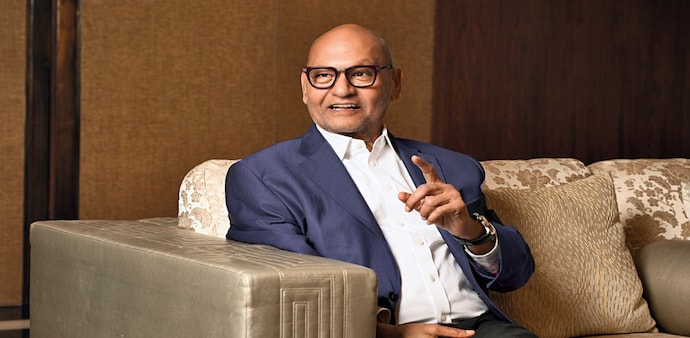
Dressed in a suit and slip-ons, he gently moves around in the large sofa. The conversation slips in and out of business. With a slight smile, he picks out key events from the past, links them to the present, and attempts to paint the future. Through all this, he does not even pause for a glass of water. In earthy Hindi laced with humour and common sense, Agarwal makes his point clear; that for his group, India is where the action is. Agarwal, who came to Mumbai from Patna in the mid-1970s with a box and a dream, has seen the natural resources story up close and personal. That ability to grasp the global picture and then determine a business opportunity in India can come only from years of experience. At 72, the Non-Executive Chairman, Vedanta Limited & Founder of Vedanta Group, is excited about how much more the company can do. Excerpts from a conversation with Business Today:
Q: What makes this moment so important for Vedanta?
A: This is a victory for everyone. Today, the whole world is looking at India very positively. Nothing is more important than economic development and we are at the forefront of that.
Natural resources are of huge strategic advantage to India. For whatever there is above the ground, there are attractive PLI schemes and India is generally self-sufficient. Now, it is about what lies below the ground, and a lot of that is imported.
I am a geologist by practice, and it is obvious that India has everything—gold, diamonds plus a strong historical background. I understand this since it’s the only thing I have done. I started with non-ferrous scrap and then moved to copper smelters, copper rods, before taking over government-owned companies (Balco and Hindustan Zinc).
There were a lot of failures along the way, but it only made me stronger like Dara Singh. A lot of it is because of my courage and the support I got from many people.
Let’s be clear about one thing. This will be a difficult journey for India, be it on oil and gas or bauxite or anything else. At the end of it, we are speaking of brick-and-mortar businesses. We lose foreign exchange in natural resources and that must change. We are confident that Vedanta is well-positioned to do all this.
Q: You have created scale in businesses over time. Is that one of your strengths even today?
A: We started manufacturing aluminium with a capacity of 1,00,000 tonnes per annum. Now we are at 3 million tonnes, and the plan is to move to 6 million tonnes. Think about it. We have increased our capacity by 60 times and there is still a shortage! In zinc, we began with 2 million tonnes and hit 1.1 million tonnes. Now, we want to get to 2.2 million tonnes. Coming to silver, it was imported, but now we will be self-sufficient. Just look at the fertiliser opportunity in Rajasthan, where we have rock phosphate and sulphuric acid. We are looking to build India’s largest fertiliser plant there.
Critical metals are super important. A lot of work is being done at HZL. Plus, we have taken mines for rare earth. We need support for all this. I am seated in a Ferrari at the start of the line waiting to take off. Our future is linked to natural resources. There are a few players today and we need a lot more.
A lot of people in the US and Canada have got into it. We cannot look at the industry with a negative mindset. It’s not bad to make money. I am confident India will become self-sufficient in the time to come.
Q: What has been the rationale for the demerger of Vedanta Ltd at this point?
A: Five is better than one (laughs). If you look at power, this is only the start, and I promise you the best is yet to come. In metals, we are the only producers of manganese and nickel. Vedanta owns mines in South Africa and that puts us in a position of great strength. Our steel business will have a meaningful role if India needs to get to a capacity of 300 million tonnes per annum.
Q: What do you have to say about Vedanta’s low-cost model?
A: Yes, there is a strong focus in this area, and we are very good at it. A big reason for that is that we put technology to very good use and that means getting 25-30% more from the same asset. We think far ahead of competition. Our approach is a combination of technology and human interface. Technology alone is a black box.
Technology gives me higher multiples and tremendous scale. We want to be in businesses where there is double-digit growth, with the investor at the forefront. We see a lot of healthy competition among companies; all are in the growth phase.
Q: Tell us a little bit about how you go about choosing a new business.
A: Our focus is on natural resources and beyond that, technology, will help existing businesses. There is no diversion for us at this point. The space is very clear—and that is natural resources.
Q: What is the broad vision for Vedanta businesses in India?
A: The story has just started. In aluminium, we will make alloys and reduce costs by at least 20%. In mining, we will use technology and sit in the control room. In each business, costs will reduce and production will increase.
Natural resources are our play, and with critical metals, the size and scale of the opportunity have never been bigger. This is a period of great transformation at Vedanta. Listing the companies throws open multiple options to raise money. To me, this is a new Vedanta.
Q: How concerned are you about the uncertain geopolitical environment and its impact on the global economy?
A: You have to just focus on your work. There will be challenges of debt going up but that is a part of the story. When you put money in manufacturing, changes will take place in technology or regulation or anything else.
One must be ready for all this. From a debt point of view, we raised $35 billion when there was no current account convertibility. It was our job to develop the Vedanta brand. We must create value and we have done that well. Vedanta is an ambassador in the international market.
Q: You have faced a big problem with the copper plant in Tamil Nadu. When do you expect production to start? (This plant is owned by Sterlite Copper, a Vedanta Group company. Housed in Thoothukudi, it has remained closed since May 2018. There were protests and a police firing incident that led to civilian deaths. Vedanta went legal with the issue and finally, the Supreme Court dismissed the review petition that sought reopening of the plant. The court’s view was that there were environmental violations).
A: Frankly, this is not the only issue on copper. Nobody wants copper production globally. It was the first copper smelter and now is not operational. I have learnt a lot from this development and also moved ahead. We have tried our best but that said, it is left to the government to decide.
As a responsible player, we have not defaulted on payment and I am hopeful something positive will emerge. At the same time, this is a very small part of all our Vedanta businesses. I can only say—let things happen when they have to. It is important to move on.
@krishnagopalan
There must be a handful of countries that Anil Agarwal has not visited but his favourite place remains aamchi (our) Mumbai. In his expansive home in South Mumbai’s Colaba, just around the corner of two bustling landmarks—the Gateway of India and the Taj Mahal Hotel—Agarwal is unusually calm after months of hard work that culminated in a successful restructuring of the group into five distinct entities.
Dressed in a suit and slip-ons, he gently moves around in the large sofa. The conversation slips in and out of business. With a slight smile, he picks out key events from the past, links them to the present, and attempts to paint the future. Through all this, he does not even pause for a glass of water. In earthy Hindi laced with humour and common sense, Agarwal makes his point clear; that for his group, India is where the action is. Agarwal, who came to Mumbai from Patna in the mid-1970s with a box and a dream, has seen the natural resources story up close and personal. That ability to grasp the global picture and then determine a business opportunity in India can come only from years of experience. At 72, the Non-Executive Chairman, Vedanta Limited & Founder of Vedanta Group, is excited about how much more the company can do. Excerpts from a conversation with Business Today:
Q: What makes this moment so important for Vedanta?
A: This is a victory for everyone. Today, the whole world is looking at India very positively. Nothing is more important than economic development and we are at the forefront of that.
Natural resources are of huge strategic advantage to India. For whatever there is above the ground, there are attractive PLI schemes and India is generally self-sufficient. Now, it is about what lies below the ground, and a lot of that is imported.
I am a geologist by practice, and it is obvious that India has everything—gold, diamonds plus a strong historical background. I understand this since it’s the only thing I have done. I started with non-ferrous scrap and then moved to copper smelters, copper rods, before taking over government-owned companies (Balco and Hindustan Zinc).
There were a lot of failures along the way, but it only made me stronger like Dara Singh. A lot of it is because of my courage and the support I got from many people.
Let’s be clear about one thing. This will be a difficult journey for India, be it on oil and gas or bauxite or anything else. At the end of it, we are speaking of brick-and-mortar businesses. We lose foreign exchange in natural resources and that must change. We are confident that Vedanta is well-positioned to do all this.
Q: You have created scale in businesses over time. Is that one of your strengths even today?
A: We started manufacturing aluminium with a capacity of 1,00,000 tonnes per annum. Now we are at 3 million tonnes, and the plan is to move to 6 million tonnes. Think about it. We have increased our capacity by 60 times and there is still a shortage! In zinc, we began with 2 million tonnes and hit 1.1 million tonnes. Now, we want to get to 2.2 million tonnes. Coming to silver, it was imported, but now we will be self-sufficient. Just look at the fertiliser opportunity in Rajasthan, where we have rock phosphate and sulphuric acid. We are looking to build India’s largest fertiliser plant there.
Critical metals are super important. A lot of work is being done at HZL. Plus, we have taken mines for rare earth. We need support for all this. I am seated in a Ferrari at the start of the line waiting to take off. Our future is linked to natural resources. There are a few players today and we need a lot more.
A lot of people in the US and Canada have got into it. We cannot look at the industry with a negative mindset. It’s not bad to make money. I am confident India will become self-sufficient in the time to come.
Q: What has been the rationale for the demerger of Vedanta Ltd at this point?
A: Five is better than one (laughs). If you look at power, this is only the start, and I promise you the best is yet to come. In metals, we are the only producers of manganese and nickel. Vedanta owns mines in South Africa and that puts us in a position of great strength. Our steel business will have a meaningful role if India needs to get to a capacity of 300 million tonnes per annum.
Q: What do you have to say about Vedanta’s low-cost model?
A: Yes, there is a strong focus in this area, and we are very good at it. A big reason for that is that we put technology to very good use and that means getting 25-30% more from the same asset. We think far ahead of competition. Our approach is a combination of technology and human interface. Technology alone is a black box.
Technology gives me higher multiples and tremendous scale. We want to be in businesses where there is double-digit growth, with the investor at the forefront. We see a lot of healthy competition among companies; all are in the growth phase.
Q: Tell us a little bit about how you go about choosing a new business.
A: Our focus is on natural resources and beyond that, technology, will help existing businesses. There is no diversion for us at this point. The space is very clear—and that is natural resources.
Q: What is the broad vision for Vedanta businesses in India?
A: The story has just started. In aluminium, we will make alloys and reduce costs by at least 20%. In mining, we will use technology and sit in the control room. In each business, costs will reduce and production will increase.
Natural resources are our play, and with critical metals, the size and scale of the opportunity have never been bigger. This is a period of great transformation at Vedanta. Listing the companies throws open multiple options to raise money. To me, this is a new Vedanta.
Q: How concerned are you about the uncertain geopolitical environment and its impact on the global economy?
A: You have to just focus on your work. There will be challenges of debt going up but that is a part of the story. When you put money in manufacturing, changes will take place in technology or regulation or anything else.
One must be ready for all this. From a debt point of view, we raised $35 billion when there was no current account convertibility. It was our job to develop the Vedanta brand. We must create value and we have done that well. Vedanta is an ambassador in the international market.
Q: You have faced a big problem with the copper plant in Tamil Nadu. When do you expect production to start? (This plant is owned by Sterlite Copper, a Vedanta Group company. Housed in Thoothukudi, it has remained closed since May 2018. There were protests and a police firing incident that led to civilian deaths. Vedanta went legal with the issue and finally, the Supreme Court dismissed the review petition that sought reopening of the plant. The court’s view was that there were environmental violations).
A: Frankly, this is not the only issue on copper. Nobody wants copper production globally. It was the first copper smelter and now is not operational. I have learnt a lot from this development and also moved ahead. We have tried our best but that said, it is left to the government to decide.
As a responsible player, we have not defaulted on payment and I am hopeful something positive will emerge. At the same time, this is a very small part of all our Vedanta businesses. I can only say—let things happen when they have to. It is important to move on.
@krishnagopalan