
Syngenta Crop Protection's Steven Hawkins on why there isn’t another market like India
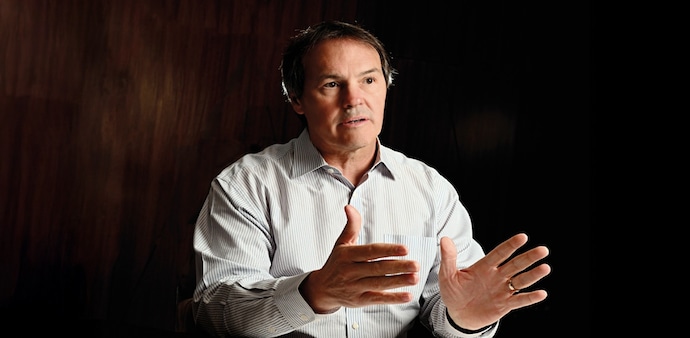
Steven Hawkins, President, Syngenta Crop Protection, on the opportunity for expanding agricultural exports and more.
- Oct 22, 2025,
- Updated Oct 22, 2025 10:31 AM IST
Over 75% business of the $17-billion Syngenta comes from crop protection. The company was formed in 2000 with the merger of Novartis and AstraZeneca’s agrichemical businesses. Steven Hawkins, President, Syngenta Crop Protection, talks with Business Today’s Krishna Gopalan about why he is optimistic about India, the effects of geopolitical turmoil, and the overall outlook for agriculture. Edited excerpts:
Q: Every multinational corporation, without exception, says India is a critical market. What makes the country unique for your business?
A: India, for sure, is a critical growth market. We must understand a few things here. The development and sophistication of agricultural production, or productivity as you call it, must catch up. That is still quite low in India compared to the global average. The good news is that it has improved. I have been coming to India for 25 years and the improvement from what it was in the past is evident. One key reason for this is that the industry has been able to bring in new technologies.
Of course, India is exporting agricultural products. That is a relatively new phenomenon and means the use of new technologies is really important. For the farmers, there is now access to better agronomic production.
Beyond all this, India is always special for many reasons. For one, it’s a huge country and the fact that it has more than 100 million small holders in agriculture is very interesting. Then, there is the fact of how rural India is connected to agriculture, with almost half of India’s population somehow involved in the sector. These dynamics make agriculture extremely critical to the country. I don’t think there’s another market like India.
Q: Are there markets that are similar?
A: I have spent 10 years in Asia. You can pick markets like Indonesia or maybe others in Southeast Asia that are big on tropical agriculture.
What stands out about India is the extent of small holdings, the size of the country, diversity of crops and markets, plus the monsoon-driven nature of agriculture. You have tropical, subtropical agriculture and crops all in one country. That is also quite unique to India.
I think the closest is Brazil with tropical agriculture and that’s actually good news for India because of the scale at which Brazil has grown. If you go back 20 years and look at how the Brazilian market has grown compared to India during that period, there is no comparison. Brazil is now the largest market in the world for agricultural inputs, and the multiples of growth have been significantly higher than in India. But that’s fine because it’s a large grower’s market and different from that perspective.
It’s good to have these two tropical markets for companies to access, because Brazil’s size will drive companies to bring innovation to farmers. That will include other tropical markets, and India can benefit from that. It would be difficult to develop a new active ingredient or other technologies just for India. But when you have Brazil in the mix, that’s a motivation for companies to bring technology here.
Q: What did Brazil do right? Is there a lesson for India?
A: One thing that’s fundamentally different is the size of the farms there and the ownership, which enable this growth. The other thing in Brazil is that they are very focused on specific field crops. For instance, corn and soybean, in particular, are exported to China. That makes it a relatively simple agronomic system.
In India, the local diets and the diversity of crops lead to a more complex system at that same level.
So, it’s not as essential as India but still critical enough that the government wants to facilitate the industry. Besides, it’s also about geopolitics and trade. I think that’s a good lesson for many countries, including India. If you really want to support an industry and think about the export opportunities India has in the future, then it is important for the government to facilitate that from a technology and trade perspective. You must support farmers—whether it’s education, stewardship, or in any other manner.
Q: Has the role of governments across countries, therefore, become more important?
A: If you look at Brazil or maybe Argentina or Mexico or Chile, once agriculture moves to a more export-driven orientation, the government needs to facilitate trade. They become an ambassador for the sector to support trade, keep things open, and make it easy.
The relationship between countries, from a trade perspective, develops from there. Depending on how the Indian government views the opportunity for agricultural exports and how critical it feels agriculture is for bringing in foreign exchange, it would absolutely [need to] support farmers.
Q: Given the challenging world dynamics today, how does that complicate things for your business?
A: There is no doubt that it is a very difficult and unpredictable scenario. At the same time, things are evolving to more identifiable spheres. For example, you have the smallholder markets, which have been obviously focused on domestic production and food security, but are again evolving. That’s a great opportunity for India. Today, there’s no reason why India cannot become a food exporter at scale. Look at South America, especially the field crop countries. These are completely export driven and very open to technology. It helps in driving their agricultural systems.
The US is unpredictable at the moment. Agricultural exports are becoming more difficult from the US. Then you have Europe, where they have shut down technology, constrained farming and still have a highly subsidised agricultural model. Growers are being asked to be less productive… Europe could become a food importer. Each sphere is evolving very differently.
Q: Drawing up a business plan at a time like this is a difficult proposition...
A: At Syngenta, we’re spending almost $1.5 billion on R&D across the world, that is, in over 100 countries and more than 100 crops. It takes about 13 years on average to bring a new product to the market. That means we have to think at least 15-20 years ahead. It’s not easy, but that is the nature of our business. We’re present only in agriculture and are committed to finding our way around it.
A short-term approach will not work. At the end of the day, this is about supporting food production in a manner that is environmentally friendly and that has a different level of responsibility. Like I said, this is the only business that we are in and, therefore, need to take a long-term view.
Q: Will we see instances of something that has worked well in Brazil moving to India?
A: There are many opportunities. It could be in insecticides, for example. We have Tymirium (a technology that provides long-lasting protection against the highly destructive plant-parasitic nematodes and soil-borne diseases) or Adepidyn (a technology for fungicide to improve plant health) that have been co-developed by markets that have similar challenges. Getting back to the example of Brazil, it’s critical that we have the input coming in from India, plus the work that we do locally to develop these products.
We will continue to invest in India and, in time, given what is taking in other global markets, the profile of India, not only as a market, but as a contributor to our research and development pipeline is only set to increase in the future.
Q: A lot of Syngenta’s growth globally has been through buyouts. What is the inorganic strategy for India?
A: India is a fragmented market,and I believe that it will take time to consolidate and that’s because of the nature of the products. They are so much more specific and specialised and, by design, there will be more companies and more products. It will be fragmented for a long time. Our strategy is to pick the options carefully. That said, we are very much in the growth mode. It’s not just about the money. There must be a right fit, the right market need and a good understanding of the customer needs.
@krishnagopalan
Over 75% business of the $17-billion Syngenta comes from crop protection. The company was formed in 2000 with the merger of Novartis and AstraZeneca’s agrichemical businesses. Steven Hawkins, President, Syngenta Crop Protection, talks with Business Today’s Krishna Gopalan about why he is optimistic about India, the effects of geopolitical turmoil, and the overall outlook for agriculture. Edited excerpts:
Q: Every multinational corporation, without exception, says India is a critical market. What makes the country unique for your business?
A: India, for sure, is a critical growth market. We must understand a few things here. The development and sophistication of agricultural production, or productivity as you call it, must catch up. That is still quite low in India compared to the global average. The good news is that it has improved. I have been coming to India for 25 years and the improvement from what it was in the past is evident. One key reason for this is that the industry has been able to bring in new technologies.
Of course, India is exporting agricultural products. That is a relatively new phenomenon and means the use of new technologies is really important. For the farmers, there is now access to better agronomic production.
Beyond all this, India is always special for many reasons. For one, it’s a huge country and the fact that it has more than 100 million small holders in agriculture is very interesting. Then, there is the fact of how rural India is connected to agriculture, with almost half of India’s population somehow involved in the sector. These dynamics make agriculture extremely critical to the country. I don’t think there’s another market like India.
Q: Are there markets that are similar?
A: I have spent 10 years in Asia. You can pick markets like Indonesia or maybe others in Southeast Asia that are big on tropical agriculture.
What stands out about India is the extent of small holdings, the size of the country, diversity of crops and markets, plus the monsoon-driven nature of agriculture. You have tropical, subtropical agriculture and crops all in one country. That is also quite unique to India.
I think the closest is Brazil with tropical agriculture and that’s actually good news for India because of the scale at which Brazil has grown. If you go back 20 years and look at how the Brazilian market has grown compared to India during that period, there is no comparison. Brazil is now the largest market in the world for agricultural inputs, and the multiples of growth have been significantly higher than in India. But that’s fine because it’s a large grower’s market and different from that perspective.
It’s good to have these two tropical markets for companies to access, because Brazil’s size will drive companies to bring innovation to farmers. That will include other tropical markets, and India can benefit from that. It would be difficult to develop a new active ingredient or other technologies just for India. But when you have Brazil in the mix, that’s a motivation for companies to bring technology here.
Q: What did Brazil do right? Is there a lesson for India?
A: One thing that’s fundamentally different is the size of the farms there and the ownership, which enable this growth. The other thing in Brazil is that they are very focused on specific field crops. For instance, corn and soybean, in particular, are exported to China. That makes it a relatively simple agronomic system.
In India, the local diets and the diversity of crops lead to a more complex system at that same level.
So, it’s not as essential as India but still critical enough that the government wants to facilitate the industry. Besides, it’s also about geopolitics and trade. I think that’s a good lesson for many countries, including India. If you really want to support an industry and think about the export opportunities India has in the future, then it is important for the government to facilitate that from a technology and trade perspective. You must support farmers—whether it’s education, stewardship, or in any other manner.
Q: Has the role of governments across countries, therefore, become more important?
A: If you look at Brazil or maybe Argentina or Mexico or Chile, once agriculture moves to a more export-driven orientation, the government needs to facilitate trade. They become an ambassador for the sector to support trade, keep things open, and make it easy.
The relationship between countries, from a trade perspective, develops from there. Depending on how the Indian government views the opportunity for agricultural exports and how critical it feels agriculture is for bringing in foreign exchange, it would absolutely [need to] support farmers.
Q: Given the challenging world dynamics today, how does that complicate things for your business?
A: There is no doubt that it is a very difficult and unpredictable scenario. At the same time, things are evolving to more identifiable spheres. For example, you have the smallholder markets, which have been obviously focused on domestic production and food security, but are again evolving. That’s a great opportunity for India. Today, there’s no reason why India cannot become a food exporter at scale. Look at South America, especially the field crop countries. These are completely export driven and very open to technology. It helps in driving their agricultural systems.
The US is unpredictable at the moment. Agricultural exports are becoming more difficult from the US. Then you have Europe, where they have shut down technology, constrained farming and still have a highly subsidised agricultural model. Growers are being asked to be less productive… Europe could become a food importer. Each sphere is evolving very differently.
Q: Drawing up a business plan at a time like this is a difficult proposition...
A: At Syngenta, we’re spending almost $1.5 billion on R&D across the world, that is, in over 100 countries and more than 100 crops. It takes about 13 years on average to bring a new product to the market. That means we have to think at least 15-20 years ahead. It’s not easy, but that is the nature of our business. We’re present only in agriculture and are committed to finding our way around it.
A short-term approach will not work. At the end of the day, this is about supporting food production in a manner that is environmentally friendly and that has a different level of responsibility. Like I said, this is the only business that we are in and, therefore, need to take a long-term view.
Q: Will we see instances of something that has worked well in Brazil moving to India?
A: There are many opportunities. It could be in insecticides, for example. We have Tymirium (a technology that provides long-lasting protection against the highly destructive plant-parasitic nematodes and soil-borne diseases) or Adepidyn (a technology for fungicide to improve plant health) that have been co-developed by markets that have similar challenges. Getting back to the example of Brazil, it’s critical that we have the input coming in from India, plus the work that we do locally to develop these products.
We will continue to invest in India and, in time, given what is taking in other global markets, the profile of India, not only as a market, but as a contributor to our research and development pipeline is only set to increase in the future.
Q: A lot of Syngenta’s growth globally has been through buyouts. What is the inorganic strategy for India?
A: India is a fragmented market,and I believe that it will take time to consolidate and that’s because of the nature of the products. They are so much more specific and specialised and, by design, there will be more companies and more products. It will be fragmented for a long time. Our strategy is to pick the options carefully. That said, we are very much in the growth mode. It’s not just about the money. There must be a right fit, the right market need and a good understanding of the customer needs.
@krishnagopalan