
“We have to reverse the perception that Bengal is anti-business”, says Bengal FM Swapan Dasgupta
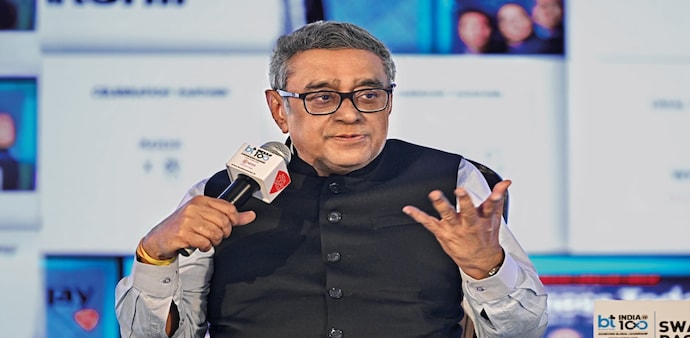
West Bengal Finance Minister Swapan Dasgupta, on restoring investor confidence and steering the state towards a business-first approach.
- Sep 17, 2026,
- Updated Sep 17, 2026 5:55 PM IST
For decades, Swapan Dasgupta made his name as a journalist, columnist, and conservative intellectual interpreting politics from the outside. Now, as West Bengal’s finance minister in the state’s first BJP government, he has been handed a rather different brief—helping turn around an economy he describes as having endured 50 years of uninterrupted decline.
The BJP’s emphatic mandate, Dasgupta argues, reflected not only anger at misgovernance but an impatience with Bengal’s prolonged economic stagnation, the flight of talent, and a reputation for hostility to business. His task, as he sees it, is as much psychological as fiscal—restore confidence, persuade entrepreneurs that Bengal has changed, and give young people
Reasons to build their futures at home.
Dasgupta is not promising miracles. Land remains scarce and politically fraught; state finances are strained; welfare expectations are deeply entrenched; and investor confidence, once lost, will take time to rebuild. But he sketches an unapologetically market-oriented agenda: simpler land laws, land pooling, deregulation, privatisation, better infrastructure, lower taxes, tighter compliance and a push to combine manufacturing with services and deep technology.
Underlying it all is a larger political ambition to recover Bengal’s old commercial self-belief. In this interview with Siddharth Zarabi, Dasgupta explains why the new government wants to overturn the perception that Bengalis are anti-business, why he believes welfare must become more targeted, and what it will take for West Bengal to aspire once again to be one of India’s fastest-growing states. Edited excerpts:
West Bengal occupied a very special place in India’s economy. It was once an industrial powerhouse. With the massive political mandate for the Bharatiya Janata Party to rule the state, can we hope for a new sunrise?
First, this mandate was partly a vote against misgovernance, but I think far more important was a degree of exasperation and impatience with a prolonged period of decline which West Bengal has been experiencing, for the past 50 years at least. The message that went out to the world was that if the Tatas cannot do business in West Bengal, then who are we to do anything?
And then there was the human cost. One of the things which I discovered when campaigning in the heart of South Calcutta was that it had become a city of old-age pensioners. So, we suffer from a huge skills deficit. Bengalis are in top places all over the world. They are very accomplished, but they are not in Bengal. They have taken a one-way ticket out.
One of the things which is very important is to address the perception that Bengalis particularly tend to be anti-business—we must reverse that.
You had 20% of the world’s GDP at one time coming from Bengal, particularly concentrated around Murshidabad because of the silk industry, which had great traction at that time.
Obviously, we are not going to get that back. But what I think you can get back is a combination of manufacturing, a boom in services and, most importantly, an injection of deep tech into West Bengal. We have lost out to Gujarat, to Karnataka, and Odisha.
Why should businesses choose to now invest in Bengal?
If you look at it purely in terms of incentives, there are states which do better. What we are saying is: we have an ecosystem in place, a skilled workforce and a reasonably liveable city. We also have a rich repository of people who know how to handle money, and a breed of indigenous potential entrepreneurs.
Should businesses be confident that if they seek large pieces of land, it will not become a flashpoint?
Land is always a ticklish issue in West Bengal because of two reasons: it is in short supply, and land holdings tend to be of handkerchief size.
And on top of that, there are infuriatingly complex land tenures created by the predecessor regimes under the Left. So, we first need a large amount of legislation to simplify it.
Secondly, outright acquisition by the government can be done in certain cases, but I think what is necessary is to have other forms of incentives. We are experimenting with land pooling arrangements, which have been successfully done in Gujarat and Haryana. But land is always going to be an issue in Bengal.
What needs to be done by your state when it comes to the restless Gen Z?
Youth unrest in West Bengal is not a new thing. What the rest of India is experiencing, we have been there before. What is important now is to create an environment where people can stay on. We need to improve the education infrastructure, create a greater degree of hunger for people to enrich themselves and have a greater degree of civic pride. The sense of hopelessness must be broken.
Industry seems to be more upbeat about growing their businesses now in the state. Is there a mood shift?
You are quite right in saying there is a mood shift among people, especially those who come from the business community. They are very optimistic and say, “Look, our energies, our impulses have been suppressed for a very long time. We want to give vent to our creativity.”
How do you see the issue of joblessness and welfare state spending?
It is a monumental challenge. There are certain expectations, and a sense of entitlement. How do you move from what was called a universal system of welfare to a means-tested, need-based system?
That sounds very nice in the dictionary of an economist, but you try and put that into practice, and you will find that those who get deprived, even though they may not need it, will shout the loudest. And this is precisely what is happening in parts of the state. So, this is going to be a problem, and the more you give, the more demands to raise it. It is no longer linked to the fact that these are unemployment benefits or that these are people who need welfare. It is now become something which you get as a matter of right.
As a result, some industries are experiencing labour shortages, just as there were farm-labour shortages at one time in northern India.
As the finance minister, what is your view on how much more the welfare state can expand?
I have inherited what might be called an obscene amount of public debt of over Rs 8 lakh crore. We must think of imaginative solutions—maybe some off-budget approaches might be one which politicians are very wary of adopting because they are reluctant to take financial strategies which are a little different from the rest. This is a problem. Our political class is very conservative in its approach.
We must do much more deregulation and privatisation. We need to leverage our existing dead assets in a way to get the state budget into a healthy position. State finances are not healthy, and if we can turn them around, then we can create greater incentives.
One of the problems is that the previous government, in its twilight days, did something remarkably shortsighted and damaging. They not only ended all incentives which were given to industry, but they did it with retrospective effect. We are now burdened with a huge liability.
As a result, sooner or later we are going to get courts awarding huge amounts of damages. As it is, the courts have awarded huge amounts to the Tatas for the Singur fiasco. They have awarded a huge amount to Haldia Petrochemicals. So, we have got to sort all this out.
Raising taxes is a retrograde method. I am a believer in the Laffer curve—the lower the taxes, the more you concentrate on compliance rather than anything else.
What about rationalising taxes further, for example, on goods and services?
I have not attended my first GST Council meeting yet. I think simplification of GST is very important because in Bengal, it has become a lawyer’s delight. And secondly, discretionary powers, which are still vested in a lot of officers, should not exist.
Can Bengal become a growth engine for India once again?
Well, we certainly hope so. We want to and are trying our best to, at least, inculcate that sense of tradition in the youth, to say, “Look, you people are not anti-business. You have a rich tradition, a heritage of business.”
And I think once that pride is inculcated, we hope we will see some results. Maybe if, in the next four years, we can register the highest growth rate in India, I think pride will return.
@szarabi
For decades, Swapan Dasgupta made his name as a journalist, columnist, and conservative intellectual interpreting politics from the outside. Now, as West Bengal’s finance minister in the state’s first BJP government, he has been handed a rather different brief—helping turn around an economy he describes as having endured 50 years of uninterrupted decline.
The BJP’s emphatic mandate, Dasgupta argues, reflected not only anger at misgovernance but an impatience with Bengal’s prolonged economic stagnation, the flight of talent, and a reputation for hostility to business. His task, as he sees it, is as much psychological as fiscal—restore confidence, persuade entrepreneurs that Bengal has changed, and give young people
Reasons to build their futures at home.
Dasgupta is not promising miracles. Land remains scarce and politically fraught; state finances are strained; welfare expectations are deeply entrenched; and investor confidence, once lost, will take time to rebuild. But he sketches an unapologetically market-oriented agenda: simpler land laws, land pooling, deregulation, privatisation, better infrastructure, lower taxes, tighter compliance and a push to combine manufacturing with services and deep technology.
Underlying it all is a larger political ambition to recover Bengal’s old commercial self-belief. In this interview with Siddharth Zarabi, Dasgupta explains why the new government wants to overturn the perception that Bengalis are anti-business, why he believes welfare must become more targeted, and what it will take for West Bengal to aspire once again to be one of India’s fastest-growing states. Edited excerpts:
West Bengal occupied a very special place in India’s economy. It was once an industrial powerhouse. With the massive political mandate for the Bharatiya Janata Party to rule the state, can we hope for a new sunrise?
First, this mandate was partly a vote against misgovernance, but I think far more important was a degree of exasperation and impatience with a prolonged period of decline which West Bengal has been experiencing, for the past 50 years at least. The message that went out to the world was that if the Tatas cannot do business in West Bengal, then who are we to do anything?
And then there was the human cost. One of the things which I discovered when campaigning in the heart of South Calcutta was that it had become a city of old-age pensioners. So, we suffer from a huge skills deficit. Bengalis are in top places all over the world. They are very accomplished, but they are not in Bengal. They have taken a one-way ticket out.
One of the things which is very important is to address the perception that Bengalis particularly tend to be anti-business—we must reverse that.
You had 20% of the world’s GDP at one time coming from Bengal, particularly concentrated around Murshidabad because of the silk industry, which had great traction at that time.
Obviously, we are not going to get that back. But what I think you can get back is a combination of manufacturing, a boom in services and, most importantly, an injection of deep tech into West Bengal. We have lost out to Gujarat, to Karnataka, and Odisha.
Why should businesses choose to now invest in Bengal?
If you look at it purely in terms of incentives, there are states which do better. What we are saying is: we have an ecosystem in place, a skilled workforce and a reasonably liveable city. We also have a rich repository of people who know how to handle money, and a breed of indigenous potential entrepreneurs.
Should businesses be confident that if they seek large pieces of land, it will not become a flashpoint?
Land is always a ticklish issue in West Bengal because of two reasons: it is in short supply, and land holdings tend to be of handkerchief size.
And on top of that, there are infuriatingly complex land tenures created by the predecessor regimes under the Left. So, we first need a large amount of legislation to simplify it.
Secondly, outright acquisition by the government can be done in certain cases, but I think what is necessary is to have other forms of incentives. We are experimenting with land pooling arrangements, which have been successfully done in Gujarat and Haryana. But land is always going to be an issue in Bengal.
What needs to be done by your state when it comes to the restless Gen Z?
Youth unrest in West Bengal is not a new thing. What the rest of India is experiencing, we have been there before. What is important now is to create an environment where people can stay on. We need to improve the education infrastructure, create a greater degree of hunger for people to enrich themselves and have a greater degree of civic pride. The sense of hopelessness must be broken.
Industry seems to be more upbeat about growing their businesses now in the state. Is there a mood shift?
You are quite right in saying there is a mood shift among people, especially those who come from the business community. They are very optimistic and say, “Look, our energies, our impulses have been suppressed for a very long time. We want to give vent to our creativity.”
How do you see the issue of joblessness and welfare state spending?
It is a monumental challenge. There are certain expectations, and a sense of entitlement. How do you move from what was called a universal system of welfare to a means-tested, need-based system?
That sounds very nice in the dictionary of an economist, but you try and put that into practice, and you will find that those who get deprived, even though they may not need it, will shout the loudest. And this is precisely what is happening in parts of the state. So, this is going to be a problem, and the more you give, the more demands to raise it. It is no longer linked to the fact that these are unemployment benefits or that these are people who need welfare. It is now become something which you get as a matter of right.
As a result, some industries are experiencing labour shortages, just as there were farm-labour shortages at one time in northern India.
As the finance minister, what is your view on how much more the welfare state can expand?
I have inherited what might be called an obscene amount of public debt of over Rs 8 lakh crore. We must think of imaginative solutions—maybe some off-budget approaches might be one which politicians are very wary of adopting because they are reluctant to take financial strategies which are a little different from the rest. This is a problem. Our political class is very conservative in its approach.
We must do much more deregulation and privatisation. We need to leverage our existing dead assets in a way to get the state budget into a healthy position. State finances are not healthy, and if we can turn them around, then we can create greater incentives.
One of the problems is that the previous government, in its twilight days, did something remarkably shortsighted and damaging. They not only ended all incentives which were given to industry, but they did it with retrospective effect. We are now burdened with a huge liability.
As a result, sooner or later we are going to get courts awarding huge amounts of damages. As it is, the courts have awarded huge amounts to the Tatas for the Singur fiasco. They have awarded a huge amount to Haldia Petrochemicals. So, we have got to sort all this out.
Raising taxes is a retrograde method. I am a believer in the Laffer curve—the lower the taxes, the more you concentrate on compliance rather than anything else.
What about rationalising taxes further, for example, on goods and services?
I have not attended my first GST Council meeting yet. I think simplification of GST is very important because in Bengal, it has become a lawyer’s delight. And secondly, discretionary powers, which are still vested in a lot of officers, should not exist.
Can Bengal become a growth engine for India once again?
Well, we certainly hope so. We want to and are trying our best to, at least, inculcate that sense of tradition in the youth, to say, “Look, you people are not anti-business. You have a rich tradition, a heritage of business.”
And I think once that pride is inculcated, we hope we will see some results. Maybe if, in the next four years, we can register the highest growth rate in India, I think pride will return.
@szarabi