
IPO boom is structural, mega IPOs to test liquidity; valuation key, says Pantomath’s Mahavir Lunawat
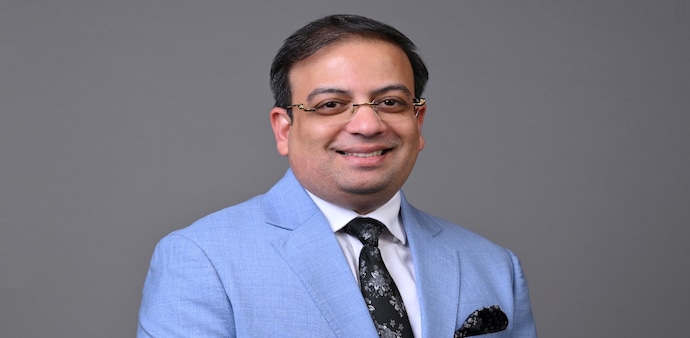
Pantomath Capital CMD Mahavir Lunawat discusses India’s IPO boom, mega issues, institutional liquidity, valuations, block deals and equity-market risks.
- Sep 4, 2026,
- Updated Sep 4, 2026 1:13 PM IST
India’s IPO market is entering a structurally stronger phase, backed by deeper domestic liquidity, rising institutional participation and growing corporate capital needs. However, a swelling pipeline of mega issues could test how efficiently capital is allocated across large, mid- and small-cap offerings. In an interaction, Mahavir Lunawat, CMD of Pantomath Capital, discusses IPO absorption, valuations, block deals, liquidity and risks for Indian equities. Read the edited excerpts:
BT: India’s IPO pipeline has become exceptionally large, with several mega issues lined up. Do you believe the current primary-market boom is structural, or are we entering a phase where supply could eventually outpace investor demand?
Lunawat: I would view the current primary-market momentum as predominantly structural rather than purely sentiment-driven. India has moved into a phase where companies across sectors and stages of maturity are increasingly looking at public markets as a source of long-term capital, while promoters and existing investors are also using the market to unlock value.
The size of the IPO pipeline is itself a reflection of this structural shift. India has a much deeper pool of domestic capital today, greater retail participation, stronger institutional participation and a much broader acceptance of equities as an asset class.
I would not characterize the current situation as one where supply will outpace demand. For India to move towards a $10 trillion economy by 2030, the financial ecosystem will also have to scale substantially. Capital formation is already rising, with gross fixed capital formation at 34.3% of GDP in the first quarter of FY27, while private-sector capital investment has also accelerated.
India will therefore need a significantly larger and more vibrant equity-capital market to finance this next phase of growth. We believe the country needs to be raising at least Rs 4 lakh crore through IPOs every year as it moves towards the $10 trillion GDP ambition. This should not be seen merely as a target for the IPO industry; it is part of the broader requirement to deepen equity capitalisations and reduce excessive dependence on leverage as the economy expands.
The important point is that this does not mean every company will be able to raise capital at any valuation. A large pipeline does not imply that the entire supply will be absorbed indiscriminately. The market has a natural price-discovery mechanism.
Companies with strong fundamentals, credible management, sustainable growth prospects and sensible valuations will continue to attract capital, while weaker propositions will have to moderate valuations or defer their offerings.
Therefore, I would not see the current IPO boom as a temporary supply-side phenomenon. Rather, we are entering a phase where the size of India's economy, its corporate sector and its capital markets will all have to expand together. The next stage will be less about whether there is enough demand and more about how efficiently capital gets allocated across companies and sectors.
BT: Jio Platforms and NSE could potentially redefine the scale of India’s IPO market. How do you expect investors to absorb such large issues, and could these IPOs crowd out liquidity from smaller and mid-sized offerings?
Lunawat: Large IPOs will certainly test the depth of India's capital markets. But I would distinguish between the market's ability to absorb large issues and the impact such issues can have on the allocation of capital across the primary market.
Institutional investors operate within defined investment frameworks largely inclined towards a certain size of the businesses, with limits around portfolio concentration, liquidity, market capitalization and risk. When a large company comes to the market, even a relatively small portfolio allocation can translate into a very significant absolute investment.
Consequently, a large IPO can absorb a disproportionate share of incremental institutional liquidity during its subscription period.
This is where the impact on smaller IPOs becomes particularly relevant. A fund may be willing to allocate 1–2% to a large, highly liquid company, but it cannot necessarily replicate that allocation across a number of smaller companies because of liquidity constraints, investment framework, portfolio-concentration considerations and the ability to deploy meaningful ticket sizes.
This does not mean smaller IPOs will lack demand. Well-priced companies with strong fundamentals can continue to attract investors. But their ability to secure meaningful institutional allocations can become more challenging when multiple mega issues are launched together.
This is why sequencing and timing will become increasingly important. The Indian market has sufficient depth to absorb large issues, but it may not absorb every issue with equal ease at the same time. For small caps, differentiation, valuation and timing will therefore become even more important.
BT: Domestic institutional and retail liquidity has been a major pillar of India’s capital markets. Is the current liquidity pool deep enough to support a wave of Rs 1,00,000 crore IPOs without putting significant pressure on the secondary market?
Lunawat: India's domestic liquidity pool has become considerably deeper, but I would avoid looking at this question purely through the lens of the aggregate amount of money available. What matters is how that liquidity is allocated.
Institutional capital is not fungible across all companies. A large-cap fund, a mid-cap fund and a small-cap fund operates under different mandates and investment constraints. Similarly, an institution may be comfortable deploying a large ticket into a highly liquid large IPO but may not be able to deploy the same absolute amount into a small issue because the post-listing liquidity and portfolio-risk profile are very different.
At the same time, India's retail participation and domestic institutional flows provide a strong counterbalance. I therefore believe the market can support substantially higher IPO volumes, but the absorption will not be uniform across the market-cap spectrum.
A Rs 2 lakh crore primary-market pipeline is not inherently a problem. The bigger question is how that Rs 1 lakh crore is distributed across the market and whether primary issuance is taking place alongside healthy secondary-market liquidity.
BT: With investors becoming increasingly selective, what separates an IPO that deserves a premium valuation from one that is simply benefiting from strong market sentiment? Are IPO valuations currently ahead of fundamentals in certain sectors?
Lunawat: The distinction is ultimately earnings quality versus narrative quality. A company deserves a premium when that premium is supported by commensurate return on capital, sustainable revenue growth, strong cash-flow generation, competitive advantages, scalable business economics and a credible path to compounding earnings over several years.
A strong market environment can certainly improve the valuation multiple investors are willing to pay, but sentiment cannot substitute for fundamentals indefinitely.
We are therefore likely to witness greater differentiation between companies going forward. Businesses with strong fundamentals and structural growth opportunities can command premium valuations; companies where the investment thesis is predominantly based on market momentum will face greater scrutiny.
There are certainly pockets of the market where valuations appear demanding relative to near-term fundamentals, particularly where expectations of future growth are already substantially reflected in prices.
BT: Block and bulk deals have surged sharply, with August witnessing around Rs 80,000 crore of such transactions. Is this primarily a sign of healthy institutional liquidity and profit-taking, or should investors read it as an indication that some large investors are becoming cautious about valuations?
Lunawat: I would interpret the increase in block and bulk transactions as a combination of healthy liquidity and rational monetization, rather than as a broad signal of institutional risk aversion.
The ability of promoters, private-equity investors and other large shareholders to monetize holdings is actually an important characteristic of a mature capital market. At the same time, the fact that this supply is being absorbed by mutual funds, insurers, pension funds and other institutional investors demonstrates that there is depth on the other side of the transaction.
So, I would call it a healthy market signal, but one that also deserves to be read carefully. When existing investors monetize after a strong recovery in mid- and small-cap stocks, it indicates that valuations have reached levels at which some long-term holders are comfortable crystallizing returns.
That does not necessarily mean they are bearish on the companies or on India. Different investors operate with different return horizons and portfolio objectives.
However, elevated block-deal activity does reinforce one message: investors should not extrapolate recent valuation expansion indefinitely. As the market matures, we should expect greater two-way activity, with some investors realizing gains while others deploy capital based on their assessment of future earnings.
BT: After the strong recovery in mid- and small-caps and continued IPO activity, where do you see the biggest opportunity—and the biggest risk—for Indian equities over the next 12–18 months? Could stretched valuations and heavy primary-market supply become a trigger for a broader correction?
Lunawat: Over the next 12–18 months, I see the biggest opportunity in businesses participating in India's formalization, digitization, financialization and infrastructure-led growth, particularly where earnings growth is supported by genuine improvements in productivity, market share and cash flows.
India's structural story remains compelling. What is changing is the price investors are paying for that growth.
The biggest risk, therefore, is not the IPO pipeline by itself. The risk is a combination of stretched valuations, aggressive earnings expectations and excessive liquidity chasing a limited set of perceived growth opportunities.
A heavy primary-market calendar can amplify that risk if investors begin funding new issues by reducing secondary-market exposure. This could be particularly relevant for smaller and mid-sized companies if institutional capital gets temporarily concentrated in mega IPOs.
But I would not expect the IPO pipeline alone to trigger a broad correction. A meaningful correction would more likely require a combination of factors—earnings disappointments, a sustained tightening of global liquidity, significant foreign outflows, geopolitical shocks or a sharp compression in valuation multiples.
The Indian equity market is becoming deeper and more sophisticated. We should therefore expect greater dispersion rather than simply a uniform market direction.
Good businesses with earnings visibility, strong balance sheets and sustainable competitive advantages can continue to perform even in a more selective market, while companies whose valuations have run materially ahead of fundamentals may see meaningful consolidation.
In short, I remain constructive on the long-term trajectory of Indian equities, but the next phase is likely to be more about stock selection, valuation discipline and earnings visibility than about indiscriminate market-wide expansion.
India’s IPO market is entering a structurally stronger phase, backed by deeper domestic liquidity, rising institutional participation and growing corporate capital needs. However, a swelling pipeline of mega issues could test how efficiently capital is allocated across large, mid- and small-cap offerings. In an interaction, Mahavir Lunawat, CMD of Pantomath Capital, discusses IPO absorption, valuations, block deals, liquidity and risks for Indian equities. Read the edited excerpts:
BT: India’s IPO pipeline has become exceptionally large, with several mega issues lined up. Do you believe the current primary-market boom is structural, or are we entering a phase where supply could eventually outpace investor demand?
Lunawat: I would view the current primary-market momentum as predominantly structural rather than purely sentiment-driven. India has moved into a phase where companies across sectors and stages of maturity are increasingly looking at public markets as a source of long-term capital, while promoters and existing investors are also using the market to unlock value.
The size of the IPO pipeline is itself a reflection of this structural shift. India has a much deeper pool of domestic capital today, greater retail participation, stronger institutional participation and a much broader acceptance of equities as an asset class.
I would not characterize the current situation as one where supply will outpace demand. For India to move towards a $10 trillion economy by 2030, the financial ecosystem will also have to scale substantially. Capital formation is already rising, with gross fixed capital formation at 34.3% of GDP in the first quarter of FY27, while private-sector capital investment has also accelerated.
India will therefore need a significantly larger and more vibrant equity-capital market to finance this next phase of growth. We believe the country needs to be raising at least Rs 4 lakh crore through IPOs every year as it moves towards the $10 trillion GDP ambition. This should not be seen merely as a target for the IPO industry; it is part of the broader requirement to deepen equity capitalisations and reduce excessive dependence on leverage as the economy expands.
The important point is that this does not mean every company will be able to raise capital at any valuation. A large pipeline does not imply that the entire supply will be absorbed indiscriminately. The market has a natural price-discovery mechanism.
Companies with strong fundamentals, credible management, sustainable growth prospects and sensible valuations will continue to attract capital, while weaker propositions will have to moderate valuations or defer their offerings.
Therefore, I would not see the current IPO boom as a temporary supply-side phenomenon. Rather, we are entering a phase where the size of India's economy, its corporate sector and its capital markets will all have to expand together. The next stage will be less about whether there is enough demand and more about how efficiently capital gets allocated across companies and sectors.
BT: Jio Platforms and NSE could potentially redefine the scale of India’s IPO market. How do you expect investors to absorb such large issues, and could these IPOs crowd out liquidity from smaller and mid-sized offerings?
Lunawat: Large IPOs will certainly test the depth of India's capital markets. But I would distinguish between the market's ability to absorb large issues and the impact such issues can have on the allocation of capital across the primary market.
Institutional investors operate within defined investment frameworks largely inclined towards a certain size of the businesses, with limits around portfolio concentration, liquidity, market capitalization and risk. When a large company comes to the market, even a relatively small portfolio allocation can translate into a very significant absolute investment.
Consequently, a large IPO can absorb a disproportionate share of incremental institutional liquidity during its subscription period.
This is where the impact on smaller IPOs becomes particularly relevant. A fund may be willing to allocate 1–2% to a large, highly liquid company, but it cannot necessarily replicate that allocation across a number of smaller companies because of liquidity constraints, investment framework, portfolio-concentration considerations and the ability to deploy meaningful ticket sizes.
This does not mean smaller IPOs will lack demand. Well-priced companies with strong fundamentals can continue to attract investors. But their ability to secure meaningful institutional allocations can become more challenging when multiple mega issues are launched together.
This is why sequencing and timing will become increasingly important. The Indian market has sufficient depth to absorb large issues, but it may not absorb every issue with equal ease at the same time. For small caps, differentiation, valuation and timing will therefore become even more important.
BT: Domestic institutional and retail liquidity has been a major pillar of India’s capital markets. Is the current liquidity pool deep enough to support a wave of Rs 1,00,000 crore IPOs without putting significant pressure on the secondary market?
Lunawat: India's domestic liquidity pool has become considerably deeper, but I would avoid looking at this question purely through the lens of the aggregate amount of money available. What matters is how that liquidity is allocated.
Institutional capital is not fungible across all companies. A large-cap fund, a mid-cap fund and a small-cap fund operates under different mandates and investment constraints. Similarly, an institution may be comfortable deploying a large ticket into a highly liquid large IPO but may not be able to deploy the same absolute amount into a small issue because the post-listing liquidity and portfolio-risk profile are very different.
At the same time, India's retail participation and domestic institutional flows provide a strong counterbalance. I therefore believe the market can support substantially higher IPO volumes, but the absorption will not be uniform across the market-cap spectrum.
A Rs 2 lakh crore primary-market pipeline is not inherently a problem. The bigger question is how that Rs 1 lakh crore is distributed across the market and whether primary issuance is taking place alongside healthy secondary-market liquidity.
BT: With investors becoming increasingly selective, what separates an IPO that deserves a premium valuation from one that is simply benefiting from strong market sentiment? Are IPO valuations currently ahead of fundamentals in certain sectors?
Lunawat: The distinction is ultimately earnings quality versus narrative quality. A company deserves a premium when that premium is supported by commensurate return on capital, sustainable revenue growth, strong cash-flow generation, competitive advantages, scalable business economics and a credible path to compounding earnings over several years.
A strong market environment can certainly improve the valuation multiple investors are willing to pay, but sentiment cannot substitute for fundamentals indefinitely.
We are therefore likely to witness greater differentiation between companies going forward. Businesses with strong fundamentals and structural growth opportunities can command premium valuations; companies where the investment thesis is predominantly based on market momentum will face greater scrutiny.
There are certainly pockets of the market where valuations appear demanding relative to near-term fundamentals, particularly where expectations of future growth are already substantially reflected in prices.
BT: Block and bulk deals have surged sharply, with August witnessing around Rs 80,000 crore of such transactions. Is this primarily a sign of healthy institutional liquidity and profit-taking, or should investors read it as an indication that some large investors are becoming cautious about valuations?
Lunawat: I would interpret the increase in block and bulk transactions as a combination of healthy liquidity and rational monetization, rather than as a broad signal of institutional risk aversion.
The ability of promoters, private-equity investors and other large shareholders to monetize holdings is actually an important characteristic of a mature capital market. At the same time, the fact that this supply is being absorbed by mutual funds, insurers, pension funds and other institutional investors demonstrates that there is depth on the other side of the transaction.
So, I would call it a healthy market signal, but one that also deserves to be read carefully. When existing investors monetize after a strong recovery in mid- and small-cap stocks, it indicates that valuations have reached levels at which some long-term holders are comfortable crystallizing returns.
That does not necessarily mean they are bearish on the companies or on India. Different investors operate with different return horizons and portfolio objectives.
However, elevated block-deal activity does reinforce one message: investors should not extrapolate recent valuation expansion indefinitely. As the market matures, we should expect greater two-way activity, with some investors realizing gains while others deploy capital based on their assessment of future earnings.
BT: After the strong recovery in mid- and small-caps and continued IPO activity, where do you see the biggest opportunity—and the biggest risk—for Indian equities over the next 12–18 months? Could stretched valuations and heavy primary-market supply become a trigger for a broader correction?
Lunawat: Over the next 12–18 months, I see the biggest opportunity in businesses participating in India's formalization, digitization, financialization and infrastructure-led growth, particularly where earnings growth is supported by genuine improvements in productivity, market share and cash flows.
India's structural story remains compelling. What is changing is the price investors are paying for that growth.
The biggest risk, therefore, is not the IPO pipeline by itself. The risk is a combination of stretched valuations, aggressive earnings expectations and excessive liquidity chasing a limited set of perceived growth opportunities.
A heavy primary-market calendar can amplify that risk if investors begin funding new issues by reducing secondary-market exposure. This could be particularly relevant for smaller and mid-sized companies if institutional capital gets temporarily concentrated in mega IPOs.
But I would not expect the IPO pipeline alone to trigger a broad correction. A meaningful correction would more likely require a combination of factors—earnings disappointments, a sustained tightening of global liquidity, significant foreign outflows, geopolitical shocks or a sharp compression in valuation multiples.
The Indian equity market is becoming deeper and more sophisticated. We should therefore expect greater dispersion rather than simply a uniform market direction.
Good businesses with earnings visibility, strong balance sheets and sustainable competitive advantages can continue to perform even in a more selective market, while companies whose valuations have run materially ahead of fundamentals may see meaningful consolidation.
In short, I remain constructive on the long-term trajectory of Indian equities, but the next phase is likely to be more about stock selection, valuation discipline and earnings visibility than about indiscriminate market-wide expansion.