
NSE IPO: SEBI decision on CAS acceptable, focus stays on implementation, says Ashishkumar Chauhan
NSE IPO: Ashish Kumar Chauhan says NSE will implement SEBI's decisions on the closing auction session and he expects recovery in volumes as global conflicts ease.
- Sep 16, 2026,
- Updated Sep 16, 2026 8:52 AM IST
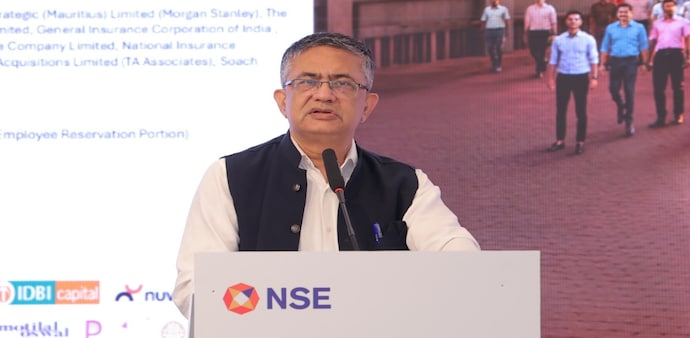
Ahead of the National Stock Exchange of India’s much-awaited IPO, NSE managing director and chief executive officer Ashish Kumar Chauhan said at a press briefing in Delhi that the exchange accepts the Securities and Exchange Board of India’s (SEBI) decisions on the closing auction session and will focus on implementing them. He also said NSE would be comfortable with whatever framework SEBI finally adopts for the proposed changes to the cash market.
Besides that, Chauhan said market volumes were expected to improve as global uncertainties ease, though global conflicts, geopolitical developments and policy shifts in the US continue to affect economies and investor risk appetite. He said Indian markets had moved sideways over the past two to three years, which had kept trading volumes subdued.
Cash market changes On the regulator’s proposed changes to the cash market framework, Chauhan said SEBI was considering several options. “Our job is to work with SEBI and incorporate its views into our operations,” he said.
He said sideways market conditions typically lead to lower activity than a sustained bullish market. “Sideways markets do provide return and thus volumes remain lacklustre,” he said.
Outlook for volumes Chauhan said improving market conditions should lead to stronger activity across transactions, indices and trading volumes. He added that changes in the merchant discount rate on UPI could affect trading volumes through the payment channel in the short term, although he expects the situation to stabilise over the long term.
Impact of MDR on stock markets The Merchant Discount Rate (MDR) for UPI payments in capital market transactions has been set at 0.02 per cent of the transaction value, with a cap of Rs 300. The charge has been kept below standard commercial transaction rates to support retail participation in formal financial markets.
NSE chief Chauhan said the MDR on UPI could affect trading volumes routed through UPI in the short term, but the impact was likely to stabilise over time. “MDR on UPI might impact trading volumes via UPI in the short term, but is likely to stabilise in the long term,” he said.
How the change affects the market will depend on whether brokers, mutual fund platforms and other intermediaries absorb the fee or pass it on. If passed on, investors could see a small additional cost on market-linked payments. The Rs 300 ceiling limits charges on higher-value transactions and keeps the fee significantly lower than typical commercial transaction rates.
IPO structure On the IPO, Chauhan said NSE does not need to raise fresh capital and will not receive any funds from the issue. He said the IPO is entirely an offer for sale by existing shareholders and is being undertaken to meet the minimum public shareholding requirement. The proceeds will therefore go to the existing shareholders and not to the exchange.
Chauhan said NSE is highly profitable and paid about Rs 8,000 crore in dividends last year, underlining that the exchange does not need IPO proceeds for its business. He said the listing would provide liquidity to existing shareholders by creating a public market for NSE shares, and would also bring more shareholders and greater transparency.
Allocation and price band He said the allocation would follow a fixed framework, with separate buckets for local mutual funds, non-mutual fund investors and foreign portfolio investors, with each category receiving shares within its prescribed limits. NSE plans to sell shares in the price band of Rs 1,700 to Rs 1,785 apiece. Each share will have a face value of Re 1. One lot has been fixed at eight shares, and retail investors will need to invest at least Rs 14,280 to bid for one lot and in multiples of eight shares thereafter.
Chauhan’s remarks centred on NSE’s readiness to implement SEBI’s decisions, expectations of better market volumes as uncertainty eases, and an IPO structure that will not bring fresh funds to the exchange but will provide liquidity to existing shareholders and help meet public shareholding norms.
Ahead of the National Stock Exchange of India’s much-awaited IPO, NSE managing director and chief executive officer Ashish Kumar Chauhan said at a press briefing in Delhi that the exchange accepts the Securities and Exchange Board of India’s (SEBI) decisions on the closing auction session and will focus on implementing them. He also said NSE would be comfortable with whatever framework SEBI finally adopts for the proposed changes to the cash market.
Besides that, Chauhan said market volumes were expected to improve as global uncertainties ease, though global conflicts, geopolitical developments and policy shifts in the US continue to affect economies and investor risk appetite. He said Indian markets had moved sideways over the past two to three years, which had kept trading volumes subdued.
Cash market changes On the regulator’s proposed changes to the cash market framework, Chauhan said SEBI was considering several options. “Our job is to work with SEBI and incorporate its views into our operations,” he said.
He said sideways market conditions typically lead to lower activity than a sustained bullish market. “Sideways markets do provide return and thus volumes remain lacklustre,” he said.
Outlook for volumes Chauhan said improving market conditions should lead to stronger activity across transactions, indices and trading volumes. He added that changes in the merchant discount rate on UPI could affect trading volumes through the payment channel in the short term, although he expects the situation to stabilise over the long term.
Impact of MDR on stock markets The Merchant Discount Rate (MDR) for UPI payments in capital market transactions has been set at 0.02 per cent of the transaction value, with a cap of Rs 300. The charge has been kept below standard commercial transaction rates to support retail participation in formal financial markets.
NSE chief Chauhan said the MDR on UPI could affect trading volumes routed through UPI in the short term, but the impact was likely to stabilise over time. “MDR on UPI might impact trading volumes via UPI in the short term, but is likely to stabilise in the long term,” he said.
How the change affects the market will depend on whether brokers, mutual fund platforms and other intermediaries absorb the fee or pass it on. If passed on, investors could see a small additional cost on market-linked payments. The Rs 300 ceiling limits charges on higher-value transactions and keeps the fee significantly lower than typical commercial transaction rates.
IPO structure On the IPO, Chauhan said NSE does not need to raise fresh capital and will not receive any funds from the issue. He said the IPO is entirely an offer for sale by existing shareholders and is being undertaken to meet the minimum public shareholding requirement. The proceeds will therefore go to the existing shareholders and not to the exchange.
Chauhan said NSE is highly profitable and paid about Rs 8,000 crore in dividends last year, underlining that the exchange does not need IPO proceeds for its business. He said the listing would provide liquidity to existing shareholders by creating a public market for NSE shares, and would also bring more shareholders and greater transparency.
Allocation and price band He said the allocation would follow a fixed framework, with separate buckets for local mutual funds, non-mutual fund investors and foreign portfolio investors, with each category receiving shares within its prescribed limits. NSE plans to sell shares in the price band of Rs 1,700 to Rs 1,785 apiece. Each share will have a face value of Re 1. One lot has been fixed at eight shares, and retail investors will need to invest at least Rs 14,280 to bid for one lot and in multiples of eight shares thereafter.
Chauhan’s remarks centred on NSE’s readiness to implement SEBI’s decisions, expectations of better market volumes as uncertainty eases, and an IPO structure that will not bring fresh funds to the exchange but will provide liquidity to existing shareholders and help meet public shareholding norms.