
NSE IPO subscribed 5.7 times as QIBs lead demand; shares to list on BSE on September 24
The ₹22,568.94-crore NSE IPO was subscribed 5.71 times, with qualified institutional buyers (QIBs) driving demand at 12.68 times the shares reserved for them. NSE shares are set to debut on the BSE on September 24, 2026, following strong participation across investor categories.
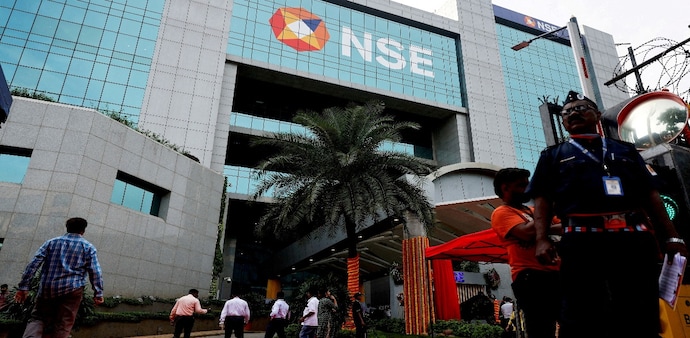
- Sep 21, 2026,
- Updated Sep 21, 2026 8:21 PM IST
The ₹22,568.94-crore initial public offering (IPO) of the National Stock Exchange of India (NSE) was subscribed 5.69 times by the close of bidding on Monday, September 21, with qualified institutional buyers (QIBs) leading demand across investor categories. NSE shares are scheduled to debut on the BSE on September 24, 2026.
The IPO received bids for 50.40 crore shares against 8.86 crore shares on offer, according to the final subscription data.
QIBs lead subscription
The QIB portion was subscribed 12.68 times, receiving bids for 31.97 crore shares against 2.52 crore shares reserved for the category.
The non-institutional investor (NII) segment was subscribed 6.54 times, with bids for 12.36 crore shares against 1.89 crore shares offered.
Retail individual investors bid for 5.96 crore shares against 4.41 crore shares reserved for the category, resulting in a subscription of 1.35 times. The employee portion was subscribed 2.36 times, with 10.22 lakh shares bid for against 4.33 lakh shares reserved.
NSE’s market leadership
Incorporated in 1992, NSE is India’s largest stock exchange by total turnover in the cash market and equity derivatives, based on the parameters outlined in the Redseer Report. It has held this position from FY01 through FY26 and for the three months ended June 30, 2026.
NSE is also the country’s largest exchange by total turnover in exchange-traded currency derivatives, based on notional turnover for currency options, from FY09 through FY26 and the three months ended June 30, 2026, according to the report.
Globally, NSE ranked as the largest multi-asset class exchange among leading listed stock exchange groups by the number of trades in cash equities and contracts traded in equity derivatives during FY26 and the three months ended June 30, 2026, according to the World Federation of Exchanges.
Scale and clearing operations
As of March 2026, NSE had 129.09 million unique registered investors and 3,228 traded entities. Its clearing arm, NSE Clearing Ltd (NCL), accounted for 88.42%-91.04% of cleared value across market segments.
NSE had 2,978 listed entities as of March 2026 and facilitated $20.06 billion through IPOs during FY26, with 219 new listings.
Nifty-linked funds accounted for 72.53% of the assets under management of India’s index funds and exchange-traded funds, highlighting the importance of NSE’s benchmark indices in the investment products market.
NSE as a market institution
NSE also operates as a first-level regulator in India, with responsibilities including providing equal, unrestricted, transparent and fair access to the stock market for investors, issuers and intermediaries. It is also responsible for supporting orderly and efficient market functioning and safeguarding investor interests.
With institutional investors driving the IPO subscription, attention now shifts to NSE’s market debut on September 24. The listing will mark a significant milestone for one of India’s largest market infrastructure institutions.
The ₹22,568.94-crore initial public offering (IPO) of the National Stock Exchange of India (NSE) was subscribed 5.69 times by the close of bidding on Monday, September 21, with qualified institutional buyers (QIBs) leading demand across investor categories. NSE shares are scheduled to debut on the BSE on September 24, 2026.
The IPO received bids for 50.40 crore shares against 8.86 crore shares on offer, according to the final subscription data.
QIBs lead subscription
The QIB portion was subscribed 12.68 times, receiving bids for 31.97 crore shares against 2.52 crore shares reserved for the category.
The non-institutional investor (NII) segment was subscribed 6.54 times, with bids for 12.36 crore shares against 1.89 crore shares offered.
Retail individual investors bid for 5.96 crore shares against 4.41 crore shares reserved for the category, resulting in a subscription of 1.35 times. The employee portion was subscribed 2.36 times, with 10.22 lakh shares bid for against 4.33 lakh shares reserved.
NSE’s market leadership
Incorporated in 1992, NSE is India’s largest stock exchange by total turnover in the cash market and equity derivatives, based on the parameters outlined in the Redseer Report. It has held this position from FY01 through FY26 and for the three months ended June 30, 2026.
NSE is also the country’s largest exchange by total turnover in exchange-traded currency derivatives, based on notional turnover for currency options, from FY09 through FY26 and the three months ended June 30, 2026, according to the report.
Globally, NSE ranked as the largest multi-asset class exchange among leading listed stock exchange groups by the number of trades in cash equities and contracts traded in equity derivatives during FY26 and the three months ended June 30, 2026, according to the World Federation of Exchanges.
Scale and clearing operations
As of March 2026, NSE had 129.09 million unique registered investors and 3,228 traded entities. Its clearing arm, NSE Clearing Ltd (NCL), accounted for 88.42%-91.04% of cleared value across market segments.
NSE had 2,978 listed entities as of March 2026 and facilitated $20.06 billion through IPOs during FY26, with 219 new listings.
Nifty-linked funds accounted for 72.53% of the assets under management of India’s index funds and exchange-traded funds, highlighting the importance of NSE’s benchmark indices in the investment products market.
NSE as a market institution
NSE also operates as a first-level regulator in India, with responsibilities including providing equal, unrestricted, transparent and fair access to the stock market for investors, issuers and intermediaries. It is also responsible for supporting orderly and efficient market functioning and safeguarding investor interests.
With institutional investors driving the IPO subscription, attention now shifts to NSE’s market debut on September 24. The listing will mark a significant milestone for one of India’s largest market infrastructure institutions.