
BT EXPLAINER | Rupee Crash: What’s driving the fall?
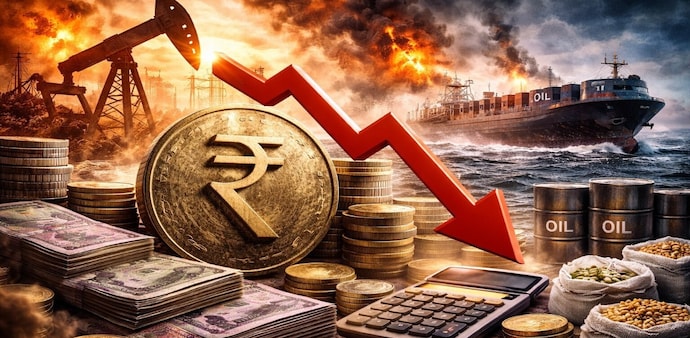
Rupee in a free fall: The record low of 95.33 today breached the low of 95.21 hit a month ago.
- Apr 30, 2026,
- Updated Apr 30, 2026 3:17 PM IST
The Indian rupee fell to its all-time low amid a stock market crash on Thursday. The record low of 95.33 today breached the low of 95.21 hit a month ago. The rupee is the worst performing currency in Asian markets.
The currency has been facing persistent headwinds due to trade frictions with the US and energy deficit from the Middle East. It has fallen nearly 6% in 2026.
Among major factors for the fall of the Indian currency, foreign investors have sold over Rs 1.9 lakh crore of Indian stocks and bonds over March and April so far, nearly double the billion of outflows 1.12 lakh crore from the same markets over all of 2025.
In April alone, FIIs offloaded over Rs 64,185 crore worth of equities, intensifying volatility in domestic markets.
An increase in FII outflows leads to a fall in rupee since the mass selling raises demand for dollars to repatriate funds.
On the other hand, brent crude oil prices hit a four-year high of $126 per barrel amid a report that the US military would brief President Donald Trump on potential action against Iran, raising worries that armed conflict could resume.
A rise in oil prices leads to weakening of the domestic currency since India imports 80% of its crude oil, paying in US dollars. High oil prices lead to an increase in demand of dollars by Indian importers, weakening the rupee.
Increased dollar demand—driven led by equity sell-offs and rising oil imports—has continued to weigh on the domestic currency.
Crude oil prices have largely stayed above $100 per barrel this year, due to geopolitical tensions between the US and Iran and concerns over the Strait of Hormuz. Reports of a potential prolonged blockade of Iran have added to supply worries, keeping prices elevated.
Uncertainty around US–Iran developments continues to drive market sentiment, with rising dollar demand, geopolitical risks, and a widening trade deficit keeping the rupee on the back foot.
Anindya Banerjee, Head of Commodity and Currency Research, Kotak Securities said, "The next important level we are watching is 96, and a sustained break above 96 opens the path to 97 - a level we see as achievable if Brent breaches $125 and the Hormuz situation deteriorates further. On the downside, 94.80 is now a meaningful support zone; anything between 94.50 and 94.80 should see strong dollar buying interest from importers who have been waiting on the sidelines. Anything below 94.50 would require a significant fall in oil prices, meaning a diplomatic breakthrough at Hormuz, which is not our base case today. Until the Strait reopens, the rupee remains under structural pressure."
The Indian rupee fell to its all-time low amid a stock market crash on Thursday. The record low of 95.33 today breached the low of 95.21 hit a month ago. The rupee is the worst performing currency in Asian markets.
The currency has been facing persistent headwinds due to trade frictions with the US and energy deficit from the Middle East. It has fallen nearly 6% in 2026.
Among major factors for the fall of the Indian currency, foreign investors have sold over Rs 1.9 lakh crore of Indian stocks and bonds over March and April so far, nearly double the billion of outflows 1.12 lakh crore from the same markets over all of 2025.
In April alone, FIIs offloaded over Rs 64,185 crore worth of equities, intensifying volatility in domestic markets.
An increase in FII outflows leads to a fall in rupee since the mass selling raises demand for dollars to repatriate funds.
On the other hand, brent crude oil prices hit a four-year high of $126 per barrel amid a report that the US military would brief President Donald Trump on potential action against Iran, raising worries that armed conflict could resume.
A rise in oil prices leads to weakening of the domestic currency since India imports 80% of its crude oil, paying in US dollars. High oil prices lead to an increase in demand of dollars by Indian importers, weakening the rupee.
Increased dollar demand—driven led by equity sell-offs and rising oil imports—has continued to weigh on the domestic currency.
Crude oil prices have largely stayed above $100 per barrel this year, due to geopolitical tensions between the US and Iran and concerns over the Strait of Hormuz. Reports of a potential prolonged blockade of Iran have added to supply worries, keeping prices elevated.
Uncertainty around US–Iran developments continues to drive market sentiment, with rising dollar demand, geopolitical risks, and a widening trade deficit keeping the rupee on the back foot.
Anindya Banerjee, Head of Commodity and Currency Research, Kotak Securities said, "The next important level we are watching is 96, and a sustained break above 96 opens the path to 97 - a level we see as achievable if Brent breaches $125 and the Hormuz situation deteriorates further. On the downside, 94.80 is now a meaningful support zone; anything between 94.50 and 94.80 should see strong dollar buying interest from importers who have been waiting on the sidelines. Anything below 94.50 would require a significant fall in oil prices, meaning a diplomatic breakthrough at Hormuz, which is not our base case today. Until the Strait reopens, the rupee remains under structural pressure."