
Below-normal monsoon? These stocks are likely to face impact - Do you own any?
Nomura India in a note said the below-normal rainfall could impact Kharif production, which accounts for 50 per cent of India’s crop output, and potentially pressure rural demand.
- Apr 15, 2026,
- Updated Apr 15, 2026 4:29 PM IST
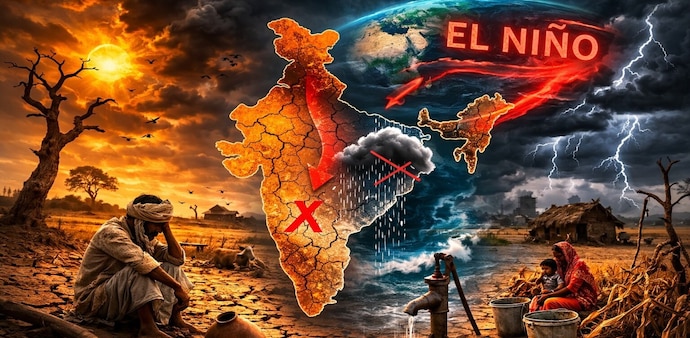
Monsoon-linked stocks are back in focus after IMD forecast the southwest monsoon at 92 per cent of long period average (LPA), driven by an emerging El Niño. This follows a strong 2025 and mirrors the disruptive 2023 deficit that hurt kharif output and rural demand.
Nomura India in a note said the below-normal rainfall could impact Kharif production, which accounts for 50 per cent of India’s crop output, and potentially pressure rural demand, which was earlier expected to improve on the back of multiple macro parameters.
It, however, believes that the intensity of impact on FMCG players’ volume growth will be limited.
"GST rate cuts have resulted in a c.10 per cent reduction in product prices, taking them back to the levels from 2-3 years ago, which has been supporting rural demand. However, given the recent rise in raw material prices, we expect companies to take price hikes to tide over the inflation," it said.
FMCG stocks
Systematix sees a negative impact of below-normal rainfall on home insecticides maker Godrej Consumer Products Ltd (GCPL) and tea and coffer manufacturers such as Nestle India, Hindustan Unilever Ltd and Tata Consumer Products Ltd.
"Second-order negative impact on commodity cost-inflation, rural demand, pricing & margins – impact across consumer categories & companies," it said.
Power stocks JM Financial said most recent El Nino years marked spikes in power demand. "We anticipate a shortfall in hydro generation (negative for NHPC, SJVN), spike in coal-fired generation (positive for NTPC, Adani Power), extension of Section-11 (Tata Mundra) and high merchant prices (Adani Green, Adani Power), subject to downside risk from any slowdown due to the prolonged West Asia conflict," it said.
Auto, consumer durables stocks Tractor makers such as Mahindra & Mahindra, Ashok Leyland and Escorts Kubota Ltd are in focus and so are two-wheeler makers such as Bajaj Auto and Hero MotoCorp.
The southwest monsoon remains critical for India’s economic growth, as a strong kharif harvest boosts rural incomes and drives demand for tractors, two-wheelers, jewellery and consumer durables, Systematix Institutional Equities said.
A deficient or erratic monsoon, as seen in 2023, typically leads to lower kharif sowing, reduced reservoir levels, weaker rabi prospects, slower tractor sales, higher MGNREGS demand, and elevated food inflation in rice, pulses and other essentials.
Fertilisers stocks In the fertiliser space, Systematix prefers backward-integrated fertiliser companies such as Coromandel International and Paradeep Phosphates, as they are believed to be better placed to handle cost volatility.
"Fears around the potential development of strong El Nino conditions in the latter half of the fiscal and negative implications of West Asia conflict on fertiliser prices and availability remain near-term monitorables for the outlook of agricultural sector," ICRA said.
Ice cream, skincare, soft drink stocks
Systematix said weak monsoon could be positive for ice creams and dairy players Dodla Dairy, Heritage Foods and Kwality Walls; juices & nectars maker Dabur India and carbonated soft drink makers such as Varun Beverages and Tata Consumer. It may also be positive for talcum powder makers and cooling hair oils manufacturers such as Emami, Marico, Dabur India and Bajaj Consumer and companies in suncare such as Honasa, it said.
Consumer durables companies making ACs and refrigerators are also seen benefiting from the development.
What is Ei Nino? El Niño is a periodic warming of sea surface temperatures in the central and eastern equatorial Pacific, occurring every 2–7 years. Under normal conditions, trade winds blow westward along the equator, pushing warm surface water toward the Indo-Pacific. During El Niño, these winds weaken or reverse, allowing warm water to shift eastward — redistributing oceanic heat in a way that reshapes rainfall patterns, jet streams, and monsoon systems globally.
Why should India be concerned? InCred Equities noted that India receives the vast majority of its annual rainfall during the June–September southwest monsoon, making it the single most important economic variable for the agricultural sector.
"El Niño disrupts this by weakening the temperature contrast between the Indian landmass and the surrounding ocean, the thermal gradient that drives monsoon circulation. A warmer Pacific competes with the Indian Ocean for atmospheric convection, reducing moisture flux into the subcontinent. The agricultural consequences are direct: kharif crops including rice, pulses, oilseeds, and cotton are sown between June and August and are overwhelmingly rainfed, making them the first casualty of a weak monsoon," it said.
Reduced rainfall delays sowing, cuts yields, and in severe cases forces farmers to abandon acreage entirely, with downstream effects on food inflation typically materialising within one to two quarters.
"The relationship between El Niño and monsoon failure is not deterministic. A meaningful share of El Niño years has produced near-normal rainfall, but the probability of a deficit shifts sharply when El Niño develops during the monsoon season itself rather than before it. That is precisely the scenario currently projected for 2026," InCred said.
The brokerage said historical record since 2000 shows a clear relationship between El Niño and below-normal monsoon rainfall in India. Every moderate or strong El Niño year in the dataset produced an all-India deficit, and only one weak event delivered above-normal rainfall.
Monsoon-linked stocks are back in focus after IMD forecast the southwest monsoon at 92 per cent of long period average (LPA), driven by an emerging El Niño. This follows a strong 2025 and mirrors the disruptive 2023 deficit that hurt kharif output and rural demand.
Nomura India in a note said the below-normal rainfall could impact Kharif production, which accounts for 50 per cent of India’s crop output, and potentially pressure rural demand, which was earlier expected to improve on the back of multiple macro parameters.
It, however, believes that the intensity of impact on FMCG players’ volume growth will be limited.
"GST rate cuts have resulted in a c.10 per cent reduction in product prices, taking them back to the levels from 2-3 years ago, which has been supporting rural demand. However, given the recent rise in raw material prices, we expect companies to take price hikes to tide over the inflation," it said.
FMCG stocks
Systematix sees a negative impact of below-normal rainfall on home insecticides maker Godrej Consumer Products Ltd (GCPL) and tea and coffer manufacturers such as Nestle India, Hindustan Unilever Ltd and Tata Consumer Products Ltd.
"Second-order negative impact on commodity cost-inflation, rural demand, pricing & margins – impact across consumer categories & companies," it said.
Power stocks JM Financial said most recent El Nino years marked spikes in power demand. "We anticipate a shortfall in hydro generation (negative for NHPC, SJVN), spike in coal-fired generation (positive for NTPC, Adani Power), extension of Section-11 (Tata Mundra) and high merchant prices (Adani Green, Adani Power), subject to downside risk from any slowdown due to the prolonged West Asia conflict," it said.
Auto, consumer durables stocks Tractor makers such as Mahindra & Mahindra, Ashok Leyland and Escorts Kubota Ltd are in focus and so are two-wheeler makers such as Bajaj Auto and Hero MotoCorp.
The southwest monsoon remains critical for India’s economic growth, as a strong kharif harvest boosts rural incomes and drives demand for tractors, two-wheelers, jewellery and consumer durables, Systematix Institutional Equities said.
A deficient or erratic monsoon, as seen in 2023, typically leads to lower kharif sowing, reduced reservoir levels, weaker rabi prospects, slower tractor sales, higher MGNREGS demand, and elevated food inflation in rice, pulses and other essentials.
Fertilisers stocks In the fertiliser space, Systematix prefers backward-integrated fertiliser companies such as Coromandel International and Paradeep Phosphates, as they are believed to be better placed to handle cost volatility.
"Fears around the potential development of strong El Nino conditions in the latter half of the fiscal and negative implications of West Asia conflict on fertiliser prices and availability remain near-term monitorables for the outlook of agricultural sector," ICRA said.
Ice cream, skincare, soft drink stocks
Systematix said weak monsoon could be positive for ice creams and dairy players Dodla Dairy, Heritage Foods and Kwality Walls; juices & nectars maker Dabur India and carbonated soft drink makers such as Varun Beverages and Tata Consumer. It may also be positive for talcum powder makers and cooling hair oils manufacturers such as Emami, Marico, Dabur India and Bajaj Consumer and companies in suncare such as Honasa, it said.
Consumer durables companies making ACs and refrigerators are also seen benefiting from the development.
What is Ei Nino? El Niño is a periodic warming of sea surface temperatures in the central and eastern equatorial Pacific, occurring every 2–7 years. Under normal conditions, trade winds blow westward along the equator, pushing warm surface water toward the Indo-Pacific. During El Niño, these winds weaken or reverse, allowing warm water to shift eastward — redistributing oceanic heat in a way that reshapes rainfall patterns, jet streams, and monsoon systems globally.
Why should India be concerned? InCred Equities noted that India receives the vast majority of its annual rainfall during the June–September southwest monsoon, making it the single most important economic variable for the agricultural sector.
"El Niño disrupts this by weakening the temperature contrast between the Indian landmass and the surrounding ocean, the thermal gradient that drives monsoon circulation. A warmer Pacific competes with the Indian Ocean for atmospheric convection, reducing moisture flux into the subcontinent. The agricultural consequences are direct: kharif crops including rice, pulses, oilseeds, and cotton are sown between June and August and are overwhelmingly rainfed, making them the first casualty of a weak monsoon," it said.
Reduced rainfall delays sowing, cuts yields, and in severe cases forces farmers to abandon acreage entirely, with downstream effects on food inflation typically materialising within one to two quarters.
"The relationship between El Niño and monsoon failure is not deterministic. A meaningful share of El Niño years has produced near-normal rainfall, but the probability of a deficit shifts sharply when El Niño develops during the monsoon season itself rather than before it. That is precisely the scenario currently projected for 2026," InCred said.
The brokerage said historical record since 2000 shows a clear relationship between El Niño and below-normal monsoon rainfall in India. Every moderate or strong El Niño year in the dataset produced an all-India deficit, and only one weak event delivered above-normal rainfall.