
Fed cuts rates for 1st time since 2024, sparks hopes of fresh FII flows into Indian markets
It signaled two more cuts are likely before year’s end, citing rising concerns over a cooling labor market.
- Sep 18, 2025,
- Updated Sep 18, 2025 5:17 AM IST
The Federal Reserve on Wednesday cut interest rates for the first time in 2025, kicking off what could be a new monetary easing cycle as it tries to steady a weakening labor market without letting inflation slip out of control.
It signaled two more cuts are likely before year’s end, citing rising concerns over a cooling labor market.
The Fed’s Open Market Committee voted 11–1 to lower its benchmark overnight rate to a range of 4.00%–4.25%. The lone dissent came from newly appointed Governor Stephen Miran, who pushed for a steeper half-point cut.
While inflation remains “somewhat elevated,” the Fed’s post-meeting statement flagged “slowed” job growth and rising downside risks to employment—indicators that Chair Jerome Powell said justify shifting to a more neutral policy stance.
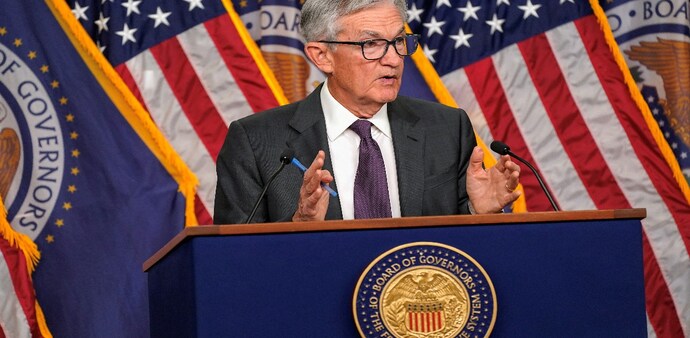
“The marked slowing in both the supply of and demand for workers is unusual,” Powell told reporters. “The downside risks to employment appear to have risen.”
Despite volatility in markets following the announcement, Powell characterized the cut as “risk management,” not a panic response. Still, analysts saw deeper implications.
“I don’t think that’s risk management. I think that’s steering the ship,” said Dan North, chief economist at Allianz Trade North America.
The Fed’s “dot plot” showed a split outlook: 10 of 19 officials expect two more cuts this year, while nine project only one. Miran, known for favoring aggressive rate cuts, likely accounted for the anonymous dot calling for a full 1.25 percentage points of easing by December.
The rate cut lands amid political pressure. All Trump-appointed governors backed the move, including Christopher Waller and Michelle Bowman, easing fears of broader dissent. Trump has repeatedly demanded sharper cuts to jumpstart housing and reduce federal borrowing costs. Meanwhile, a federal court blocked his attempt to oust Biden appointee Lisa Cook, who also voted in favor.
With Powell’s term ending in 2026, Waller has emerged as a possible successor, especially if he leads efforts to ease amid persistent labor market stagnation.
Despite the political noise, Powell insisted there was no “widespread support” for a half-point cut.
What it means for Indian markets
- Lower US yields may boost foreign investment in Indian stocks and bonds as the yield gap widens.
- Rupee stability could improve, and import inflation pressures may ease due to a softer dollar.
- IT and Metals sectors may benefit in the short term from increased US-linked capital expenditure.
- While the rate cut is partly priced in, a sustained dovish Fed stance could drive further market rallies and foreign inflows.
The Federal Reserve on Wednesday cut interest rates for the first time in 2025, kicking off what could be a new monetary easing cycle as it tries to steady a weakening labor market without letting inflation slip out of control.
It signaled two more cuts are likely before year’s end, citing rising concerns over a cooling labor market.
The Fed’s Open Market Committee voted 11–1 to lower its benchmark overnight rate to a range of 4.00%–4.25%. The lone dissent came from newly appointed Governor Stephen Miran, who pushed for a steeper half-point cut.
While inflation remains “somewhat elevated,” the Fed’s post-meeting statement flagged “slowed” job growth and rising downside risks to employment—indicators that Chair Jerome Powell said justify shifting to a more neutral policy stance.
“The marked slowing in both the supply of and demand for workers is unusual,” Powell told reporters. “The downside risks to employment appear to have risen.”
Despite volatility in markets following the announcement, Powell characterized the cut as “risk management,” not a panic response. Still, analysts saw deeper implications.
“I don’t think that’s risk management. I think that’s steering the ship,” said Dan North, chief economist at Allianz Trade North America.
The Fed’s “dot plot” showed a split outlook: 10 of 19 officials expect two more cuts this year, while nine project only one. Miran, known for favoring aggressive rate cuts, likely accounted for the anonymous dot calling for a full 1.25 percentage points of easing by December.
The rate cut lands amid political pressure. All Trump-appointed governors backed the move, including Christopher Waller and Michelle Bowman, easing fears of broader dissent. Trump has repeatedly demanded sharper cuts to jumpstart housing and reduce federal borrowing costs. Meanwhile, a federal court blocked his attempt to oust Biden appointee Lisa Cook, who also voted in favor.
With Powell’s term ending in 2026, Waller has emerged as a possible successor, especially if he leads efforts to ease amid persistent labor market stagnation.
Despite the political noise, Powell insisted there was no “widespread support” for a half-point cut.
What it means for Indian markets
- Lower US yields may boost foreign investment in Indian stocks and bonds as the yield gap widens.
- Rupee stability could improve, and import inflation pressures may ease due to a softer dollar.
- IT and Metals sectors may benefit in the short term from increased US-linked capital expenditure.
- While the rate cut is partly priced in, a sustained dovish Fed stance could drive further market rallies and foreign inflows.