
'Game of chicken': China to intervene in stock market; stimulus soon, says Nomura
Stock market today: Nomura said China’s stabilisation funds -- it called them “national teams”, supported by the PBoC -- are likely to intervene significantly in stock markets over the coming weeks.
- Apr 9, 2025,
- Updated Apr 9, 2025 9:01 AM IST
In its fresh note on the brewing US-China trade war, Nomura said financial markets of both economies have been severely hit, and the worst might be yet to come. Beijing, it said, would also very likely vow to speed up and increase fiscal spending to bolster demand, especially consumption demand.
Nomura said China’s stabilisation funds -- it called them “national teams”, supported by the PBoC -- are likely to intervene significantly in stock markets over the coming weeks.
Stock indices in Mainland China were trading up to 2 per cent lower earlier today, following the 104 per cent tariffs imposed by the US in fresh retaliation. Yet, within few hours, they were flattish.
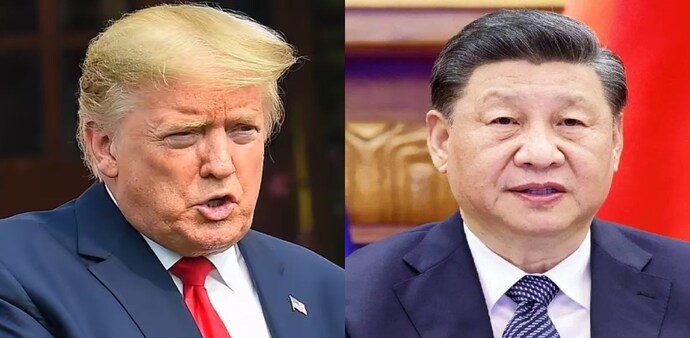
"US and China are stuck in an unprecedented, and expensive, game of chicken, and it seems that both sides are unwilling to back down. The first real battleground of the tariff war is financial markets, especially stock markets," it said.
Nomura said the PBoC, in addition to funding the national teams, could also implement high-profile RRR cuts and policy rate cuts sooner than what had been planned.
"Unlike in 2018-19, and considering a property market crisis, we believe that the PBoC, in order to maintain domestic financial and property market stability, will not choose to devalue RMB or engage in/allow for any substantial currency depreciation," it said.
White House in an overnight statement noted that China has announced that it will retaliate against the US in response to executive order 14257 by the US President Donald Trump.
In recognition of the fact, effective with respect to goods entered for consumption, or withdrawn from warehouse for consumption, on or after 12:01 am. eastern daylight time on April 9, 2025, it imposed further tariffs on China.
White House dared China to retaliate against Trump’s fresh tariff and said he has got 'Spine of Steel' and that he would not break. In reply, Chinese Premier Li Qiang said his country has ample policy tools to “fully offset” any negative external shocks.
"We anticipate more support for tech innovation and self-sufficiency, and monetary easing in the form of more cuts to its RRR (100-200bps) and policy rate (30-50bps). However, at present, Chinese policy remains reactive rather than proactive," UBS said in a note.
In a separate note, Nomura said a more front-loaded inflation shock and growth slowdown in the US means a near-recession is likely, with the Fed holding off cutting rates until December.
Nomura said it continues to believe that India is the least exposed to the US tariff shock, and could benefit from the ongoing global supply-chain shifts. Meanwhile, For Asia, lower oil prices are a positive terms-of-trade shock, as most Asian countries are net oil importers, it said.
In its fresh note on the brewing US-China trade war, Nomura said financial markets of both economies have been severely hit, and the worst might be yet to come. Beijing, it said, would also very likely vow to speed up and increase fiscal spending to bolster demand, especially consumption demand.
Nomura said China’s stabilisation funds -- it called them “national teams”, supported by the PBoC -- are likely to intervene significantly in stock markets over the coming weeks.
Stock indices in Mainland China were trading up to 2 per cent lower earlier today, following the 104 per cent tariffs imposed by the US in fresh retaliation. Yet, within few hours, they were flattish.
"US and China are stuck in an unprecedented, and expensive, game of chicken, and it seems that both sides are unwilling to back down. The first real battleground of the tariff war is financial markets, especially stock markets," it said.
Nomura said the PBoC, in addition to funding the national teams, could also implement high-profile RRR cuts and policy rate cuts sooner than what had been planned.
"Unlike in 2018-19, and considering a property market crisis, we believe that the PBoC, in order to maintain domestic financial and property market stability, will not choose to devalue RMB or engage in/allow for any substantial currency depreciation," it said.
White House in an overnight statement noted that China has announced that it will retaliate against the US in response to executive order 14257 by the US President Donald Trump.
In recognition of the fact, effective with respect to goods entered for consumption, or withdrawn from warehouse for consumption, on or after 12:01 am. eastern daylight time on April 9, 2025, it imposed further tariffs on China.
White House dared China to retaliate against Trump’s fresh tariff and said he has got 'Spine of Steel' and that he would not break. In reply, Chinese Premier Li Qiang said his country has ample policy tools to “fully offset” any negative external shocks.
"We anticipate more support for tech innovation and self-sufficiency, and monetary easing in the form of more cuts to its RRR (100-200bps) and policy rate (30-50bps). However, at present, Chinese policy remains reactive rather than proactive," UBS said in a note.
In a separate note, Nomura said a more front-loaded inflation shock and growth slowdown in the US means a near-recession is likely, with the Fed holding off cutting rates until December.
Nomura said it continues to believe that India is the least exposed to the US tariff shock, and could benefit from the ongoing global supply-chain shifts. Meanwhile, For Asia, lower oil prices are a positive terms-of-trade shock, as most Asian countries are net oil importers, it said.