
Has Bitcoin peaked? Why Jefferies removed 10% allocation; quantum computing, gold & more
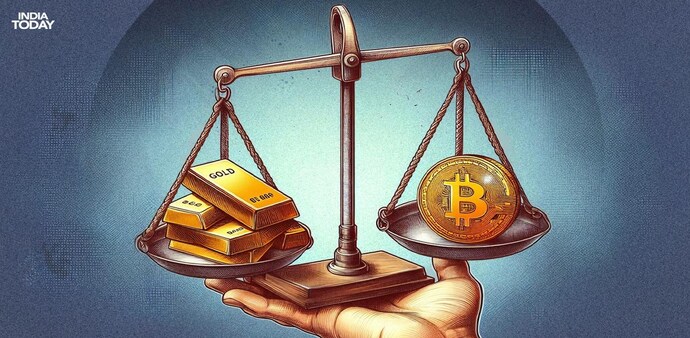
Jefferies said it would remove the 10 per cent allocation to Bitcoin this week with 5 per cent reallocated to gold and 5 per cent reallocated to gold-mining stocks.
- Jan 16, 2026,
- Updated Jan 16, 2026 2:48 PM IST
Jefferies' Christopher Wood in his latest GREED & fear note on Friday talked about the threat posed to the Bitcoin system by the arrival of quantum computing. While Wood does not believe that the quantum issue is about to hit the Bitcoin price dramatically in the near term, he believes the "store of value" concept is clearly on less solid foundation from the standpoint of a long-term portfolio.
Jefferies said it would remove the 10 per cent allocation to Bitcoin in its long-only US-dollar-based pension funds this week with 5 per cent reallocated to gold and 5 per cent reallocated to gold-mining stocks. Despite gold’s recent outperformance over Bitcoin, Bitcoin has still outperformed since the initial allocation, it said noting that Bitcoin has risen by 325 per cent since December 17, 2020, while gold bullion is up 145 per cent over the same period. "There is an ongoing discussion about whether to “burn” the quantum-vulnerable coins or to do nothing and risk having those vulnerable coins being “stolen” by entities with so-called CRQCs (i.e. cryptographically relevant quantum computers). The issue is, apparently, that while deriving a public key from a private key is computationally simple, the reverse operation would take supercomputers trillions of years," Jefferies said.
"But this asymmetry collapses with the arrival of CRQCs reducing the time to derive a private key from a public key to mere hours or days," it added.
Jefferies said there is a rising concern that this could only be a few years away rather than a decade or more. Clearly any threat to the quantitative tightening dynamic enshrined in Bitcoin, with the last Bitcoin due to be created or “mined” in 2140, is potentially existential as it undermines the concept of Bitcoin as a store of value and therefore as a digital alternative to gold.
If the risk is accepted that CRQCs will one day become a reality, which apparently is the case, the question for the Bitcoin community is what to do about it, Jefferies said.
Jefferies said those arguing for pre-emptive action that burning the vulnerable coins will preserve Bitcoin’s integrity as a system designed to protect property rights.
"It is also the case that it can be legitimately argued that so-called forks in Bitcoin have happened where rules have been changed following a debate within the community. Still the contrary argument is that burning quantum-vulnerable coins would be confiscatory and violate the property rights of the owners which undermines the very essence of Bitcoin," it said.
If the latter is an understandable standpoint, Jefferies said one computer scientist described such a stance to GREED & fear this week as a “suicidal delusion”.
Jefferies cited a study saying the first vulnerable group is what are known as Satoshi-era holdings named after Bitcoin’s anonymous founder Satoshi Nakamoto, or at least GREED & fear does not know who he is.
"There is an estimated 600,000 to 1.1m of such BTC representing 3-5.5 per cent of current total Bitcoin supply. These coins remain in P2PK (Pay-to-PublicKey) addresses with fully exposed public keys. The P2PK is the initial script pattern that Bitcoin used to send and receive cryptocurrencies in its early days by locking funds to a particular public key," it said.
The second area of vulnerable BTC is lost coins. On-chain analysis has estimated the figure at 2-3 million (20-30 lakh) BTC in 2017, Jefferies said adding that it heard another estimate in New York this week of 4-5 million (40-50 lakh).
"The third area of vulnerability is where there has been so-called “address re-use” whereby the same address was used for multiple transactions. This leads to the possibility of exposed public keys. What are the investment implications of all of the above? While Bitcoin is probably due a countertrend rally, and is up 20.2% from the recent low reached in November, GREED & fear’s base case remains that it has peaked in the post-halving cycle at US$126,251 last October," Jefferies said.
Jefferies' Christopher Wood in his latest GREED & fear note on Friday talked about the threat posed to the Bitcoin system by the arrival of quantum computing. While Wood does not believe that the quantum issue is about to hit the Bitcoin price dramatically in the near term, he believes the "store of value" concept is clearly on less solid foundation from the standpoint of a long-term portfolio.
Jefferies said it would remove the 10 per cent allocation to Bitcoin in its long-only US-dollar-based pension funds this week with 5 per cent reallocated to gold and 5 per cent reallocated to gold-mining stocks. Despite gold’s recent outperformance over Bitcoin, Bitcoin has still outperformed since the initial allocation, it said noting that Bitcoin has risen by 325 per cent since December 17, 2020, while gold bullion is up 145 per cent over the same period. "There is an ongoing discussion about whether to “burn” the quantum-vulnerable coins or to do nothing and risk having those vulnerable coins being “stolen” by entities with so-called CRQCs (i.e. cryptographically relevant quantum computers). The issue is, apparently, that while deriving a public key from a private key is computationally simple, the reverse operation would take supercomputers trillions of years," Jefferies said.
"But this asymmetry collapses with the arrival of CRQCs reducing the time to derive a private key from a public key to mere hours or days," it added.
Jefferies said there is a rising concern that this could only be a few years away rather than a decade or more. Clearly any threat to the quantitative tightening dynamic enshrined in Bitcoin, with the last Bitcoin due to be created or “mined” in 2140, is potentially existential as it undermines the concept of Bitcoin as a store of value and therefore as a digital alternative to gold.
If the risk is accepted that CRQCs will one day become a reality, which apparently is the case, the question for the Bitcoin community is what to do about it, Jefferies said.
Jefferies said those arguing for pre-emptive action that burning the vulnerable coins will preserve Bitcoin’s integrity as a system designed to protect property rights.
"It is also the case that it can be legitimately argued that so-called forks in Bitcoin have happened where rules have been changed following a debate within the community. Still the contrary argument is that burning quantum-vulnerable coins would be confiscatory and violate the property rights of the owners which undermines the very essence of Bitcoin," it said.
If the latter is an understandable standpoint, Jefferies said one computer scientist described such a stance to GREED & fear this week as a “suicidal delusion”.
Jefferies cited a study saying the first vulnerable group is what are known as Satoshi-era holdings named after Bitcoin’s anonymous founder Satoshi Nakamoto, or at least GREED & fear does not know who he is.
"There is an estimated 600,000 to 1.1m of such BTC representing 3-5.5 per cent of current total Bitcoin supply. These coins remain in P2PK (Pay-to-PublicKey) addresses with fully exposed public keys. The P2PK is the initial script pattern that Bitcoin used to send and receive cryptocurrencies in its early days by locking funds to a particular public key," it said.
The second area of vulnerable BTC is lost coins. On-chain analysis has estimated the figure at 2-3 million (20-30 lakh) BTC in 2017, Jefferies said adding that it heard another estimate in New York this week of 4-5 million (40-50 lakh).
"The third area of vulnerability is where there has been so-called “address re-use” whereby the same address was used for multiple transactions. This leads to the possibility of exposed public keys. What are the investment implications of all of the above? While Bitcoin is probably due a countertrend rally, and is up 20.2% from the recent low reached in November, GREED & fear’s base case remains that it has peaked in the post-halving cycle at US$126,251 last October," Jefferies said.