
IT selloff: AI-led volatility presents a few buying opportunities, says Bay Capital CIO
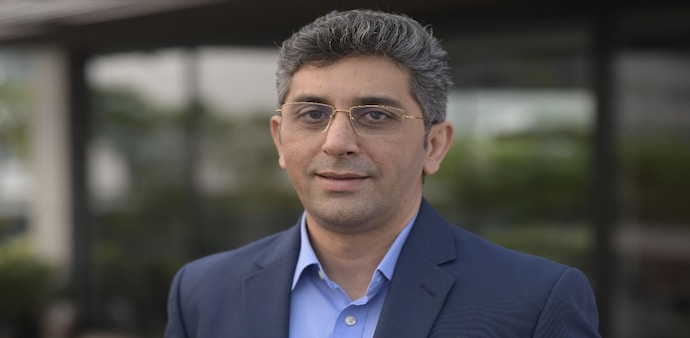
In interaction with Business Today, Keyur Majumdar, Managing Partner and CIO at Bay Capital India, shares his perspective on shifting global capital flows, India’s underperformance and AI-disruption.
- Feb 20, 2026,
- Updated Feb 20, 2026 2:54 PM IST
In exclusive interaction with Business Today, Keyur Majumdar, Managing Partner and CIO at Bay Capital India, shares his perspective on shifting global capital flows, India’s relative underperformance during the US-led AI rally, and the evolving outlook for Indian IT stocks. He discussed whether AI disruption fears are overdone, how traditional outsourcing models must adapt, and why earnings resilience and valuations—not narratives—will ultimately determine which businesses emerge as long-term compounders.
BT: Global capital appears to be reducing its dependence on the US. From what you hear from global allocators, is this a tactical diversification move—or the early stages of a structural reallocation toward markets like India? Majumdar: There is no meaningful reduction and re-allocation as such. The re-allocation of flows to other emerging markets particularly is happening to the detriment of flows relating to India . This is reflected in India's massive under-performance to other emerging markets.
It does not appear that any meaningful flows have moved into India at this time though with earnings growth in select sectors, segments and valuations now far more benign than 12 months back, that should change.
What has transpired over the last few months or so within the US, is that the rotation is gradually happening out of some of software/ technology names and other pockets have done significantly better (consumer staples, energy, materials and industrials)
BT: India has lagged some global peers during the US-led AI rally. Do you see this as temporary underperformance driven by market cycles, or does it expose vulnerabilities in how global capital views India today?
Majumdar: Over the last 12-14 months, there has been a view that India lags in the AI race. The recent turbulence caused in the traditional IT names (following the Anthropic announcement in the US in early FEbrurary) is a reflection of this view.
As the very recent news flow around the AI summit has shown , India is taking significant steps to address this perceived gap and that should augur well over the medium term. India's own foundational LLM - Sarvam, significant announcements and plans for India to become a global AI infrastructure destination and others are notable highlights. As many of these developments evolve and take shape India's perception can well change.
From an equity market point of view, India has always offered investors a fairly wide array of sectors, segments and opportunity sets. As earnings and underlying business fundamentals continue to show up as being resilient and start to matter more for investors, the focus will shift away from narratives to earnings and valuations and in that context individual businesses will start to stand out.
BT: Many digital-first Indian companies are reporting improving margins after years of losses. How do you distinguish between genuine operating leverage and margin gains driven largely by cost pullbacks or slower growth?
Majumdar: Many of these digital first businesses follow this arc of profitability. Losses in the early years reflect of platform building , customer acquisition, customer retention and technology and brand building efforts. Over time, as the platform scales, network effects solidify, monetisation starts to happen and operating leverage starts to kick in.
The key of course is that just because a business is digital first does not necessarily mean that it is going to be able to scale profitably.
True operating leverage is derived from scale, platform network effects and multiple monetisation levers and other components. Temporary steps such as cost cutting etc will not ensure long term profitability. As assessment of the core business and its competitive edge is important.
In our view, one of the hallmarks of a good business is its ability grow the market (where penetration is relatively low) and then capture a large share of that increased market. With an efficient cost base, operating leverage ensures that incremental revenues significantly filter down to profitability.
BT: AI disruption fears have weighed on Indian IT and outsourcing stocks. Is the market overpricing near-term disruption while underestimating how quickly incumbents can adapt, as they have in past tech cycles
Majumdar: The disruption is real. What is happening is that the pace of change and disruption is accelerating and enterprises are struggling to keep up. This creates what Nandan Nilekani has described as a "deployment gap". The traditional IT outsourcing models will need to undergo a significant change. While the top tier businesses will move quickly to adapt to this new reality, the near term will create flux and lead to disruptions. This flux and disruption are what the markets have very quickly priced in.
That said, over time as business models rapidly evolve and are re-architecture, there can very well be significant dominant winners that will emerge. This could be the large incumbents or even some seemingly smaller more nimble players who can adapt very quickly.
In our view deep client relationships, deep domain knowledge and significant "unlearning" with a focus on more outcome based engagements will be the key differentiators for the winners.
BT: Foreign investors remain cautious on Indian equities despite strong domestic participation. What, in your view, is the single most important trigger that could bring FIIs back with sustained conviction?
Majumdar: There is rarely one single factor that determine these flows. It is always an interplay of factors. The perception and near-term narrative of India being a relative non beneficiary of the AI disruption is one of the factors. The combination of earnings growth, benign valuations and a stable macro environment will all aid this process.
In our view, long term investors must not fret too much about these FPI flows. Investors will be better served thinking about individual businesses, their earnings growth, what makes these business resilient (to disruption) and how they can compound earnings over a period of time. Ultimately this along with benign entry valuations will be the key determinants of future shareholder returns.
BT: With narratives shifting rapidly—from AI to geopolitics to liquidity—how does Bay Capital stress-test long-term investment theses to avoid being whipsawed by short-term market cycles?
Majumdar: Bay Capital does not invest on the basis of sweeping narratives or shift rapidly from one theme or sector to the next. We focus on investing in businesses for the long term where we believe the business can continue to compound value. As long as the business is compounding value, stock prices will gyrate but this volatility then presents some of the best buying opportunities. The key for us is to dissect the difference between the business and the stock price.
BT: What common traits do you see across companies that have consistently delivered superior risk-adjusted returns over multiple cycles?
Majumdar: Some of the common traits are disciplined capital allocation (high returns on capital), strong governance, remaining agile and resilient as the businesses navigates a shifting environment. Moreover, many businesses need to constantly reorient and re-architecture themselves to continue to accrue value and this is an important element in long term value creation.
In technology sensitive areas, high quality businesses always tend to "disrupt themselves". This is extremely important to be future ready.
BT: Looking five years out, which broad themes—digital penetration, consumption formalisation, financial deepening, or outsourcing—excite you the most from a compounding perspective?
Majumdar: While we don’t invest with a top-down thematic lens, all these areas represent powerful structural tailwinds for India’s economy. Digital penetration, consumption formalisation, financial deepening, and global outsourcing each offer long runways for sustainable growth. Well-run businesses aligned to these trends can compound earnings steadily and translate that growth into meaningful shareholder value over the next decade and beyond
In exclusive interaction with Business Today, Keyur Majumdar, Managing Partner and CIO at Bay Capital India, shares his perspective on shifting global capital flows, India’s relative underperformance during the US-led AI rally, and the evolving outlook for Indian IT stocks. He discussed whether AI disruption fears are overdone, how traditional outsourcing models must adapt, and why earnings resilience and valuations—not narratives—will ultimately determine which businesses emerge as long-term compounders.
BT: Global capital appears to be reducing its dependence on the US. From what you hear from global allocators, is this a tactical diversification move—or the early stages of a structural reallocation toward markets like India? Majumdar: There is no meaningful reduction and re-allocation as such. The re-allocation of flows to other emerging markets particularly is happening to the detriment of flows relating to India . This is reflected in India's massive under-performance to other emerging markets.
It does not appear that any meaningful flows have moved into India at this time though with earnings growth in select sectors, segments and valuations now far more benign than 12 months back, that should change.
What has transpired over the last few months or so within the US, is that the rotation is gradually happening out of some of software/ technology names and other pockets have done significantly better (consumer staples, energy, materials and industrials)
BT: India has lagged some global peers during the US-led AI rally. Do you see this as temporary underperformance driven by market cycles, or does it expose vulnerabilities in how global capital views India today?
Majumdar: Over the last 12-14 months, there has been a view that India lags in the AI race. The recent turbulence caused in the traditional IT names (following the Anthropic announcement in the US in early FEbrurary) is a reflection of this view.
As the very recent news flow around the AI summit has shown , India is taking significant steps to address this perceived gap and that should augur well over the medium term. India's own foundational LLM - Sarvam, significant announcements and plans for India to become a global AI infrastructure destination and others are notable highlights. As many of these developments evolve and take shape India's perception can well change.
From an equity market point of view, India has always offered investors a fairly wide array of sectors, segments and opportunity sets. As earnings and underlying business fundamentals continue to show up as being resilient and start to matter more for investors, the focus will shift away from narratives to earnings and valuations and in that context individual businesses will start to stand out.
BT: Many digital-first Indian companies are reporting improving margins after years of losses. How do you distinguish between genuine operating leverage and margin gains driven largely by cost pullbacks or slower growth?
Majumdar: Many of these digital first businesses follow this arc of profitability. Losses in the early years reflect of platform building , customer acquisition, customer retention and technology and brand building efforts. Over time, as the platform scales, network effects solidify, monetisation starts to happen and operating leverage starts to kick in.
The key of course is that just because a business is digital first does not necessarily mean that it is going to be able to scale profitably.
True operating leverage is derived from scale, platform network effects and multiple monetisation levers and other components. Temporary steps such as cost cutting etc will not ensure long term profitability. As assessment of the core business and its competitive edge is important.
In our view, one of the hallmarks of a good business is its ability grow the market (where penetration is relatively low) and then capture a large share of that increased market. With an efficient cost base, operating leverage ensures that incremental revenues significantly filter down to profitability.
BT: AI disruption fears have weighed on Indian IT and outsourcing stocks. Is the market overpricing near-term disruption while underestimating how quickly incumbents can adapt, as they have in past tech cycles
Majumdar: The disruption is real. What is happening is that the pace of change and disruption is accelerating and enterprises are struggling to keep up. This creates what Nandan Nilekani has described as a "deployment gap". The traditional IT outsourcing models will need to undergo a significant change. While the top tier businesses will move quickly to adapt to this new reality, the near term will create flux and lead to disruptions. This flux and disruption are what the markets have very quickly priced in.
That said, over time as business models rapidly evolve and are re-architecture, there can very well be significant dominant winners that will emerge. This could be the large incumbents or even some seemingly smaller more nimble players who can adapt very quickly.
In our view deep client relationships, deep domain knowledge and significant "unlearning" with a focus on more outcome based engagements will be the key differentiators for the winners.
BT: Foreign investors remain cautious on Indian equities despite strong domestic participation. What, in your view, is the single most important trigger that could bring FIIs back with sustained conviction?
Majumdar: There is rarely one single factor that determine these flows. It is always an interplay of factors. The perception and near-term narrative of India being a relative non beneficiary of the AI disruption is one of the factors. The combination of earnings growth, benign valuations and a stable macro environment will all aid this process.
In our view, long term investors must not fret too much about these FPI flows. Investors will be better served thinking about individual businesses, their earnings growth, what makes these business resilient (to disruption) and how they can compound earnings over a period of time. Ultimately this along with benign entry valuations will be the key determinants of future shareholder returns.
BT: With narratives shifting rapidly—from AI to geopolitics to liquidity—how does Bay Capital stress-test long-term investment theses to avoid being whipsawed by short-term market cycles?
Majumdar: Bay Capital does not invest on the basis of sweeping narratives or shift rapidly from one theme or sector to the next. We focus on investing in businesses for the long term where we believe the business can continue to compound value. As long as the business is compounding value, stock prices will gyrate but this volatility then presents some of the best buying opportunities. The key for us is to dissect the difference between the business and the stock price.
BT: What common traits do you see across companies that have consistently delivered superior risk-adjusted returns over multiple cycles?
Majumdar: Some of the common traits are disciplined capital allocation (high returns on capital), strong governance, remaining agile and resilient as the businesses navigates a shifting environment. Moreover, many businesses need to constantly reorient and re-architecture themselves to continue to accrue value and this is an important element in long term value creation.
In technology sensitive areas, high quality businesses always tend to "disrupt themselves". This is extremely important to be future ready.
BT: Looking five years out, which broad themes—digital penetration, consumption formalisation, financial deepening, or outsourcing—excite you the most from a compounding perspective?
Majumdar: While we don’t invest with a top-down thematic lens, all these areas represent powerful structural tailwinds for India’s economy. Digital penetration, consumption formalisation, financial deepening, and global outsourcing each offer long runways for sustainable growth. Well-run businesses aligned to these trends can compound earnings steadily and translate that growth into meaningful shareholder value over the next decade and beyond