
Market Impact: Will energy shock hit FY27 earnings? Harsha Upadhyaya decodes
Upadhyaya said 60-65 per cent of the Nifty composition is represented by sectors like financials, hospitals and telecom that are not really impacted by the Iran war.
- May 20, 2026,
- Updated May 20, 2026 4:17 PM IST
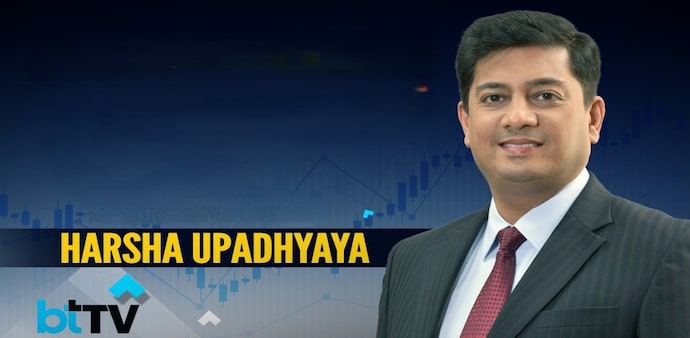
Harsha Upadhyaya, Chief Investment Officer for Equity at Kotak Mahindra Asset Management Company Ltd on Wednesday said the ongoing energy shock globally is unlikely to impact Nifty earnings to a major extent and that only a sentimental hit is likely.
In an exclusive edition of BTTV's Market Masters, Upadhyaya decoded the impact of a prolonged West Asia war on Nifty earnings, saying 60-65 per cent of the Nifty composition is represented by sectors like financials, hospitals and telecom that are not really impacted by the Iran war in the initial phase. If the war gets extended, there could be second and third order effects though, he said.
That, Upadhyaya said, could lead to more sectors facing issues in terms of profitability.
"But as of now, nearly two-third of Nifty basket is not really impacted in terms of fundamentals. But of course, sentiments are going to get worsened and, to that extent, we are already seeing price damage in almost all of the sectors. There is about a quarter of Nifty, which is negatively impacted that are your oil marketing companies where crude oil derivatives or fuel cost becomes a large part of the input cost and hence the margins may come under pressure," he said.
Upadhyay said about 10-15 per cent of Nifty weight is in sectors, which may get marginally benefitted from depreciating rupee.
"When you look at Nifty at this point of time, we are not really expecting too much of damage to earnings growth for financial year 2027. Of course, June quarter of this financial year is going to get impacted. But I think if the crisis ends soon, people will not really look at Q1 results or even Q2," Upadhyay said.
Kotak AMC is the fourth largest asset manager with equity assets of Rs 3.71 lakh crore.
Upadhyaya said it is a volatile period for the markets and one needs to re-evaluate in terms of valuations and growth, in terms of where the portfolio is and how to tide over market volatility.
"When you are in the middle of a volatile period or a crisis, it's always difficult to manage. But those who can manage volatility and look for wealth creation over the medium to long term, they benefit from those volatile periods," he said.
Rising US bond yields Upadhyaya said whenever US bond yields have moved up beyond a comfortable range, that has forced policy makers and decision makers to act swiftly and in the interest of markets. No country in the world wants a higher interest rates, he said.
"The interest rates that we have been seeing on the yields that we have been seeing on the 10-year or the 30-year bonds in US are almost at a two-decade high. So, to that extent, US is also facing the ill effects of the war. We have just seen energy shock leading to higher inflation, but it is going to lead to more of second-order effects if it continues," Upadhyaya said.
India & inflation Upadhyaya said whenever the retail pump prices go up, one sees that feeding into inflation over a period of time. Since fuel is used for transportation, not just personal transportation, but also for goods and service goods and products, it has cascading impact over a period of time if it remains at higher levels.
That is the worry, Upadhyaya said.
"If that happens, then how will the consumer basket change in terms of discretionary spend is a question. In many parts of the world, the prices have risen even more sharply. And not just the price, the availability has also become an issue for many nations, which means that the economic growth that we are going to see in the global context is going to get limited because of this shock. That is where one needs to be concerned about," Upadhyaya said.
Harsha Upadhyaya, Chief Investment Officer for Equity at Kotak Mahindra Asset Management Company Ltd on Wednesday said the ongoing energy shock globally is unlikely to impact Nifty earnings to a major extent and that only a sentimental hit is likely.
In an exclusive edition of BTTV's Market Masters, Upadhyaya decoded the impact of a prolonged West Asia war on Nifty earnings, saying 60-65 per cent of the Nifty composition is represented by sectors like financials, hospitals and telecom that are not really impacted by the Iran war in the initial phase. If the war gets extended, there could be second and third order effects though, he said.
That, Upadhyaya said, could lead to more sectors facing issues in terms of profitability.
"But as of now, nearly two-third of Nifty basket is not really impacted in terms of fundamentals. But of course, sentiments are going to get worsened and, to that extent, we are already seeing price damage in almost all of the sectors. There is about a quarter of Nifty, which is negatively impacted that are your oil marketing companies where crude oil derivatives or fuel cost becomes a large part of the input cost and hence the margins may come under pressure," he said.
Upadhyay said about 10-15 per cent of Nifty weight is in sectors, which may get marginally benefitted from depreciating rupee.
"When you look at Nifty at this point of time, we are not really expecting too much of damage to earnings growth for financial year 2027. Of course, June quarter of this financial year is going to get impacted. But I think if the crisis ends soon, people will not really look at Q1 results or even Q2," Upadhyay said.
Kotak AMC is the fourth largest asset manager with equity assets of Rs 3.71 lakh crore.
Upadhyaya said it is a volatile period for the markets and one needs to re-evaluate in terms of valuations and growth, in terms of where the portfolio is and how to tide over market volatility.
"When you are in the middle of a volatile period or a crisis, it's always difficult to manage. But those who can manage volatility and look for wealth creation over the medium to long term, they benefit from those volatile periods," he said.
Rising US bond yields Upadhyaya said whenever US bond yields have moved up beyond a comfortable range, that has forced policy makers and decision makers to act swiftly and in the interest of markets. No country in the world wants a higher interest rates, he said.
"The interest rates that we have been seeing on the yields that we have been seeing on the 10-year or the 30-year bonds in US are almost at a two-decade high. So, to that extent, US is also facing the ill effects of the war. We have just seen energy shock leading to higher inflation, but it is going to lead to more of second-order effects if it continues," Upadhyaya said.
India & inflation Upadhyaya said whenever the retail pump prices go up, one sees that feeding into inflation over a period of time. Since fuel is used for transportation, not just personal transportation, but also for goods and service goods and products, it has cascading impact over a period of time if it remains at higher levels.
That is the worry, Upadhyaya said.
"If that happens, then how will the consumer basket change in terms of discretionary spend is a question. In many parts of the world, the prices have risen even more sharply. And not just the price, the availability has also become an issue for many nations, which means that the economic growth that we are going to see in the global context is going to get limited because of this shock. That is where one needs to be concerned about," Upadhyaya said.