
Operation Sindoor: Nifty signals nervous start after India's strikes on Pakistan terror camps
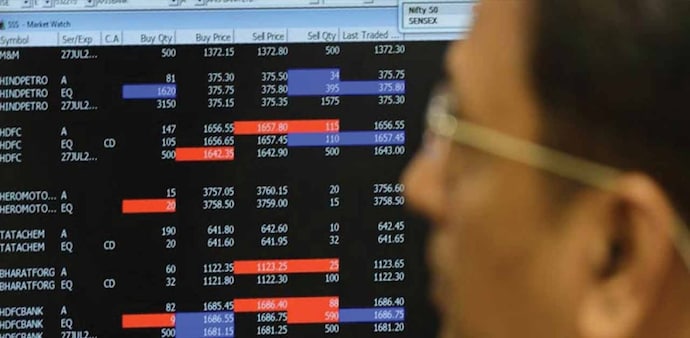
Futures on the Nifty 50 index traded on the GIFT City exchange fell by about 1.19% in early deals, suggesting a muted or negative open when the markets resume.
- May 7, 2025,
- Updated May 7, 2025 3:20 AM IST
Indian equity markets may open weaker on Wednesday, with early indicators showing a cautious reaction to the Indian Armed Forces' overnight precision strikes on terrorist infrastructure in Pakistan and Pakistan-Occupied Kashmir under Operation Sindoor. While the government has described the operation as “focused, measured and non-escalatory,” the initial market sentiment has reflected some anxiety.
Futures on the Nifty 50 index traded on the GIFT City exchange fell by about 1.19% in early deals, suggesting a muted or negative open when the markets resume. The pressure on futures indicates investor concern over near-term geopolitical uncertainty, especially after Pakistan acknowledged that at least four locations—Muzaffarabad, Kotli, Bahawalpur, and Muridke—were targeted in the strikes.
However, the broader market context offers some reassurance. After similar incidents in the past, such as the Balakot air strikes in February 2019, Indian markets initially reacted with sharp declines but quickly stabilized. On February 26, 2019, the Sensex dropped by 239 points and the Nifty by 44 points, but both indices recovered the very next day as fears of escalation eased.
The current official messaging is aligned with that historical pattern. Indian authorities have been quick to emphasize that no Pakistani military targets were involved in Operation Sindoor, and that the response was carefully calibrated to avoid further escalation.
After the Pahalgam terror attack on April 22, where 26 civilians were killed, markets had remained largely stable, indicating that investors were pricing in a proportionate response rather than a prolonged conflict.
Indian equity markets may open weaker on Wednesday, with early indicators showing a cautious reaction to the Indian Armed Forces' overnight precision strikes on terrorist infrastructure in Pakistan and Pakistan-Occupied Kashmir under Operation Sindoor. While the government has described the operation as “focused, measured and non-escalatory,” the initial market sentiment has reflected some anxiety.
Futures on the Nifty 50 index traded on the GIFT City exchange fell by about 1.19% in early deals, suggesting a muted or negative open when the markets resume. The pressure on futures indicates investor concern over near-term geopolitical uncertainty, especially after Pakistan acknowledged that at least four locations—Muzaffarabad, Kotli, Bahawalpur, and Muridke—were targeted in the strikes.
However, the broader market context offers some reassurance. After similar incidents in the past, such as the Balakot air strikes in February 2019, Indian markets initially reacted with sharp declines but quickly stabilized. On February 26, 2019, the Sensex dropped by 239 points and the Nifty by 44 points, but both indices recovered the very next day as fears of escalation eased.
The current official messaging is aligned with that historical pattern. Indian authorities have been quick to emphasize that no Pakistani military targets were involved in Operation Sindoor, and that the response was carefully calibrated to avoid further escalation.
After the Pahalgam terror attack on April 22, where 26 civilians were killed, markets had remained largely stable, indicating that investors were pricing in a proportionate response rather than a prolonged conflict.