
Sensex, Nifty: Will pain in mid & small caps continue? Deven Choksey explains
Choksey noted that while large caps may not have offered explosive returns recently, they have served a crucial purpose: "They have protected the capital," he said.
- Dec 10, 2025,
- Updated Dec 10, 2025 1:38 PM IST
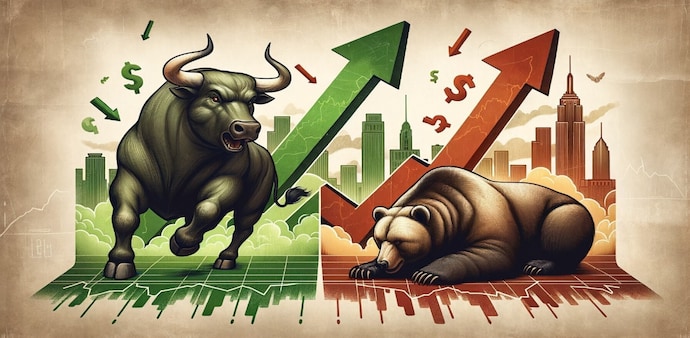
The Indian stock market in 2025 has become a tale of two distinct cities. While the heavyweights have managed to hold the fort, with BSE LargeCap and Sensex indices gaining nearly 8 per cent so far this year, the party seems decisively over for the broader markets. The smallcap index has slumped more than 8 per cent, while midcaps remain muted, trading nearly 1 per cent lower.
Despite a backdrop of robust macro parameters and GDP breaching 8 per cent, the mood on Dalal Street is one of confusion and pain. Why are portfolios bleeding when the economy is booming?
According to Deven Choksey, MD of DR Choksey FinServ, the current correction is a necessary hangover from past excesses. "The market is passing through a pain largely because of I think, its own past," Choksey told Business Today, pointing to the euphoria that drove valuations to unsustainable levels.
Choksey said that the math simply stopped adding up. Investors were paying astronomical premiums for companies with only moderate growth engines.
"When a company's business growth is seen growing between 15-20 per cent at best... you end up paying a price of 70-80-90 times the price-earnings ratio," Choksey explained. This mismatch left zero margin for error. Consequently, "in every rise, the investor wants to get rid of midcap and smallcap which are bought at a higher valuation."
In contrast, Choksey noted that while large caps may not have offered explosive returns recently, they have served a crucial purpose: "They have protected the capital," he said.
For retail investors nursing wounds with portfolios down 30-35 per cent, Choksey advises against the urge to fix it themselves, suggesting they consult quality advisors to restructure. "In every rally, the individual investor is getting stuck because I think he is employing his own mind and expertise on a subject which is not his," he warned.
For those looking to deploy fresh capital, Choksey’s mantra is simple: stick to the giants, because "the big is getting bigger." He believes large compounders will continue to increase their wealth sheet every four to five years.
Choksey revealed that his firm is seeing entry of new money from mature investors looking 5 to 10 years ahead.
He remains positive on the financial heavyweights, specifically the "triple twins" of the Bajaj group—Bajaj Finance, Bajaj Finserv, and Bajaj Housing Finance—citing their ability to unfold growth significantly. He also preferred Reliance Industries, banking on the monetisation of its Jio and Retail platforms.
In niche segments, Choksey flagged interest in Tata Technologies for its engineering R&D capabilities and Lotus Developers in the luxury real estate space.
The Indian stock market in 2025 has become a tale of two distinct cities. While the heavyweights have managed to hold the fort, with BSE LargeCap and Sensex indices gaining nearly 8 per cent so far this year, the party seems decisively over for the broader markets. The smallcap index has slumped more than 8 per cent, while midcaps remain muted, trading nearly 1 per cent lower.
Despite a backdrop of robust macro parameters and GDP breaching 8 per cent, the mood on Dalal Street is one of confusion and pain. Why are portfolios bleeding when the economy is booming?
According to Deven Choksey, MD of DR Choksey FinServ, the current correction is a necessary hangover from past excesses. "The market is passing through a pain largely because of I think, its own past," Choksey told Business Today, pointing to the euphoria that drove valuations to unsustainable levels.
Choksey said that the math simply stopped adding up. Investors were paying astronomical premiums for companies with only moderate growth engines.
"When a company's business growth is seen growing between 15-20 per cent at best... you end up paying a price of 70-80-90 times the price-earnings ratio," Choksey explained. This mismatch left zero margin for error. Consequently, "in every rise, the investor wants to get rid of midcap and smallcap which are bought at a higher valuation."
In contrast, Choksey noted that while large caps may not have offered explosive returns recently, they have served a crucial purpose: "They have protected the capital," he said.
For retail investors nursing wounds with portfolios down 30-35 per cent, Choksey advises against the urge to fix it themselves, suggesting they consult quality advisors to restructure. "In every rally, the individual investor is getting stuck because I think he is employing his own mind and expertise on a subject which is not his," he warned.
For those looking to deploy fresh capital, Choksey’s mantra is simple: stick to the giants, because "the big is getting bigger." He believes large compounders will continue to increase their wealth sheet every four to five years.
Choksey revealed that his firm is seeing entry of new money from mature investors looking 5 to 10 years ahead.
He remains positive on the financial heavyweights, specifically the "triple twins" of the Bajaj group—Bajaj Finance, Bajaj Finserv, and Bajaj Housing Finance—citing their ability to unfold growth significantly. He also preferred Reliance Industries, banking on the monetisation of its Jio and Retail platforms.
In niche segments, Choksey flagged interest in Tata Technologies for its engineering R&D capabilities and Lotus Developers in the luxury real estate space.