
Terrible Thursday ahead: GIFT Nifty slumps 200 pts after Trump’s tariff ambush
Effective August 27, the new tariff doubles duties on many Indian goods to 50%, making India the highest-tariffed U.S. trade partner alongside Brazil.
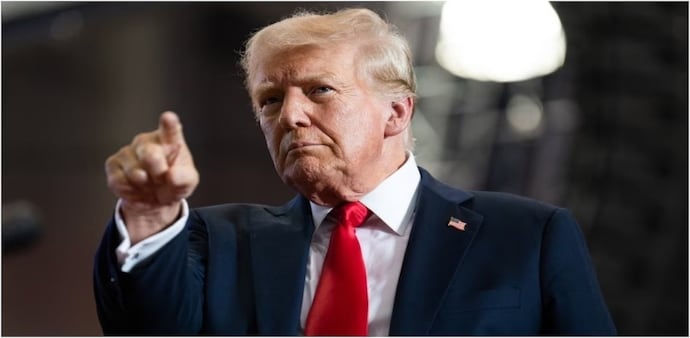
- Aug 6, 2025,
- Updated Aug 6, 2025 10:20 PM IST
Markets shuddered as GIFT Nifty plunged over 200 points following U.S. President Donald Trump’s executive order imposing an additional 25% tariff on Indian exports—citing New Delhi’s continued oil imports from Russia. The benchmark index tracking Indian equities in the GIFT City dropped to 24,536, signaling a gap-down open for the Nifty 50.
Effective August 27, the new tariff doubles duties on many Indian goods to 50%, making India the highest-tariffed U.S. trade partner alongside Brazil. This includes goods across textiles, automobiles, jewelry, chemicals, new energy, seafood, and footwear.
However, certain sectors—pharmaceuticals and semiconductors—are exempt under Section 232 of the Trade Expansion Act of 1962, cushioning them from the blow. Goods already in transit before the effective date will also escape the additional levy.
The order, grounded in the International Emergency Economic Powers Act and the National Emergencies Act, justifies the action by accusing India of directly or indirectly purchasing Russian oil—a practice the White House claims undermines U.S. foreign policy on the Ukraine conflict.
The Indian government strongly objected to the measure, calling it "unfair, unjustified, and unreasonable." India reiterated its right to secure affordable energy for 1.4 billion citizens and noted that several other countries continue similar trade practices without facing U.S. retaliation.
Economists project that these tariffs could shave 50 basis points off India’s GDP growth and trigger a 5% earnings hit for Indian companies included in major global indices.
The impact will be felt most in export-heavy industries—such as auto, oil & gas, chemicals, and apparel—where exposure to U.S. markets is significant. In contrast, domestically driven sectors—including finance, telecom, healthcare, power, and real estate—are expected to absorb the shock with limited disruption.
The broader Nifty 50 index has already fallen over 3% in the last month, reflecting market jitters over escalating U.S. trade actions. Trump’s order leaves room for modification, depending on India’s diplomatic response—offering a narrow window to negotiate before the tariff strikes fully land.
Markets shuddered as GIFT Nifty plunged over 200 points following U.S. President Donald Trump’s executive order imposing an additional 25% tariff on Indian exports—citing New Delhi’s continued oil imports from Russia. The benchmark index tracking Indian equities in the GIFT City dropped to 24,536, signaling a gap-down open for the Nifty 50.
Effective August 27, the new tariff doubles duties on many Indian goods to 50%, making India the highest-tariffed U.S. trade partner alongside Brazil. This includes goods across textiles, automobiles, jewelry, chemicals, new energy, seafood, and footwear.
However, certain sectors—pharmaceuticals and semiconductors—are exempt under Section 232 of the Trade Expansion Act of 1962, cushioning them from the blow. Goods already in transit before the effective date will also escape the additional levy.
The order, grounded in the International Emergency Economic Powers Act and the National Emergencies Act, justifies the action by accusing India of directly or indirectly purchasing Russian oil—a practice the White House claims undermines U.S. foreign policy on the Ukraine conflict.
The Indian government strongly objected to the measure, calling it "unfair, unjustified, and unreasonable." India reiterated its right to secure affordable energy for 1.4 billion citizens and noted that several other countries continue similar trade practices without facing U.S. retaliation.
Economists project that these tariffs could shave 50 basis points off India’s GDP growth and trigger a 5% earnings hit for Indian companies included in major global indices.
The impact will be felt most in export-heavy industries—such as auto, oil & gas, chemicals, and apparel—where exposure to U.S. markets is significant. In contrast, domestically driven sectors—including finance, telecom, healthcare, power, and real estate—are expected to absorb the shock with limited disruption.
The broader Nifty 50 index has already fallen over 3% in the last month, reflecting market jitters over escalating U.S. trade actions. Trump’s order leaves room for modification, depending on India’s diplomatic response—offering a narrow window to negotiate before the tariff strikes fully land.