
What Rakesh Jhunjhunwala might have told Madhu Kela, Shankar Sharma on market investing amid US-Iran war
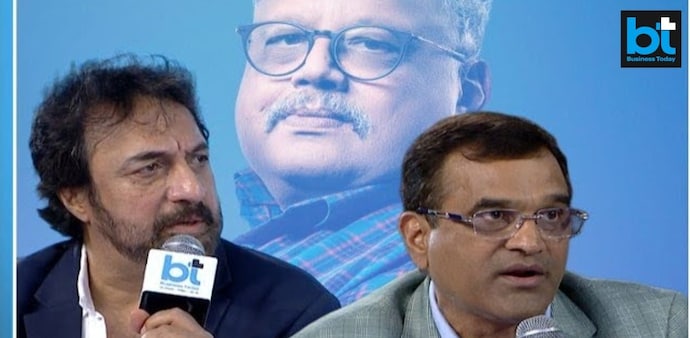
Madhu Kela said Rakesh Jhunjhunwala would have really watched for the markets to stabilise, and for bad news to stop impacting prices.
- Mar 31, 2026,
- Updated Mar 31, 2026 2:16 PM IST
Late ace investor Rakesh Jhunjhunwala was an eternal bull. Known as the Warren Buffett of India, or the Big Bull, he stayed bullish even in the most bearish phases of the market.
Madhusudan Kela, who spent considerable time with the billionaire investor in his last few years, said that if Jhunjhunwala had been with us today, he would certainly not have been ‘long’ in terms of trading in the current market condition, and probably short.
"He would have told me only one thing: Chup Chap baith; tereko maalum hain yeh sab kab khatam hone wala hain?," Kela said, suggesting Jhunjhunwala would have advised him to sit quietly, as nobody knows when the West Asia crisis will end.
"He would have told me: Don't try to be brave in this market. If you are trading, go with the trend," Kela said.
The founder at MK Ventures recalled that Jhunjhunwala was a bit careful during the Covid-19 period. He said the moment Jhunjhunwala realised that the bad news had stopped impacting stock prices and the market, he called him asking how much gold he had at home.
"I want you to be 105 per cent invested in equity," Kela recalled the ace investor as saying.
He said Rakesh Jhunjhunwala would have really watched for the markets to stabilise, and for bad news to stop impacting prices. There will be a point when bad news continues to come, but stocks stop reacting to it, and that will be the turning point of the market, Kela said at Business Today MindRush & India’s Best CEOs Awards on the topic "Beyond the Markets Mayhem".
Market veteran Shankar Sharma, who was close to Jhunjhunwala, said this is what risk management is all about.
"You don't have to be playing offensive big shots in a difficult situation. Sometimes, just don't play. Leave the balls. We will see how it goes. But that is what the difference between the men and the boys is. Boys will be always aggressively playing, and you have permanent loss of capital staring at you if you play aggressively in markets, as we are right now," Sharma said.
Sharma said Jhunjhunwala would surely been shorting stocks, apart from being long. "You can't reveal 100 per cent of what you do. That is what we are not required to do also, as a private investors who manage their own capital. As a fund managers who have to be out on TV every day."
Kela said if one wants to hit only sixes in a game of cricket, he will soon have to sit in pavilion.
"One has to have senses how to approach the market. How to remain sane in this kind of environment. How to not leverage however bullish I am. I can find companies in this market where cash is higher than the market cap; how bigger a deep value you can get. But I'm not yet buying because of the paranoia of surviving through these difficult times, you know? So you have to, at some point of time, realize your view is different and the market is telling you something different," Kela said.
He said: "So I'll be buyer but would wait till the time prices tell you that bad news has stopped impacting the markets and it has no impact on the share prices. And the time will come, whether it is now or after 15 days or after one month."
Late ace investor Rakesh Jhunjhunwala was an eternal bull. Known as the Warren Buffett of India, or the Big Bull, he stayed bullish even in the most bearish phases of the market.
Madhusudan Kela, who spent considerable time with the billionaire investor in his last few years, said that if Jhunjhunwala had been with us today, he would certainly not have been ‘long’ in terms of trading in the current market condition, and probably short.
"He would have told me only one thing: Chup Chap baith; tereko maalum hain yeh sab kab khatam hone wala hain?," Kela said, suggesting Jhunjhunwala would have advised him to sit quietly, as nobody knows when the West Asia crisis will end.
"He would have told me: Don't try to be brave in this market. If you are trading, go with the trend," Kela said.
The founder at MK Ventures recalled that Jhunjhunwala was a bit careful during the Covid-19 period. He said the moment Jhunjhunwala realised that the bad news had stopped impacting stock prices and the market, he called him asking how much gold he had at home.
"I want you to be 105 per cent invested in equity," Kela recalled the ace investor as saying.
He said Rakesh Jhunjhunwala would have really watched for the markets to stabilise, and for bad news to stop impacting prices. There will be a point when bad news continues to come, but stocks stop reacting to it, and that will be the turning point of the market, Kela said at Business Today MindRush & India’s Best CEOs Awards on the topic "Beyond the Markets Mayhem".
Market veteran Shankar Sharma, who was close to Jhunjhunwala, said this is what risk management is all about.
"You don't have to be playing offensive big shots in a difficult situation. Sometimes, just don't play. Leave the balls. We will see how it goes. But that is what the difference between the men and the boys is. Boys will be always aggressively playing, and you have permanent loss of capital staring at you if you play aggressively in markets, as we are right now," Sharma said.
Sharma said Jhunjhunwala would surely been shorting stocks, apart from being long. "You can't reveal 100 per cent of what you do. That is what we are not required to do also, as a private investors who manage their own capital. As a fund managers who have to be out on TV every day."
Kela said if one wants to hit only sixes in a game of cricket, he will soon have to sit in pavilion.
"One has to have senses how to approach the market. How to remain sane in this kind of environment. How to not leverage however bullish I am. I can find companies in this market where cash is higher than the market cap; how bigger a deep value you can get. But I'm not yet buying because of the paranoia of surviving through these difficult times, you know? So you have to, at some point of time, realize your view is different and the market is telling you something different," Kela said.
He said: "So I'll be buyer but would wait till the time prices tell you that bad news has stopped impacting the markets and it has no impact on the share prices. And the time will come, whether it is now or after 15 days or after one month."