
Why Samir Arora prefers ‘elimination strategy’ over chasing winners for alpha generation
Samir Arora, founder and Group CIO of Helios Capital said that investors should centre their efforts on identifying and avoiding stocks most likely to underperform.
- Feb 16, 2026,
- Updated Feb 16, 2026 4:40 PM IST
Samir Arora, founder and Group CIO of Helios Capital said that investors should centre their efforts on identifying and avoiding stocks most likely to underperform, rather than pursuing elusive top performers. This approach, labelled 'Elimination strategy' over stock picking heroics, underpinning his investing philosophy.
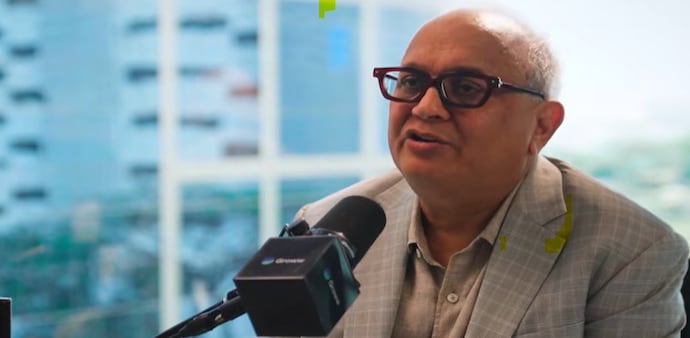
In a recent investment podcast with Groww, Samir Arora stated, "It is easier to know who the losers are than to know who the winners will be," adding that fund managers frequently underperform not through missing out on high-flying stocks, but by holding those that destroy capital. He underscored that such an elimination approach is more realistic for sustained results.
According to Arora, "The approach, he suggested, improves the probability of delivering steady alpha without excessive risk-taking." His strategy advocates systematically avoiding the bottom 150 stocks in the index universe, focusing on risk control over aggressive bets.
On recent macro developments, Samir Arora commented, "On the macro front, Arora described the recent easing of US-India trade tensions as a sentiment booster rather than a structural turning point." He argued that the removal of severe tariff risks simply restores "normalcy" to Indian markets, rather than sparking a rally.
He observed that India’s recent underperformance relative to emerging markets was largely due to tariff uncertainties and external shocks. However, "India’s normal is not bad," he noted, citing the country's historical earnings growth of 13–15 percent in rupee terms. He suggested that a swift recovery compared to global peers is unlikely after underperformance, but emphasised the stability of India’s growth pattern.
Reflecting on foreign institutional investor (FII) flows, Arora said, "With the Nifty trading around 22x earnings, Arora dismissed the idea that foreign institutional investor (FII) outflows were purely valuation-driven." He explained that much of the selling happened during geopolitical and tariff-related events, not simply due to high market valuations.
Elaborating, Samir Arora remarked, "According to him, much of the selling coincided with geopolitical shocks, war-related developments and tariff threats. In fact, FIIs continued to participate in high-valuation primary issuances, particularly in new-age businesses." He also stressed the essential role of foreign capital "not only for market liquidity but also for currency stability and private equity exits," and noted, "If one part of the capital cycle slows, it becomes more painful for the broader ecosystem."
Addressing the “China Plus One” strategy, Arora said, "On whether India has missed the bus on the 'China Plus One' opportunity, Arora acknowledged delays but argued that global diversification away from China is inevitable." He indicated that India stands to benefit from supply chain shifts if policy stability and competitiveness are ensured.
Discussing sectoral outlooks, Arora expressed caution regarding IT services, warning of the disruptive effect of artificial intelligence on established outsourcing models and highlighting medium-term earnings uncertainty. He also warned, "The auto sector, in his view, faces a more complex transition. The shift towards electric vehicles (EVs) could lead to capital destruction for incumbents if investments fail to generate adequate returns." At the same time, he noted "selective conviction in certain new-age technology platforms" and reiterated a preference for gold as a hedge during uncertain times.
For retail investors considering global exchange-traded funds, Arora emphasised caution. "For retail investors exploring global ETFs, Arora urged caution. While international diversification has merit, he highlighted currency risks, taxation complexities and the challenge of understanding overseas business cycles."
He maintained that India’s relatively consistent long-term growth profile, he argued, should not be underestimated in the rush to diversify abroad. Ultimately, he said, "overarching advice in a volatile market: avoid drama, avoid obvious losers, and anchor decisions in earnings realism rather than narratives."
Samir Arora, founder and Group CIO of Helios Capital said that investors should centre their efforts on identifying and avoiding stocks most likely to underperform, rather than pursuing elusive top performers. This approach, labelled 'Elimination strategy' over stock picking heroics, underpinning his investing philosophy.
In a recent investment podcast with Groww, Samir Arora stated, "It is easier to know who the losers are than to know who the winners will be," adding that fund managers frequently underperform not through missing out on high-flying stocks, but by holding those that destroy capital. He underscored that such an elimination approach is more realistic for sustained results.
According to Arora, "The approach, he suggested, improves the probability of delivering steady alpha without excessive risk-taking." His strategy advocates systematically avoiding the bottom 150 stocks in the index universe, focusing on risk control over aggressive bets.
On recent macro developments, Samir Arora commented, "On the macro front, Arora described the recent easing of US-India trade tensions as a sentiment booster rather than a structural turning point." He argued that the removal of severe tariff risks simply restores "normalcy" to Indian markets, rather than sparking a rally.
He observed that India’s recent underperformance relative to emerging markets was largely due to tariff uncertainties and external shocks. However, "India’s normal is not bad," he noted, citing the country's historical earnings growth of 13–15 percent in rupee terms. He suggested that a swift recovery compared to global peers is unlikely after underperformance, but emphasised the stability of India’s growth pattern.
Reflecting on foreign institutional investor (FII) flows, Arora said, "With the Nifty trading around 22x earnings, Arora dismissed the idea that foreign institutional investor (FII) outflows were purely valuation-driven." He explained that much of the selling happened during geopolitical and tariff-related events, not simply due to high market valuations.
Elaborating, Samir Arora remarked, "According to him, much of the selling coincided with geopolitical shocks, war-related developments and tariff threats. In fact, FIIs continued to participate in high-valuation primary issuances, particularly in new-age businesses." He also stressed the essential role of foreign capital "not only for market liquidity but also for currency stability and private equity exits," and noted, "If one part of the capital cycle slows, it becomes more painful for the broader ecosystem."
Addressing the “China Plus One” strategy, Arora said, "On whether India has missed the bus on the 'China Plus One' opportunity, Arora acknowledged delays but argued that global diversification away from China is inevitable." He indicated that India stands to benefit from supply chain shifts if policy stability and competitiveness are ensured.
Discussing sectoral outlooks, Arora expressed caution regarding IT services, warning of the disruptive effect of artificial intelligence on established outsourcing models and highlighting medium-term earnings uncertainty. He also warned, "The auto sector, in his view, faces a more complex transition. The shift towards electric vehicles (EVs) could lead to capital destruction for incumbents if investments fail to generate adequate returns." At the same time, he noted "selective conviction in certain new-age technology platforms" and reiterated a preference for gold as a hedge during uncertain times.
For retail investors considering global exchange-traded funds, Arora emphasised caution. "For retail investors exploring global ETFs, Arora urged caution. While international diversification has merit, he highlighted currency risks, taxation complexities and the challenge of understanding overseas business cycles."
He maintained that India’s relatively consistent long-term growth profile, he argued, should not be underestimated in the rush to diversify abroad. Ultimately, he said, "overarching advice in a volatile market: avoid drama, avoid obvious losers, and anchor decisions in earnings realism rather than narratives."