
Zomato, Swiggy shares: How to play the quick commerce theme ahead of a potential Zepto IPO
Mehta, Spark Capital Private Wealth Deputy MD and CIO-Equity Devang Mehta said his approach to the space remains “a bit orthodox”, arguing that Indian markets still value listed companies primarily on 'EPS or profitability' and on the ability to generate operating and free cash flows.
- Jul 5, 2026,
- Updated Jul 5, 2026 3:00 PM IST
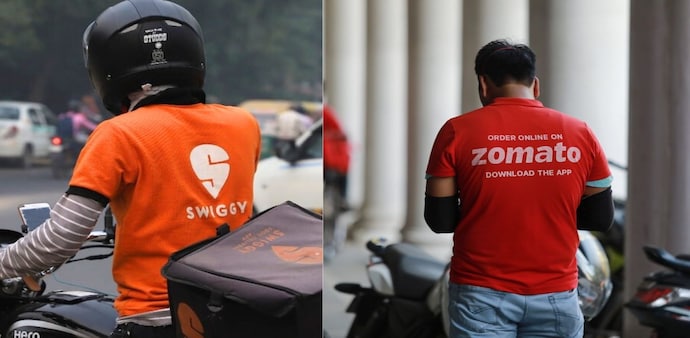
Investors chasing India’s quick commerce boom should look past headline growth and focus instead on a far older market discipline: profits, cash flows and return ratios. That is the core message from Spark Capital Private Wealth Deputy MD and CIO-Equity Devang Mehta, who struck a cautious note on listed new-age tech names such as Zomato and Swiggy even as expectations build around a potential Zepto IPO.
Profitability over hype
In an exclusive interview to BTTV, Mehta said his approach to the space remains “a bit orthodox”, arguing that Indian markets still value listed companies primarily on 'EPS,earnings per share or profitability' and on the ability to generate operating and free cash flows.
In his view, that framework becomes especially relevant in segments where scale is being bought through aggressive spending. “Companies which are sort of burning cash, companies which are just turning profitable or there is no roadmap to become profitable, are companies which probably you should avoid at this point,” he said.
Why quick commerce faces a tougher test
The warning is significant because quick commerce has emerged as one of the market’s most closely watched consumption themes, promising rapid delivery, urban convenience and high customer engagement. But Mehta’s comments suggest that public market investors may be less willing to underwrite prolonged cash burn than private capital was during the sector’s expansion phase.
His concern is not only about current profitability but also about capital efficiency. “Every penny should go to generate that incremental ROE for the company,” he said, underlining that growth without returns may struggle to command premium valuations for long.
Competition risk is rising
Mehta also flagged the competitive intensity building across the segment. Beyond listed players and upcoming IPO candidates, he warned that “enough intense competition” could come from larger business houses as well, potentially squeezing margins further in a business already dependent on execution, logistics density and customer retention.
That observation ties into the broader market debate around retail and consumption, where investors are increasingly distinguishing between premium, cash-generative businesses and models that still require heavy subsidy-led expansion.
Where investors may look instead
Rather than backing companies with uncertain earnings visibility, Mehta said investors currently have enough alternatives elsewhere in the market. He pointed to sectors where “you find cash flows, where you find the EPS growth, where you see even margin expansion in certain cases.”
The takeaway is clear: in a market that is rewarding earnings quality more selectively, quick commerce may remain exciting as a theme, but stock selection will likely hinge on one question above all others — who can convert growth into durable profits.
Investors chasing India’s quick commerce boom should look past headline growth and focus instead on a far older market discipline: profits, cash flows and return ratios. That is the core message from Spark Capital Private Wealth Deputy MD and CIO-Equity Devang Mehta, who struck a cautious note on listed new-age tech names such as Zomato and Swiggy even as expectations build around a potential Zepto IPO.
Profitability over hype
In an exclusive interview to BTTV, Mehta said his approach to the space remains “a bit orthodox”, arguing that Indian markets still value listed companies primarily on 'EPS,earnings per share or profitability' and on the ability to generate operating and free cash flows.
In his view, that framework becomes especially relevant in segments where scale is being bought through aggressive spending. “Companies which are sort of burning cash, companies which are just turning profitable or there is no roadmap to become profitable, are companies which probably you should avoid at this point,” he said.
Why quick commerce faces a tougher test
The warning is significant because quick commerce has emerged as one of the market’s most closely watched consumption themes, promising rapid delivery, urban convenience and high customer engagement. But Mehta’s comments suggest that public market investors may be less willing to underwrite prolonged cash burn than private capital was during the sector’s expansion phase.
His concern is not only about current profitability but also about capital efficiency. “Every penny should go to generate that incremental ROE for the company,” he said, underlining that growth without returns may struggle to command premium valuations for long.
Competition risk is rising
Mehta also flagged the competitive intensity building across the segment. Beyond listed players and upcoming IPO candidates, he warned that “enough intense competition” could come from larger business houses as well, potentially squeezing margins further in a business already dependent on execution, logistics density and customer retention.
That observation ties into the broader market debate around retail and consumption, where investors are increasingly distinguishing between premium, cash-generative businesses and models that still require heavy subsidy-led expansion.
Where investors may look instead
Rather than backing companies with uncertain earnings visibility, Mehta said investors currently have enough alternatives elsewhere in the market. He pointed to sectors where “you find cash flows, where you find the EPS growth, where you see even margin expansion in certain cases.”
The takeaway is clear: in a market that is rewarding earnings quality more selectively, quick commerce may remain exciting as a theme, but stock selection will likely hinge on one question above all others — who can convert growth into durable profits.