
Bought these stocks? Here's how a ₹144 crore pump-and-dump scam fooled retail investors
Bought these stocks? Here's how a ₹144 crore pump-and-dump scam fooled retail investors
The capital markets regulator uncovered the pump-and-dump network involving around 226 entities across 5 illiquid listed companies.
Business Today Desk
- Jul 2, 2026,
- Updated Jul 2, 2026 5:16 PM IST
They thought they'd been careful. No paper trail, no direct transfers, no obvious fingerprints on a scheme worth ₹144 crore.
What they didn't account for was lunch and travel.
Capital markets regulator SEBI was already keeping an eye out. Investigators didn't find a smoking gun. They found a digital trail — ordinary, everyday data that most people never think twice about leaving behind. And when they pieced it together, the picture was damning.
Advertisement
Piece by piece, an elaborate stock manipulation plot began to unravel.
How did SEBI nail down 'industrial scale' stock manipulation?
The capital markets regulator uncovered the pump-and-dump network involving around 226 entities across 5 illiquid listed companies. To unearth the scam, a wide range of evidence beyond trading records came to the SEBI's rescue.
This included WhatsApp chats, bulk SMS gateway data, airline booking records, hotel reservations, food delivery app orders, employee records, website ownership and domain registration details, bank funds and telecom records.
Investigators became suspicious when the alleged mastermind of the scam, Hanif Shekh, denied using certain mobile numbers. The regulator then matched airline bookings made through IndiGo, email IDs and phone numbers with other digital records to establish links.
Advertisement
They also corroborated WhatsApp chats, travel records, and financial transactions to connect members of the alleged network. Describing the case as one of its most sophisticated probes, SEBI said that the manipulation was carried out on an "industrial scale" and threatened investor confidence.
So, what is a pump-and-dump scam?
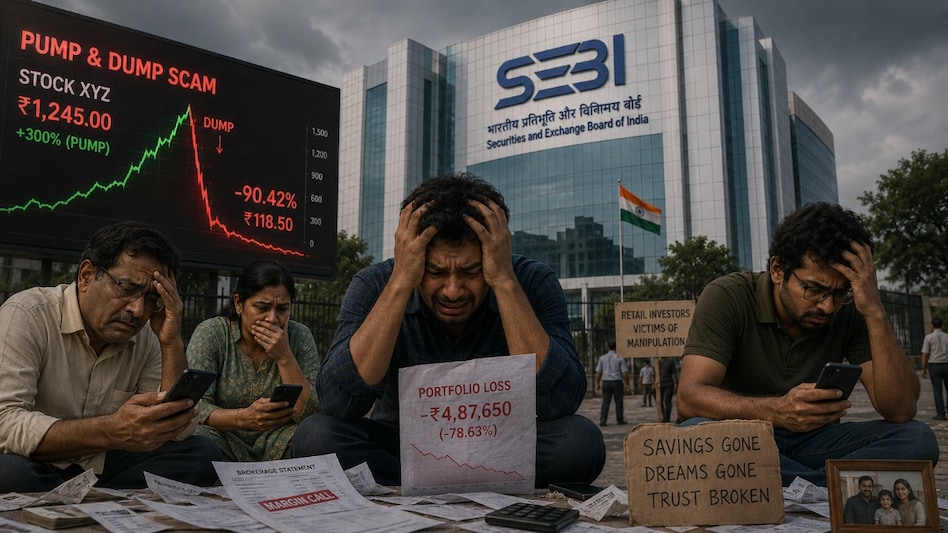
In the case of stock markets, 'pump and dump' refers to a fraudulent scheme where operators artificially inflate (pump) the price of a stock by creating false hype, misleading recommendations, or coordinated trading and then sell (dump) their heavily accumulated shares at the peak, leaving retail investors with huge financial losses.
Last year, the SEBI banned actor Arshad Warsi, his wife Maria Goretti and 57 others from the securities market for 1-5 years for their involvement in a pump and dump stock manipulation scheme. They artificially inflated the share prices of Sadhana Broadcast Limited (SBL), now known as Crystal Business System Ltd.
Advertisement
Nature of the scam
According to SEBI, the alleged network artificially inflated stock prices and trading volumes before offloading shares to unsuspecting retail investors. The alleged scheme involved Mauria Udyog Ltd, Vishal Fabrics Ltd, 7NR Retail Ltd, GBL Industries Ltd, and Darjeeling Ropeway Company Ltd.
The network reportedly used coordinated trading and promotional activities to manufacture investor interest. Prices were manipulated before operators exited their positions, leaving retail investors grappling with losses after prices crashed.
Connected traders bought and sold shares among themselves to create the illusion of active market participation. Volume creators and promoters of the stocks were not behind in reaping the benefits.
While volume traders executed synchronised or circular trends to make the stocks appear in demand, promoters allegedly helped create a positive narrative around the companies.
SEBI action
Soon after the scam was unearthed, SEBI cracked the whip. The capital markets regulator directed the accused entities to return the alleged illegal profits they pocketed from stock manipulation. They have also been directed to pay interest on that amount so they don't benefit from holding the money.
Advertisement
Besides this, SEBI has also levied fines to the tune of ₹47.8 crore on the accused entities for violating securities market rules.
Most of the accused have been barred from buying, selling or dealing in the stock market for 4-7 years. They have also been prohibited from acting as directors, key managerial personnel or being associated with listed companies or SEBI-registered intermediaries during the ban, wherever applicable.
Disclaimer: Business Today provides stock market news for informational purposes only and should not be construed as investment advice. Readers are encouraged to consult with a qualified financial advisor before making any investment decisions.
They thought they'd been careful. No paper trail, no direct transfers, no obvious fingerprints on a scheme worth ₹144 crore.
What they didn't account for was lunch and travel.
Capital markets regulator SEBI was already keeping an eye out. Investigators didn't find a smoking gun. They found a digital trail — ordinary, everyday data that most people never think twice about leaving behind. And when they pieced it together, the picture was damning.
Advertisement
Piece by piece, an elaborate stock manipulation plot began to unravel.
How did SEBI nail down 'industrial scale' stock manipulation?
The capital markets regulator uncovered the pump-and-dump network involving around 226 entities across 5 illiquid listed companies. To unearth the scam, a wide range of evidence beyond trading records came to the SEBI's rescue.
This included WhatsApp chats, bulk SMS gateway data, airline booking records, hotel reservations, food delivery app orders, employee records, website ownership and domain registration details, bank funds and telecom records.
Investigators became suspicious when the alleged mastermind of the scam, Hanif Shekh, denied using certain mobile numbers. The regulator then matched airline bookings made through IndiGo, email IDs and phone numbers with other digital records to establish links.
Advertisement
They also corroborated WhatsApp chats, travel records, and financial transactions to connect members of the alleged network. Describing the case as one of its most sophisticated probes, SEBI said that the manipulation was carried out on an "industrial scale" and threatened investor confidence.
So, what is a pump-and-dump scam?
In the case of stock markets, 'pump and dump' refers to a fraudulent scheme where operators artificially inflate (pump) the price of a stock by creating false hype, misleading recommendations, or coordinated trading and then sell (dump) their heavily accumulated shares at the peak, leaving retail investors with huge financial losses.
Last year, the SEBI banned actor Arshad Warsi, his wife Maria Goretti and 57 others from the securities market for 1-5 years for their involvement in a pump and dump stock manipulation scheme. They artificially inflated the share prices of Sadhana Broadcast Limited (SBL), now known as Crystal Business System Ltd.
Advertisement
Nature of the scam
According to SEBI, the alleged network artificially inflated stock prices and trading volumes before offloading shares to unsuspecting retail investors. The alleged scheme involved Mauria Udyog Ltd, Vishal Fabrics Ltd, 7NR Retail Ltd, GBL Industries Ltd, and Darjeeling Ropeway Company Ltd.
The network reportedly used coordinated trading and promotional activities to manufacture investor interest. Prices were manipulated before operators exited their positions, leaving retail investors grappling with losses after prices crashed.
Connected traders bought and sold shares among themselves to create the illusion of active market participation. Volume creators and promoters of the stocks were not behind in reaping the benefits.
While volume traders executed synchronised or circular trends to make the stocks appear in demand, promoters allegedly helped create a positive narrative around the companies.
SEBI action
Soon after the scam was unearthed, SEBI cracked the whip. The capital markets regulator directed the accused entities to return the alleged illegal profits they pocketed from stock manipulation. They have also been directed to pay interest on that amount so they don't benefit from holding the money.
Advertisement
Besides this, SEBI has also levied fines to the tune of ₹47.8 crore on the accused entities for violating securities market rules.
Most of the accused have been barred from buying, selling or dealing in the stock market for 4-7 years. They have also been prohibited from acting as directors, key managerial personnel or being associated with listed companies or SEBI-registered intermediaries during the ban, wherever applicable.
Disclaimer: Business Today provides stock market news for informational purposes only and should not be construed as investment advice. Readers are encouraged to consult with a qualified financial advisor before making any investment decisions.
Read more!