
BT EXPLAINER | NSE EGR - What is Electronic Gold Receipt, how it works | Salient features
BT EXPLAINER | NSE EGR - What is Electronic Gold Receipt, how it works | Salient features
The National Stock Exchange of India recently launched Electronic Gold Receipts as a new segment to deepen India’s gold ecosystem.
Pawan Kumar Nahar
- May 7, 2026,
- Updated May 7, 2026 3:42 PM IST
The National Stock Exchange of India (NSE) recently launched Electronic Gold Receipts (EGRs) as a new segment to deepen India’s gold ecosystem. This May 4 launch is aimed at bringing transparency, efficiency and formalisation to India’s large gold market, while creating a regulated, secure and technology-driven platform for trading the precious metal.
Advertisement
What are EGRs?
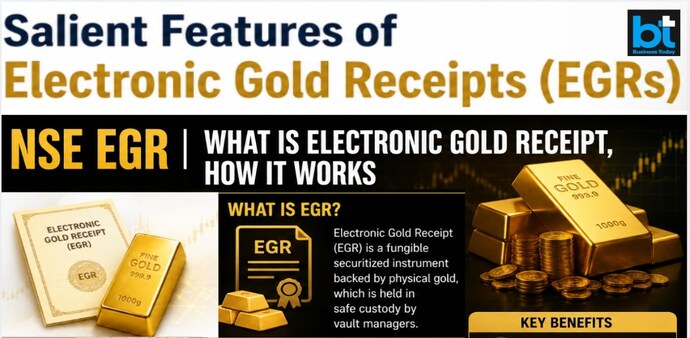
EGRs are dematerialised securities that represent ownership of physical gold. The gold is stored in SEBI-accredited vaults and held electronically through depositories. Each EGR is fully backed by physical gold and can be traded on the exchange, bringing gold into the formal financial system.
Why are EGRs launched?
The move is intended to bridge the long-standing gap between physical gold and financial markets. NSE said the new framework is designed to support transparent price discovery, improve participation and build trust among stakeholders such as jewellers, refiners, traders and institutional investors.
NSE said gold holds a distinct place in India, where it is valued for tradition and gifting and is also seen as a long-term store of value during uncertain times. As investors look for transparent pricing, safe holding and the option to start small, EGRs offer a more modern route to participate in gold.
Advertisement
How do EGRs work?
The receipts are linked to standardised gold and allow market-based price discovery, electronic holding and the flexibility to buy and sell in defined denominations and purity. They also come with the option to convert to and from physical gold as per the prescribed process. NSE said this combination of standardisation, accessibility and regulation could make EGRs an important route for gold participation in the years ahead.
Conversion into Gold
The exchange also recorded the successful dematerialisation of a 1,000-gram gold bar into an Electronic Gold Receipt. NSE said this demonstrated the seamless conversion of physical gold into a secure and tradable electronic instrument within the regulated ecosystem, and underlined the operational readiness of the EGR framework for efficient, transparent and delivery-backed trading in gold.
Advertisement
In a nutshell
According to the NSE, EGRs are digital assets representing gold ownership that can be traded on exchanges like stocks and bonds, while remaining backed by physical gold that can be redeemed at any time.
Among the benefits listed for investors are unified pricing described as 'one nation, one price', easy exchange trading, greater convenience than holding physical gold, liquidity, assured gold quality, fungibility of gold delivery, settlement guarantee, portfolio diversification, holding through a demat account and flexible trading across different gold denominations.
With the launch of EGRs, NSE has introduced a framework that combines physical backing with electronic trading, demat holding and regulated storage. The exchange said the segment is expected to support a more transparent and efficient gold market in India while offering investors and market participants a formal channel for trading and holding gold.
Disclaimer: Business Today provides stock market news for informational purposes only and should not be construed as investment advice. Readers are encouraged to consult with a qualified financial advisor before making any investment decisions.
The National Stock Exchange of India (NSE) recently launched Electronic Gold Receipts (EGRs) as a new segment to deepen India’s gold ecosystem. This May 4 launch is aimed at bringing transparency, efficiency and formalisation to India’s large gold market, while creating a regulated, secure and technology-driven platform for trading the precious metal.
Advertisement
What are EGRs?
EGRs are dematerialised securities that represent ownership of physical gold. The gold is stored in SEBI-accredited vaults and held electronically through depositories. Each EGR is fully backed by physical gold and can be traded on the exchange, bringing gold into the formal financial system.
Why are EGRs launched?
The move is intended to bridge the long-standing gap between physical gold and financial markets. NSE said the new framework is designed to support transparent price discovery, improve participation and build trust among stakeholders such as jewellers, refiners, traders and institutional investors.
NSE said gold holds a distinct place in India, where it is valued for tradition and gifting and is also seen as a long-term store of value during uncertain times. As investors look for transparent pricing, safe holding and the option to start small, EGRs offer a more modern route to participate in gold.
Advertisement
How do EGRs work?
The receipts are linked to standardised gold and allow market-based price discovery, electronic holding and the flexibility to buy and sell in defined denominations and purity. They also come with the option to convert to and from physical gold as per the prescribed process. NSE said this combination of standardisation, accessibility and regulation could make EGRs an important route for gold participation in the years ahead.
Conversion into Gold
The exchange also recorded the successful dematerialisation of a 1,000-gram gold bar into an Electronic Gold Receipt. NSE said this demonstrated the seamless conversion of physical gold into a secure and tradable electronic instrument within the regulated ecosystem, and underlined the operational readiness of the EGR framework for efficient, transparent and delivery-backed trading in gold.
Advertisement
In a nutshell
According to the NSE, EGRs are digital assets representing gold ownership that can be traded on exchanges like stocks and bonds, while remaining backed by physical gold that can be redeemed at any time.
Among the benefits listed for investors are unified pricing described as 'one nation, one price', easy exchange trading, greater convenience than holding physical gold, liquidity, assured gold quality, fungibility of gold delivery, settlement guarantee, portfolio diversification, holding through a demat account and flexible trading across different gold denominations.
With the launch of EGRs, NSE has introduced a framework that combines physical backing with electronic trading, demat holding and regulated storage. The exchange said the segment is expected to support a more transparent and efficient gold market in India while offering investors and market participants a formal channel for trading and holding gold.
Disclaimer: Business Today provides stock market news for informational purposes only and should not be construed as investment advice. Readers are encouraged to consult with a qualified financial advisor before making any investment decisions.
Read more!