
Treat governance, disclosures as reputational assets: CEA V Anantha Nageswaran to capital market participants
A financial system that combines technological sophistication with institutional improvements can act as a stabilising force in an increasingly uncertain global environment, the CEA said.
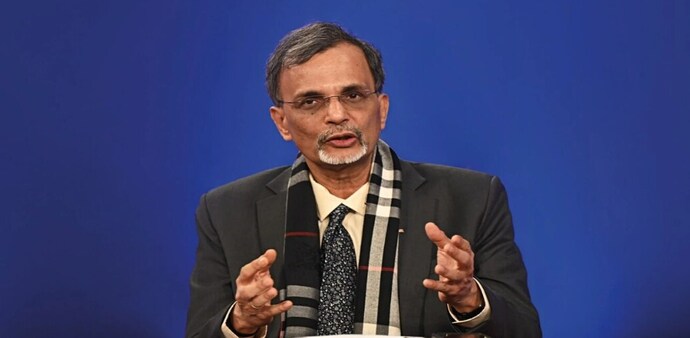
- Feb 26, 2026,
- Updated Feb 26, 2026 6:20 PM IST
V Anantha Nageswaran, Chief Economic Advisor to the Government of India, said on Thursday that policymakers can provide stability and predictability, but liquidity, innovation and market depth ultimately depend on investors, intermediaries and institutions. He added that long-term capital, responsible innovation and constructive engagement with regulatory frameworks remain central to the continued development of India’s capital markets.
Speaking at the Global Securities Markets Conclave 2.0, hosted by the International Financial Services Centres Authority at GIFT IFSC, the CEA asked investors, asset managers and financial entrepreneurs to bring capital, patience, a constructive approach and long-term commitment to India’s productive economy.
"Invest in transparency, treat governance and disclosure as reputational assets that reduce borrowing costs. Be partners with regulators on sand boxes that build the resilience rather than evade scrutiny. Innovative responsibility," he said adding that complexity without a clarity destroys securitisation everywhere.
Nageswaran said India's strong macroeconomic performance coexists with the global environment that does not automatically reward economic strength with stable capital flows, underscoring the importance of strategic engagement with the evolving global financial system.
The CEA said India's aspiration to become a developed economy by 2047 will require sustained mobilisation of both domestic and global capital. The objective is not merely to attract financial flows, but to channel them towards prductive investors that enhances productivity strengthens infrastructure offer reservation and generates.
A financial system that combines technological sophistication with institutional improvements can act as a stabilising force in an increasingly uncertain global environment, the CEA said. He said the task before policymakers and market participants is not just to change but to shape it.
The CEA said when passive flows and algorithmic strategies converge on AI-driven exposures, price discovery risks becoming momentum-driven rather than fundamentals-driven. For India, strategic patients may therefore represent a strength, not a limitation.
He said it is not necessary to be the first mover in every technological way to be a long-term beneficiary. A second mover advantage permits careful observation of technological maturation, regulatory adaptation and business model consolidation before large-scale capital deployment.
This, he said, enables selective integration participation in enabled productivity gains, while avoiding disproportionate exposure to valuation cycles or infrastructure over extension. India's comparative advantage excel beyond frontier models, he said.
V Anantha Nageswaran, Chief Economic Advisor to the Government of India, said on Thursday that policymakers can provide stability and predictability, but liquidity, innovation and market depth ultimately depend on investors, intermediaries and institutions. He added that long-term capital, responsible innovation and constructive engagement with regulatory frameworks remain central to the continued development of India’s capital markets.
Speaking at the Global Securities Markets Conclave 2.0, hosted by the International Financial Services Centres Authority at GIFT IFSC, the CEA asked investors, asset managers and financial entrepreneurs to bring capital, patience, a constructive approach and long-term commitment to India’s productive economy.
"Invest in transparency, treat governance and disclosure as reputational assets that reduce borrowing costs. Be partners with regulators on sand boxes that build the resilience rather than evade scrutiny. Innovative responsibility," he said adding that complexity without a clarity destroys securitisation everywhere.
Nageswaran said India's strong macroeconomic performance coexists with the global environment that does not automatically reward economic strength with stable capital flows, underscoring the importance of strategic engagement with the evolving global financial system.
The CEA said India's aspiration to become a developed economy by 2047 will require sustained mobilisation of both domestic and global capital. The objective is not merely to attract financial flows, but to channel them towards prductive investors that enhances productivity strengthens infrastructure offer reservation and generates.
A financial system that combines technological sophistication with institutional improvements can act as a stabilising force in an increasingly uncertain global environment, the CEA said. He said the task before policymakers and market participants is not just to change but to shape it.
The CEA said when passive flows and algorithmic strategies converge on AI-driven exposures, price discovery risks becoming momentum-driven rather than fundamentals-driven. For India, strategic patients may therefore represent a strength, not a limitation.
He said it is not necessary to be the first mover in every technological way to be a long-term beneficiary. A second mover advantage permits careful observation of technological maturation, regulatory adaptation and business model consolidation before large-scale capital deployment.
This, he said, enables selective integration participation in enabled productivity gains, while avoiding disproportionate exposure to valuation cycles or infrastructure over extension. India's comparative advantage excel beyond frontier models, he said.