
Any impact on the energy basket has indirect implications for the cement industry: Madhavkrishna Singhania
Madhavkrishna Singhania noted that cement remains one of the most inexpensive commodities globally, yet it is the second most consumed commodity after water.
- Mar 28, 2026,
- Updated Mar 28, 2026 7:29 PM IST
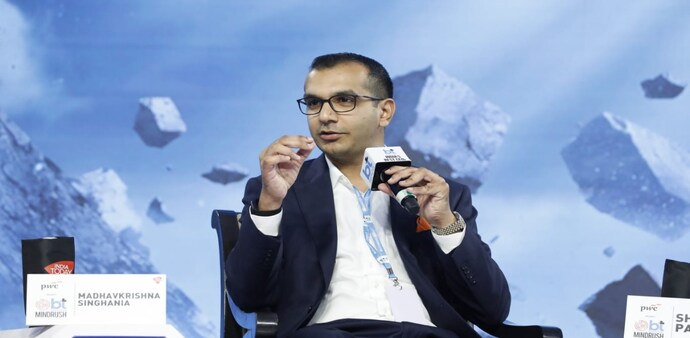
Speaking at the Business Today MindRush & India’s Best CEOs Awards, Madhavkrishna Singhania, Joint MD & CEO of JK Cement, highlighted the indirect but significant impact of the ongoing energy crisis on the cement industry.
Singhania noted that cement remains one of the most inexpensive commodities globally, yet it is the second most consumed commodity after water.
He emphasised that the sector is highly energy-intensive. “Even though we don’t use crude oil directly, any impact on the energy basket has indirect implications for us,” he said.
He explained that rising crude prices have pushed up the cost of petroleum coke, a key fuel used in cement manufacturing. “With crude prices rising, pet coke prices have also increased,” he said, adding that energy accounts for 30–40% of the sector’s total cost.
Beyond fuel, packaging has emerged as another pressure point. Cement bags are the second-largest cost component, with nearly 90% of cement sold in polypropylene (PP) bags. “Due to gas shortages, refineries shifted focus towards gas production, which reduced PP output. This has added to inflationary pressure on packaging,” he noted.
As a result, the overall cost impact is estimated at ₹30–40 per bag. However, the industry has not fully passed on these costs to consumers. “While cement has not been directly hit, there are cascading impacts across sectors when such a crisis unfolds,” he added.
Singhania also stressed the growing importance of supply chain diversification in an increasingly uncertain geopolitical environment. He noted that geopolitical volatility has fundamentally changed how companies approach sourcing.
“It is no longer just about buying from the lowest-cost supplier. Companies now need to build more diversified and resilient sourcing strategies,” he said. He added that, on the demand side, over-reliance on specific export markets should also be reassessed.
Despite near-term challenges, Singhania remains optimistic about India’s outlook. “There may be a few months of turbulence, but India continues to be one of the best places to be, especially in the current global environment,” he said.
Speaking at the Business Today MindRush & India’s Best CEOs Awards, Madhavkrishna Singhania, Joint MD & CEO of JK Cement, highlighted the indirect but significant impact of the ongoing energy crisis on the cement industry.
Singhania noted that cement remains one of the most inexpensive commodities globally, yet it is the second most consumed commodity after water.
He emphasised that the sector is highly energy-intensive. “Even though we don’t use crude oil directly, any impact on the energy basket has indirect implications for us,” he said.
He explained that rising crude prices have pushed up the cost of petroleum coke, a key fuel used in cement manufacturing. “With crude prices rising, pet coke prices have also increased,” he said, adding that energy accounts for 30–40% of the sector’s total cost.
Beyond fuel, packaging has emerged as another pressure point. Cement bags are the second-largest cost component, with nearly 90% of cement sold in polypropylene (PP) bags. “Due to gas shortages, refineries shifted focus towards gas production, which reduced PP output. This has added to inflationary pressure on packaging,” he noted.
As a result, the overall cost impact is estimated at ₹30–40 per bag. However, the industry has not fully passed on these costs to consumers. “While cement has not been directly hit, there are cascading impacts across sectors when such a crisis unfolds,” he added.
Singhania also stressed the growing importance of supply chain diversification in an increasingly uncertain geopolitical environment. He noted that geopolitical volatility has fundamentally changed how companies approach sourcing.
“It is no longer just about buying from the lowest-cost supplier. Companies now need to build more diversified and resilient sourcing strategies,” he said. He added that, on the demand side, over-reliance on specific export markets should also be reassessed.
Despite near-term challenges, Singhania remains optimistic about India’s outlook. “There may be a few months of turbulence, but India continues to be one of the best places to be, especially in the current global environment,” he said.