
Clarity in uncertainty can unlock opportunity: Sanjeev Krishnan of PwC India at BT MindRush
Amid rising global uncertainty, clarity in leadership is emerging as a key differentiator for businesses. At BT MindRush, PwC India Chair Sanjeev Krishnan said disruption in capital and technology can also unlock new opportunities for India Inc in current times.
- Mar 28, 2026,
- Updated Mar 28, 2026 4:55 PM IST
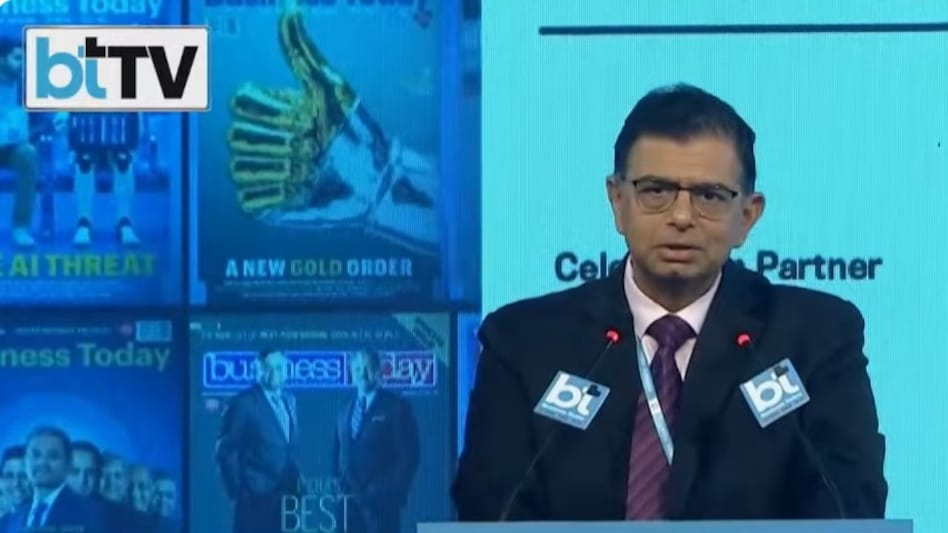
BT MindRush: At a time when global businesses are navigating volatility across markets, technology, and capital flows, Sanjeev Krishnan, Chairperson of PwC in India, emphasised that uncertainty should not be seen purely as a risk, but as a strategic opportunity. Speaking at the 14th edition of Business Today MindRush, Krishnan outlined how leadership clarity can become a decisive differentiator for India Inc.
“There are opportunities in this uncertain world. But for that to happen, what is possibly needed is clarity in the minds of leadership,” Krishnan said, adding that clarity itself can act as both “insurance and opportunity” in volatile environments.
Framing the current business landscape, Krishnan noted that Indian companies are once again at a crossroads, similar to the early days of the Covid-19 pandemic. “We didn’t know what would really hit us and what would change. Today, we find ourselves at a similar juncture, with a significant amount of uncertainty,” he said. According to him, two critical forces—capital and technology—are simultaneously driving disruption while also creating new growth avenues.
Krishnan highlighted that conversations at the forum were centred on understanding how India Inc is dealing with ongoing disruptions and what insights can be drawn from global ecosystems. He stressed that many of today’s challenges may persist, making it essential for businesses to adopt frameworks that are resilient over time.
Breaking down leadership strategy in uncertain times, he pointed to five key themes: control, learn, evolve, act, and rethink.
On control, Krishnan acknowledged that many variables are outside a company’s influence. However, he argued that this should not lead to inaction. Instead, leaders must identify areas where they can exercise conviction and take calculated bets. He cited Amazon Web Services (AWS) as a classic example. “Post the 2008 financial crisis, when most companies were conserving cash, Jeff Bezos chose to invest heavily in what became AWS. That decision, backed by execution and tenacity, created immense long-term value,” he said.
The second pillar -- Learning -- was equally critical. Krishnan pointed to Microsoft’s transformation under CEO Satya Nadella as a case study in cultural reinvention. “Microsoft moved from being a ‘know-it-all’ organisation to a ‘learn-it-all’ organisation. This shift made leadership more adaptive and open to continuous learning,” he noted. The change, he said, played a crucial role in reshaping Microsoft into one of the world’s most valuable companies.
On evolution, Krishnan highlighted Nvidia as a defining example of long-term strategic vision. “Back in 2007–09, Nvidia was largely focused on gaming applications. It took Jensen Huang’s conviction to pivot towards artificial intelligence. The investments in GPU computing during that period were uncertain, with no clear visibility on returns. But today, those bets have powered the global AI revolution,” he said, underscoring how early, high-conviction investments can reshape industries.
Explaining the idea of acting with intent, he cautioned that leadership is not about reckless decision-making but about aligning the organisation to seize emerging opportunities. “Closer home, Jio is a strong example. At a time of high data costs and low digital penetration, Jio disrupted the market by making data affordable and building a digital ecosystem,” he said.
On rethinking strategy, Krishnan pointed to the Tata Group’s global acquisitions as a turning point for Indian corporate ambition. “There was a time when Indian companies were hesitant about overseas acquisitions. Ratan Tata changed that narrative with landmark deals such as Tata Steel’s acquisition in the UK and Jaguar Land Rover. The challenge is how you rethink and refashion a brand to create long-term value,” he said.
Krishnan underscored that in an era defined by rapid technological change and capital reallocation, static strategies are no longer viable. Instead, organisations must remain in a continuous cycle of learning and adaptation while maintaining clarity in decision-making.
“In conclusion, there will be many challenges in this environment. While there is a need to conserve resources, it should not come at the cost of innovation and calibrated risk-taking that can create value tomorrow,” he said.
BT MindRush: At a time when global businesses are navigating volatility across markets, technology, and capital flows, Sanjeev Krishnan, Chairperson of PwC in India, emphasised that uncertainty should not be seen purely as a risk, but as a strategic opportunity. Speaking at the 14th edition of Business Today MindRush, Krishnan outlined how leadership clarity can become a decisive differentiator for India Inc.
“There are opportunities in this uncertain world. But for that to happen, what is possibly needed is clarity in the minds of leadership,” Krishnan said, adding that clarity itself can act as both “insurance and opportunity” in volatile environments.
Framing the current business landscape, Krishnan noted that Indian companies are once again at a crossroads, similar to the early days of the Covid-19 pandemic. “We didn’t know what would really hit us and what would change. Today, we find ourselves at a similar juncture, with a significant amount of uncertainty,” he said. According to him, two critical forces—capital and technology—are simultaneously driving disruption while also creating new growth avenues.
Krishnan highlighted that conversations at the forum were centred on understanding how India Inc is dealing with ongoing disruptions and what insights can be drawn from global ecosystems. He stressed that many of today’s challenges may persist, making it essential for businesses to adopt frameworks that are resilient over time.
Breaking down leadership strategy in uncertain times, he pointed to five key themes: control, learn, evolve, act, and rethink.
On control, Krishnan acknowledged that many variables are outside a company’s influence. However, he argued that this should not lead to inaction. Instead, leaders must identify areas where they can exercise conviction and take calculated bets. He cited Amazon Web Services (AWS) as a classic example. “Post the 2008 financial crisis, when most companies were conserving cash, Jeff Bezos chose to invest heavily in what became AWS. That decision, backed by execution and tenacity, created immense long-term value,” he said.
The second pillar -- Learning -- was equally critical. Krishnan pointed to Microsoft’s transformation under CEO Satya Nadella as a case study in cultural reinvention. “Microsoft moved from being a ‘know-it-all’ organisation to a ‘learn-it-all’ organisation. This shift made leadership more adaptive and open to continuous learning,” he noted. The change, he said, played a crucial role in reshaping Microsoft into one of the world’s most valuable companies.
On evolution, Krishnan highlighted Nvidia as a defining example of long-term strategic vision. “Back in 2007–09, Nvidia was largely focused on gaming applications. It took Jensen Huang’s conviction to pivot towards artificial intelligence. The investments in GPU computing during that period were uncertain, with no clear visibility on returns. But today, those bets have powered the global AI revolution,” he said, underscoring how early, high-conviction investments can reshape industries.
Explaining the idea of acting with intent, he cautioned that leadership is not about reckless decision-making but about aligning the organisation to seize emerging opportunities. “Closer home, Jio is a strong example. At a time of high data costs and low digital penetration, Jio disrupted the market by making data affordable and building a digital ecosystem,” he said.
On rethinking strategy, Krishnan pointed to the Tata Group’s global acquisitions as a turning point for Indian corporate ambition. “There was a time when Indian companies were hesitant about overseas acquisitions. Ratan Tata changed that narrative with landmark deals such as Tata Steel’s acquisition in the UK and Jaguar Land Rover. The challenge is how you rethink and refashion a brand to create long-term value,” he said.
Krishnan underscored that in an era defined by rapid technological change and capital reallocation, static strategies are no longer viable. Instead, organisations must remain in a continuous cycle of learning and adaptation while maintaining clarity in decision-making.
“In conclusion, there will be many challenges in this environment. While there is a need to conserve resources, it should not come at the cost of innovation and calibrated risk-taking that can create value tomorrow,” he said.