
Indian policies not conducive to attract foreign explores: Kirit Parikh
Indian exploration and production policies over the years were not conductive to attract international player and retrospective changes made them lose trust, said former Member Planning Commission Kirit Parikh.
- Mar 28, 2026,
- Updated Mar 28, 2026 8:49 PM IST
The exploration and production policy changes by the government act as a constraint for foreign explorers as they don’t see getting returns on their investments, said former Member Planning Commission Kirit Parikh.
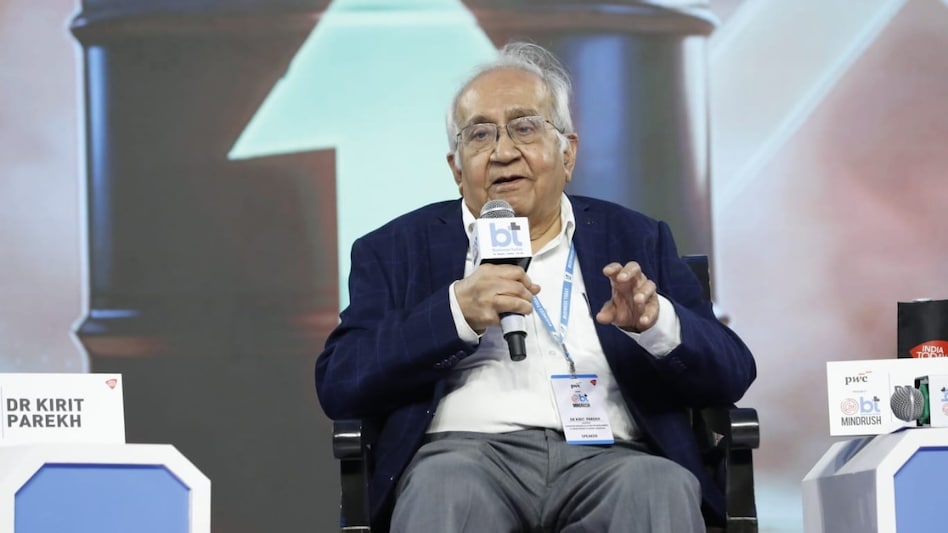
Speaking at the Business Today MindRush & India’s Best CEOs Awards, Parikh, who headed the Gas Pricing Reforms Committee, said many large exploratory companies assess Indian potential to be very poor compared to West Asia, Iran and Indonesia.
“So far policies have been not been conducive to attract explorers here. We were using price control, now there is freedom for selling and pricing their produce. However, they are not fully trusting us because of couple of incidents where government made retrospective policy changes. It takes years to build trust and minutes to lose,” said Parikh.
On the impact of the ongoing West Asia conflict, Parikh said that it will have a long term impact on energy resources and country needs to cut down on fossil fuel consumption while switching to alternate resources such as solar.
Samiran Chakraborty, Managing Director, Chief Economist, Citi Bank India says the war’s impact on Indian GDP will be lesser compared to the Consumer Price Index (CPI), owing to hit in supply of petrochemical products.
“GDP impact will be lesser about 20-30 basis point on FY27 GDP. The CPI impact will be higher at 50-70 points,” he said, adding India doesn’t use gas for electricity production and being exporters of petrol and diesel is expected to hedge us from bigger inflation impact.
Parikh feels that the government needs to raise the prices of oil and gas to make people use it economically. However, Chakraborty said that government will try to absorb it before pass it to people.
“First effect is on the fiscal and monetary policy is in wait and watch. It all depends on how long the conflict lasts and we are starting from low level of inflation and taking inflation through fiscal and not monetary policy,” he added.
On need for building strategic reserves, Parikh said the country needs to have at least 90 days of reserves to handle any crisis situation.
The exploration and production policy changes by the government act as a constraint for foreign explorers as they don’t see getting returns on their investments, said former Member Planning Commission Kirit Parikh.
Speaking at the Business Today MindRush & India’s Best CEOs Awards, Parikh, who headed the Gas Pricing Reforms Committee, said many large exploratory companies assess Indian potential to be very poor compared to West Asia, Iran and Indonesia.
“So far policies have been not been conducive to attract explorers here. We were using price control, now there is freedom for selling and pricing their produce. However, they are not fully trusting us because of couple of incidents where government made retrospective policy changes. It takes years to build trust and minutes to lose,” said Parikh.
On the impact of the ongoing West Asia conflict, Parikh said that it will have a long term impact on energy resources and country needs to cut down on fossil fuel consumption while switching to alternate resources such as solar.
Samiran Chakraborty, Managing Director, Chief Economist, Citi Bank India says the war’s impact on Indian GDP will be lesser compared to the Consumer Price Index (CPI), owing to hit in supply of petrochemical products.
“GDP impact will be lesser about 20-30 basis point on FY27 GDP. The CPI impact will be higher at 50-70 points,” he said, adding India doesn’t use gas for electricity production and being exporters of petrol and diesel is expected to hedge us from bigger inflation impact.
Parikh feels that the government needs to raise the prices of oil and gas to make people use it economically. However, Chakraborty said that government will try to absorb it before pass it to people.
“First effect is on the fiscal and monetary policy is in wait and watch. It all depends on how long the conflict lasts and we are starting from low level of inflation and taking inflation through fiscal and not monetary policy,” he added.
On need for building strategic reserves, Parikh said the country needs to have at least 90 days of reserves to handle any crisis situation.