
‘Legacy can earn you trust, but not preference,’ says Godrej Enterprises Group's Nyrika Holkar
Legacy alone is not enough to stay relevant, says Nyrika Holkar, executive director at Godrej Enterprises Group.
- Oct 23, 2026,
- Updated Oct 23, 2026 6:18 PM IST
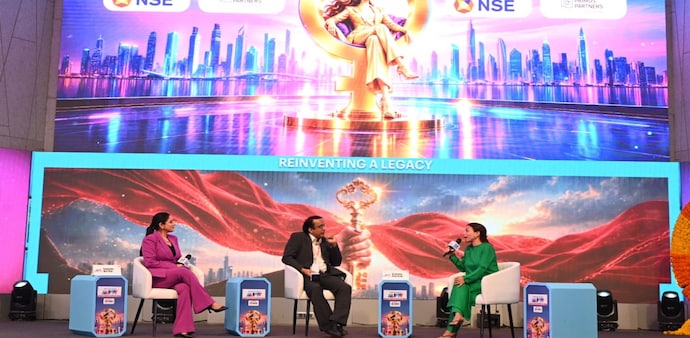
The next phase of growth at Godrej Enterprises Group will be shaped by India’s evolving needs, from energy-efficient appliances and battery storage to aerospace and logistics, Nyrika Holkar, executive director at Godrej Enterprises Group, said during a fireside chat titled ‘Reinventing a Legacy’ at the Business Today Most Powerful Women Awards 2026.
“The idea is that, at least how we look at it, is what does the country need, and I think that fuels our bets,” Holkar said, reflecting on how the 129-year-old business group diversified into several industries by reinventing itself.
For Holkar, steering a legacy business is not simply about preserving its legacy but ensuring it remains competitive as markets, technology and consumer expectations evolve.
Legacy alone is not enough to stay relevant, according to Holkar. “It’s the entrepreneurial spirit which we need to keep alive in each generation, which started with a locks business and has now diversified into furniture, security and aerospace. Every generation has had to reinvent itself,” Holkar explained.
“Legacy can earn you trust and confidence, but it doesn’t earn you preference,” she said. “That preference and relevance have to be earned in every generation.”
Godrej Enterprises Group is looking to expand its consumer businesses in underpenetrated markets while scaling industrial businesses that could benefit from the country’s growing manufacturing capabilities and expanding space programme.
Battery energy storage and energy-efficient appliances are among the areas where the group sees opportunities. India’s low air-conditioner penetration, coupled with rising temperatures, presents significant growth potential for consumer durables manufacturers.
“Given that the penetration for air-conditioners is in single digits today, and with rising heat levels, it's no longer a discretionary item. It is a productivity tool,” Holkar said, adding that Godrej Enterprises Group ensures that the products it makes are energy-efficient so that they don't have a larger carbon footprint.
While consumer businesses have substantial headroom for growth, Holkar identified aerospace as a promising area for the group’s next phase of expansion.
“Businesses where we have invested over the last few decades are really poised for growth today. Whether it is foreign OEM interest in India or India's space programme, I think there are uncharted territories today where India is at the forefront,” Holkar said.
“We have built capabilities over the decades, but opening up the aerospace industry to the private sector and startups makes this a very exciting time to be in India. I think that is going to be a very exciting growth story for the future,” she added.
The group is also looking to unlock growth across its existing portfolio. Holkar said its consumer-facing businesses have strong brand recognition and leadership positions in their respective categories, but low penetration in several markets leaves room for expansion.
Furniture, where she cited a roughly 70% unorganised market, and air conditioners, with single-digit penetration, offer opportunities to expand organised-market participation. Newer categories such as digital locks and safes could provide additional growth avenues.
Holkar, however, believes that the idea of making bold bets has to be supported by accountability.
“We have to be able to test assumptions, and we have to be able to importantly decide to stop something if we believe the assumptions don't support the original hypothesis... You have to be able to adapt, and I think that's really where this culture of experimentation, this culture of learning fast, and the culture of knowing when to stop, are all important,” Holkar said.