
MPW: Indigenous design, R&D and innovation to drive India’s next phase of industrial growth
Women leaders say India's next growth phase hinges on indigenous design, sustained R&D and innovation, as EV and defence leaders call for homegrown technologies, resilient supply chains and globally competitive products.
- Oct 23, 2026,
- Updated Nov 10, 2026 6:41 PM IST
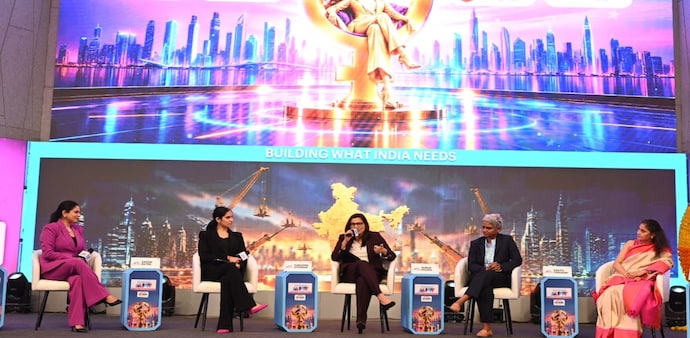
India’s next phase of industrial growth will depend not just on its ability to manufacture products, but on its capacity to design, develop and own the technologies behind them. That was a central message from women leaders across electric mobility and defence technology at Business Today’s Most Powerful Women event in Mumbai.
The panel discussion on Building What India Needs featured industry leaders Suman Mishra, MD and CEO of Mahindra Last Mile Mobility; Shilpa Choudari, whole-time director of Zen Technologies; and Rekha Murthy Rangarajan, whole-time director of Data Patterns. They highlighted indigenous innovation, R&D and resilient supply chains as critical to building globally competitive Indian businesses.
Choudari, from defence technology company Zen Technologies, stressed the importance of owning product design and developing capabilities suited to emerging warfare technologies.
“Unless we own the design, we will never be able to put India on the global front,” she said, highlighting the need to strengthen indigenous product development.
The rapid evolution of drone warfare, electronic systems and other advanced defence technologies has created new opportunities for Indian companies. Choudari said her company began investing in anti-drone technology in 2018, anticipating future requirements. She also emphasised closer collaboration between industry and universities to bridge gaps in practical engineering skills, particularly in artificial intelligence, robotics and embedded systems.
Rekha of Data Patterns echoed the need to prioritise design over manufacturing alone, arguing that Indian companies must develop products for global markets rather than limit themselves to domestic requirements.
“We should take pride in what we build,” she said, adding that Indian products must be developed for the global arena.
She also called for sustained investment in R&D, noting that defence electronics face rapid technological obsolescence. Building adaptable systems and strengthening domestic supply chains will be essential to maintaining technological competitiveness.
The discussion also highlighted the commercial case for indigenous innovation in electric mobility. Mishra, who leads an electric commercial vehicle manufacturer backed by the Mahindra Group, said economics was increasingly driving the adoption of electric three-wheelers. She noted that the category had reached around 50% electrification, with lower running costs encouraging operators to switch from conventional fuels.
“Ultimately, like everything, like an Indian customer, it is going to be economics,” she said.
Mishra also stressed that electric vehicle businesses must remain viable as government subsidies are withdrawn. Differentiated products, tight cost management, economies of scale and continued R&D spending will be necessary to sustain growth amid commodity price fluctuations and supply chain volatility.
Across both sectors, the panellists identified a common challenge: translating India's manufacturing capabilities into technological ownership. While domestic policy support has helped create opportunities, global competitiveness will require proactive investment in innovation, talent development and resilient supply chains.
The broader takeaway was that self-reliance cannot be measured just by how much India manufactures domestically. Its next growth phase will depend on whether Indian companies can develop original technologies, build commercially sustainable products and establish themselves as suppliers to the world.