
Declining OPT participation from 95% to 78%: Why fewer Indian STEM students are choosing to stay in US
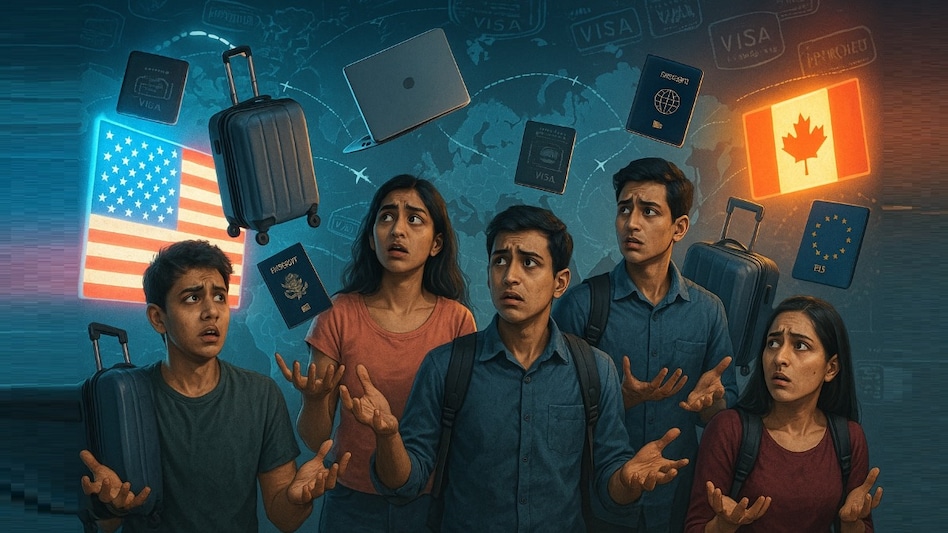
US is no longer the top destination for foreign students as it once was, as there has been an 18% overall drop in international students since their peak in 2017
- Oct 11, 2025,
- Updated Oct 11, 2025 12:51 PM IST
In recent years, the United States has seen a significant decline in the number of international students pursuing higher education, particularly from India and China. According to a U.S.-based venture capitalist, Debarghya Das, the U.S. is no longer the top destination for foreign students as it once was, citing an 18% overall drop in international students since their peak in 2017. Among the hardest hit are Indian students, who have seen a 42% drop in numbers compared to 2017.
One area that highlights this shift is the STEM (Science, Technology, Engineering, and Mathematics) field, which has historically been a major draw for international students in the U.S.
The data by OPT Observatory, shared by Das, stresses an alarming trend: Indian STEM students are far more likely to stay in the U.S. on Optional Practical Training (OPT) visas (which allow graduates to work in their field for up to three years) compared to their Chinese counterparts. While 80-90% of Indian STEM graduates choose to stay, only 50-60% of Chinese students do the same.
However, even these numbers are declining fast. Das's post points to a 25% drop in OPT participation for Chinese students and a 17% drop for Indian students, going from 75% to 50% for China and from 95% to 78% for India in recent years.
The Bigger Picture: Falling Numbers and Changing Choices
The data from OPT Observatory sheds light on another broader trend: Indian and Chinese STEM master's graduates make up about 30% of all international graduates in the U.S. across all fields and degrees. However, fewer students from these two countries are coming to the U.S. to study, and fewer are staying afterwards.
A chart shared by Das visually represents this shift. The graph shows the decrease in the number of Indian and Chinese STEM master's students enrolling and staying in the U.S. on OPT over the years. It’s clear that a combination of stricter immigration policies, a global pandemic, and more attractive alternatives elsewhere has contributed to this decline.
Why is this happening?
A multitude of factors are behind this shift:
-
Policy Changes: Tightened immigration policies and increased visa restrictions have made the U.S. less appealing to international students. For instance, the H-1B visa lottery system, which is crucial for many STEM graduates, remains uncertain, discouraging students from pursuing long-term stays in the U.S.
-
Rising Competition: Other countries, such as Canada, Australia, and the U.K., as well as a majority of European and Gulf nations, have implemented more welcoming policies for international students, offering easier pathways to permanent residency and better work opportunities post-graduation. These nations are increasingly becoming preferred destinations for students looking for career growth after completing their studies.
What does this mean for India?
The trend is particularly concerning for India, as Indian students make up a large proportion of STEM graduates in the U.S. The 42% decline in enrollment since 2017 signals a shift in how India’s top talent views the U.S. as a destination. As Das pointed out, fewer Indian students are choosing the U.S., and even fewer are opting to stay after graduation.
This signals an urgent need for both countries to reassess their international education and migration policies, particularly with regard to long-term work opportunities for foreign students. The falling OPT participation rates for Indian and Chinese students suggest that more and more international graduates are seeking opportunities elsewhere.
In recent years, the United States has seen a significant decline in the number of international students pursuing higher education, particularly from India and China. According to a U.S.-based venture capitalist, Debarghya Das, the U.S. is no longer the top destination for foreign students as it once was, citing an 18% overall drop in international students since their peak in 2017. Among the hardest hit are Indian students, who have seen a 42% drop in numbers compared to 2017.
One area that highlights this shift is the STEM (Science, Technology, Engineering, and Mathematics) field, which has historically been a major draw for international students in the U.S.
The data by OPT Observatory, shared by Das, stresses an alarming trend: Indian STEM students are far more likely to stay in the U.S. on Optional Practical Training (OPT) visas (which allow graduates to work in their field for up to three years) compared to their Chinese counterparts. While 80-90% of Indian STEM graduates choose to stay, only 50-60% of Chinese students do the same.
However, even these numbers are declining fast. Das's post points to a 25% drop in OPT participation for Chinese students and a 17% drop for Indian students, going from 75% to 50% for China and from 95% to 78% for India in recent years.
The Bigger Picture: Falling Numbers and Changing Choices
The data from OPT Observatory sheds light on another broader trend: Indian and Chinese STEM master's graduates make up about 30% of all international graduates in the U.S. across all fields and degrees. However, fewer students from these two countries are coming to the U.S. to study, and fewer are staying afterwards.
A chart shared by Das visually represents this shift. The graph shows the decrease in the number of Indian and Chinese STEM master's students enrolling and staying in the U.S. on OPT over the years. It’s clear that a combination of stricter immigration policies, a global pandemic, and more attractive alternatives elsewhere has contributed to this decline.
Why is this happening?
A multitude of factors are behind this shift:
-
Policy Changes: Tightened immigration policies and increased visa restrictions have made the U.S. less appealing to international students. For instance, the H-1B visa lottery system, which is crucial for many STEM graduates, remains uncertain, discouraging students from pursuing long-term stays in the U.S.
-
Rising Competition: Other countries, such as Canada, Australia, and the U.K., as well as a majority of European and Gulf nations, have implemented more welcoming policies for international students, offering easier pathways to permanent residency and better work opportunities post-graduation. These nations are increasingly becoming preferred destinations for students looking for career growth after completing their studies.
What does this mean for India?
The trend is particularly concerning for India, as Indian students make up a large proportion of STEM graduates in the U.S. The 42% decline in enrollment since 2017 signals a shift in how India’s top talent views the U.S. as a destination. As Das pointed out, fewer Indian students are choosing the U.S., and even fewer are opting to stay after graduation.
This signals an urgent need for both countries to reassess their international education and migration policies, particularly with regard to long-term work opportunities for foreign students. The falling OPT participation rates for Indian and Chinese students suggest that more and more international graduates are seeking opportunities elsewhere.