
Fareed Zakaria flays Trump for H-1B visa move: 'Bypassing law, pattern of larger power grab'
Zakaria called out the administration's pattern of bypassing established norms and regulations, warning that the move to levy the fee under the justification of national security "ignored and flouted laws and rules purposefully."
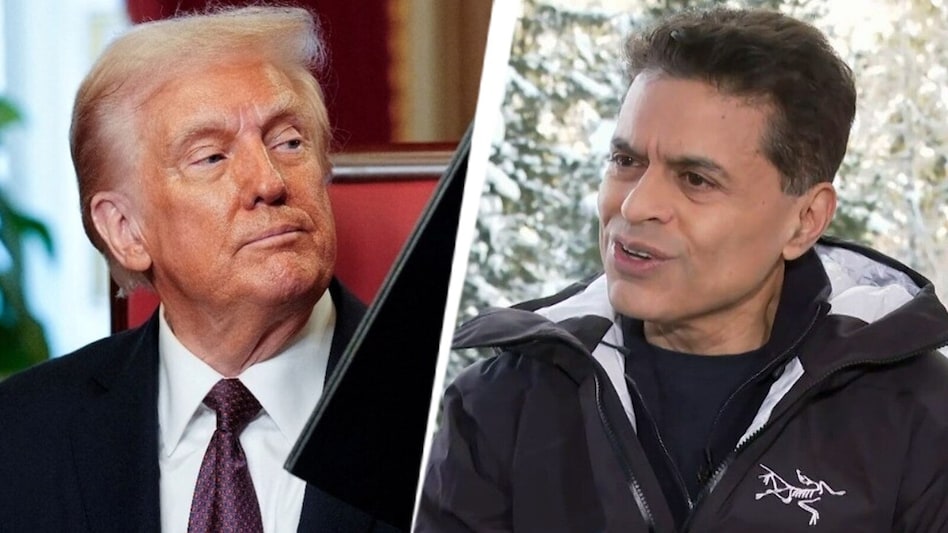
- Sep 29, 2025,
- Updated Sep 29, 2025 1:27 PM IST
The Trump administration 'played fast and loose with the rules' governing H-1B visas, noted global affairs commentator Fareed Zakaria said on Sunday. He cited the recent decision to impose a $100,000 fee on most applicants without following mandated legal procedures for public notice and comment.
Zakaria called out the administration's pattern of bypassing established norms and regulations, warning that the move to levy the fee under the justification of national security "ignored and flouted laws and rules purposefully." He argued that this approach signals a broader attempt to "erode the checks on its authority."
Earlier this month, the Trump administration imposed a one-time annual fee of $100,000 on new H-1B visa applications, significantly increasing costs for U.S. firms and primarily affecting Indian IT professionals who comprise the largest group of H-1B recipients. The fee marked a dramatic increase in the cost of the visa, which is commonly used by U.S. companies to hire highly skilled foreign workers in sectors like technology and healthcare.
"This administration is deliberately refusing to play by the rules in ways that look to most observers like usurpations of authority and accumulation of power," Zakaria said on his show for CNN. He noted that such executive actions are not isolated, pointing to Trump's firing of over a dozen inspectors general in violation of legal requirements for specific cause and public notice.
Rather than navigating legislative processes-such as asking Congress to raise tariffs or shut down USAID-Zakaria observed that the administration often pursued unilateral executive action. "The Republican majorities there have denied him practically nothing," he wrote, highlighting the administration's preference for executive maneuvers even when legislative routes were available.
Zakaria expressed concern about the deeper implications of this governance style, questioning why America's system of checks and balances has proven "so weak among the Western democracies." He placed the United States alongside Hungary in the erosion of constitutional norms, calling America "the oldest constitutional republic in the world" and comparing its current trajectory to a fragile post-communist democracy.
He cited findings from Sweden's VDem Institute, which described the scale of democratic backsliding in the U.S. as "unprecedented." According to Zakaria, actions that would have once triggered national outrage-including "regulatory threats and lawsuits against media companies, threats to deny law firms government business or access to federal buildings"-now pass with muted reaction.
He warned that the Department of Justice has been used to target political opponents and that military forces have been deployed domestically under executive direction. "Some laud these moves as necessary acts of executive authority," Zakaria conceded, "but almost no one would disagree that the breadth and number of these actions are unprecedented."
The Trump administration 'played fast and loose with the rules' governing H-1B visas, noted global affairs commentator Fareed Zakaria said on Sunday. He cited the recent decision to impose a $100,000 fee on most applicants without following mandated legal procedures for public notice and comment.
Zakaria called out the administration's pattern of bypassing established norms and regulations, warning that the move to levy the fee under the justification of national security "ignored and flouted laws and rules purposefully." He argued that this approach signals a broader attempt to "erode the checks on its authority."
Earlier this month, the Trump administration imposed a one-time annual fee of $100,000 on new H-1B visa applications, significantly increasing costs for U.S. firms and primarily affecting Indian IT professionals who comprise the largest group of H-1B recipients. The fee marked a dramatic increase in the cost of the visa, which is commonly used by U.S. companies to hire highly skilled foreign workers in sectors like technology and healthcare.
"This administration is deliberately refusing to play by the rules in ways that look to most observers like usurpations of authority and accumulation of power," Zakaria said on his show for CNN. He noted that such executive actions are not isolated, pointing to Trump's firing of over a dozen inspectors general in violation of legal requirements for specific cause and public notice.
Rather than navigating legislative processes-such as asking Congress to raise tariffs or shut down USAID-Zakaria observed that the administration often pursued unilateral executive action. "The Republican majorities there have denied him practically nothing," he wrote, highlighting the administration's preference for executive maneuvers even when legislative routes were available.
Zakaria expressed concern about the deeper implications of this governance style, questioning why America's system of checks and balances has proven "so weak among the Western democracies." He placed the United States alongside Hungary in the erosion of constitutional norms, calling America "the oldest constitutional republic in the world" and comparing its current trajectory to a fragile post-communist democracy.
He cited findings from Sweden's VDem Institute, which described the scale of democratic backsliding in the U.S. as "unprecedented." According to Zakaria, actions that would have once triggered national outrage-including "regulatory threats and lawsuits against media companies, threats to deny law firms government business or access to federal buildings"-now pass with muted reaction.
He warned that the Department of Justice has been used to target political opponents and that military forces have been deployed domestically under executive direction. "Some laud these moves as necessary acts of executive authority," Zakaria conceded, "but almost no one would disagree that the breadth and number of these actions are unprecedented."