
Going to watch FIFA World Cup 2026 in Canada? You might face visa delays of up to 292 days
Immigration, Refugees and Citizenship Canada (IRCC) is facing higher visa processing demands after cutting 20% of its staff
- Feb 18, 2026,
- Updated Feb 18, 2026 3:16 PM IST
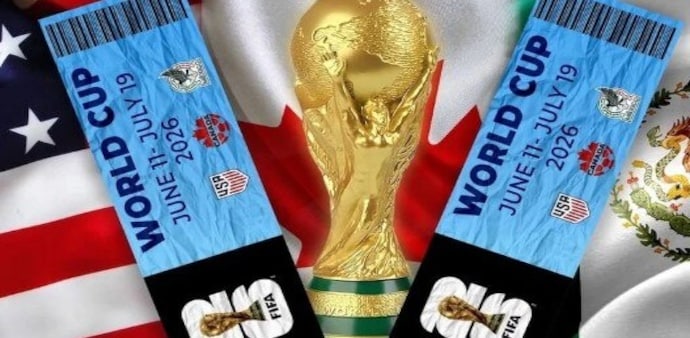
As Canada prepares to host 13 FIFA World Cup 2026 matches beginning in June, its immigration system is under strain. Immigration, Refugees and Citizenship Canada (IRCC) is facing higher visa processing demands after cutting 20% of its staff, according to Buffalo Toronto Public Media.
The agency is attempting to return to pre-pandemic operations while reducing costs and personnel, amid increased application volumes, a move that is raising concerns about longer processing delays.
Fragomen Immigration Law partner Rick Lamanna offered a detailed assessment of the situation.
Processing times surge in key categories
Lamanna said certain application categories have seen sharp increases.
“We saw massive jumps in certain application types. One, for example, was spousal sponsorship," he said." Those jumped almost double, in some cases, tripled. Another one is work permit extensions. Those processing times are unfortunately accurate, and they’re over 200 calendar days.”
According to IRCC’s latest timetable:
-
Federal skilled worker applications show a one-month increase
-
New permanent resident card applicants face a one-week increase
-
Super visa applicants from countries including India and the US have seen processing times rise between 17 and 110 days
Citizenship applications officially remain at 13 months. However, the citizenship certificate period has increased to 10 months, up from 9 months in December.
Lamanna noted discrepancies between published timelines and applicant feedback. IRCC agents have reportedly told some citizenship applicants that processing times have increased by at least three months, a change not reflected in the latest official timetable.
Pressure from World Cup travel demand
More than 20 million international visitors are expected for the tournament. Canada typically processes close to 1 million visas annually.
The surge in temporary resident visas (TRVs) and electronic travel authorisations (eTAs) could significantly strain an already stretched system.
Processing delays are especially relevant for travellers from five competing nations: Ghana, Senegal, Egypt, the Ivory Coast and Panama.
"Ivory Coast, right now, is listed at 292 days. Senegal, 203 days, this is to get a visitor visa to Canada," Lamanna said about TRV processing times. "I'm very interested to see when these folks are able to come into Canada, if they're if they have yet to apply for their visa. Because the schedule for the World Cup was only released in the beginning of December."
Will World Cup applications be prioritised?
Lamanna speculated that IRCC may attempt to fast-track certain cases.
"Yes, the intake is very, very high. My guess is that they'll try to sort through these applications for people who have identified as coming for the World Cup and will approve those," he said. "But again, nothing online that says specifically that they'll do that, and perhaps they're doing it because they don't want to have people trying to game the system with fraudulent, you know, proof of tickets."
On the broader outlook, Lamanna was blunt: "IRCC, I think, is doing what it can to try to alleviate some of these things, but frankly, I think they're going to be here for a while, the increased processing times."
As Canada prepares to host 13 FIFA World Cup 2026 matches beginning in June, its immigration system is under strain. Immigration, Refugees and Citizenship Canada (IRCC) is facing higher visa processing demands after cutting 20% of its staff, according to Buffalo Toronto Public Media.
The agency is attempting to return to pre-pandemic operations while reducing costs and personnel, amid increased application volumes, a move that is raising concerns about longer processing delays.
Fragomen Immigration Law partner Rick Lamanna offered a detailed assessment of the situation.
Processing times surge in key categories
Lamanna said certain application categories have seen sharp increases.
“We saw massive jumps in certain application types. One, for example, was spousal sponsorship," he said." Those jumped almost double, in some cases, tripled. Another one is work permit extensions. Those processing times are unfortunately accurate, and they’re over 200 calendar days.”
According to IRCC’s latest timetable:
-
Federal skilled worker applications show a one-month increase
-
New permanent resident card applicants face a one-week increase
-
Super visa applicants from countries including India and the US have seen processing times rise between 17 and 110 days
Citizenship applications officially remain at 13 months. However, the citizenship certificate period has increased to 10 months, up from 9 months in December.
Lamanna noted discrepancies between published timelines and applicant feedback. IRCC agents have reportedly told some citizenship applicants that processing times have increased by at least three months, a change not reflected in the latest official timetable.
Pressure from World Cup travel demand
More than 20 million international visitors are expected for the tournament. Canada typically processes close to 1 million visas annually.
The surge in temporary resident visas (TRVs) and electronic travel authorisations (eTAs) could significantly strain an already stretched system.
Processing delays are especially relevant for travellers from five competing nations: Ghana, Senegal, Egypt, the Ivory Coast and Panama.
"Ivory Coast, right now, is listed at 292 days. Senegal, 203 days, this is to get a visitor visa to Canada," Lamanna said about TRV processing times. "I'm very interested to see when these folks are able to come into Canada, if they're if they have yet to apply for their visa. Because the schedule for the World Cup was only released in the beginning of December."
Will World Cup applications be prioritised?
Lamanna speculated that IRCC may attempt to fast-track certain cases.
"Yes, the intake is very, very high. My guess is that they'll try to sort through these applications for people who have identified as coming for the World Cup and will approve those," he said. "But again, nothing online that says specifically that they'll do that, and perhaps they're doing it because they don't want to have people trying to game the system with fraudulent, you know, proof of tickets."
On the broader outlook, Lamanna was blunt: "IRCC, I think, is doing what it can to try to alleviate some of these things, but frankly, I think they're going to be here for a while, the increased processing times."