
India–New Zealand FTA offers 5,000 work visas, opens 118 service sectors to Indians
The visas will cover key sectors including information technology, engineering, healthcare, education, yoga, culinary arts and music, placing workforce mobility at the centre of the pact
- Dec 22, 2025,
- Updated Dec 22, 2025 3:10 PM IST
Indian professionals and students stand to gain significantly from the India–New Zealand free trade agreement, with Wellington committing to issuing 5,000 temporary work visas for Indian nationals for periods of up to three years. The visas will cover key sectors including information technology, engineering, healthcare, education, yoga, culinary arts and music, placing workforce mobility at the centre of the pact.
Services form a major pillar of the agreement, with India securing market access across 118 service categories, including IT. The deal also introduces a student mobility framework and a post-study work visa arrangement, allowing Indian students in New Zealand to work up to 20 hours a week without any quota restrictions.
Mentioning about this ultimate visa advantage for Indian nationals, Union Minister for Commerce & Industry, Piyush Goyal said," Indian students who go to New Zealand to study- if they take a degree course, they will get three year work visa; if they take bachelor's degree with honors and STEM disciplines, they will get a three year work visa; a four year work visa will be granted to students who go for post graduate studies...Almost 5000 of our professionals who are yoga instructors, chefs, AYUSH professionals, IT or educational teachers, nurses, and caregivers will get professional visas for serving the New Zealand economy..."
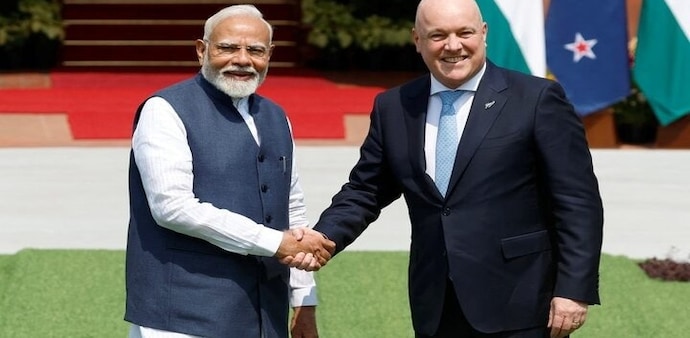
This comes as India and New Zealand successfully concluded the free trade agreement on Monday, as a major step toward expanding trade and economic cooperation.
What is included?
India’s Prime Minister’s Office said the agreement would significantly broaden economic engagement between the two countries. "The FTA would significantly deepen bilateral economic engagement, enhance market access, promote investment flows, strengthen strategic cooperation between the two countries, and also open up new opportunities for innovators, entrepreneurs, farmers, MSMEs, students and youth of both countries across various sectors," the statement said.
"With the strong and credible foundation provided by the FTA, both leaders expressed confidence in doubling bilateral trade over the next five years," it added.
On the tariff front, India will ease duties on roughly 70 per cent of its tariff lines, accounting for about 95 per cent of bilateral trade value. Around 30 per cent of tariff lines will remain excluded, including dairy, animal products and certain agricultural goods, following a model similar to India’s agreement with Australia.
Sensitive farm imports such as apples, kiwifruit and Manuka honey will be regulated through tariff-rate quotas, minimum import prices and seasonal safeguards to protect Indian farmers from sudden import spikes.
Bilateral trade between India and New Zealand currently stands at about $2.4 billion and is projected to double within five years. The agreement also includes provisions covering intellectual property, investment rules, customs facilitation and a roadmap for $20 billion in New Zealand investment into India over the next 15 years.
What is not included?
India has drawn a firm line on dairy in its newly concluded free trade agreement with New Zealand, refusing to offer any import duty concessions in the sector, an official said on Monday.
“The dairy sector is completely a red line for us. No duty concessions under the pact in the sector,” the official said, underscoring New Delhi’s long-standing position on the issue.
India has consistently kept dairy out of its trade liberalisation commitments, including in previous free trade agreements, citing the sector’s economic and political sensitivity.
Dairy has been among the most contentious areas in the India–New Zealand negotiations, with India seeking to shield its domestic market from large-scale imports. The country is home to millions of small and marginal dairy farmers, for whom protection from global competition remains a core policy priority.
New Zealand, by contrast, is one of the world’s largest dairy exporters. Despite this, actual dairy trade between the two countries remains limited. In FY2025, New Zealand’s dairy exports to India stood at just USD 1.07 million. These included milk and cream worth USD 0.40 million, natural honey at USD 0.32 million, mozzarella cheese at USD 0.18 million, butter at USD 0.09 million, and skimmed milk at USD 0.08 million.
Indian professionals and students stand to gain significantly from the India–New Zealand free trade agreement, with Wellington committing to issuing 5,000 temporary work visas for Indian nationals for periods of up to three years. The visas will cover key sectors including information technology, engineering, healthcare, education, yoga, culinary arts and music, placing workforce mobility at the centre of the pact.
Services form a major pillar of the agreement, with India securing market access across 118 service categories, including IT. The deal also introduces a student mobility framework and a post-study work visa arrangement, allowing Indian students in New Zealand to work up to 20 hours a week without any quota restrictions.
Mentioning about this ultimate visa advantage for Indian nationals, Union Minister for Commerce & Industry, Piyush Goyal said," Indian students who go to New Zealand to study- if they take a degree course, they will get three year work visa; if they take bachelor's degree with honors and STEM disciplines, they will get a three year work visa; a four year work visa will be granted to students who go for post graduate studies...Almost 5000 of our professionals who are yoga instructors, chefs, AYUSH professionals, IT or educational teachers, nurses, and caregivers will get professional visas for serving the New Zealand economy..."
This comes as India and New Zealand successfully concluded the free trade agreement on Monday, as a major step toward expanding trade and economic cooperation.
What is included?
India’s Prime Minister’s Office said the agreement would significantly broaden economic engagement between the two countries. "The FTA would significantly deepen bilateral economic engagement, enhance market access, promote investment flows, strengthen strategic cooperation between the two countries, and also open up new opportunities for innovators, entrepreneurs, farmers, MSMEs, students and youth of both countries across various sectors," the statement said.
"With the strong and credible foundation provided by the FTA, both leaders expressed confidence in doubling bilateral trade over the next five years," it added.
On the tariff front, India will ease duties on roughly 70 per cent of its tariff lines, accounting for about 95 per cent of bilateral trade value. Around 30 per cent of tariff lines will remain excluded, including dairy, animal products and certain agricultural goods, following a model similar to India’s agreement with Australia.
Sensitive farm imports such as apples, kiwifruit and Manuka honey will be regulated through tariff-rate quotas, minimum import prices and seasonal safeguards to protect Indian farmers from sudden import spikes.
Bilateral trade between India and New Zealand currently stands at about $2.4 billion and is projected to double within five years. The agreement also includes provisions covering intellectual property, investment rules, customs facilitation and a roadmap for $20 billion in New Zealand investment into India over the next 15 years.
What is not included?
India has drawn a firm line on dairy in its newly concluded free trade agreement with New Zealand, refusing to offer any import duty concessions in the sector, an official said on Monday.
“The dairy sector is completely a red line for us. No duty concessions under the pact in the sector,” the official said, underscoring New Delhi’s long-standing position on the issue.
India has consistently kept dairy out of its trade liberalisation commitments, including in previous free trade agreements, citing the sector’s economic and political sensitivity.
Dairy has been among the most contentious areas in the India–New Zealand negotiations, with India seeking to shield its domestic market from large-scale imports. The country is home to millions of small and marginal dairy farmers, for whom protection from global competition remains a core policy priority.
New Zealand, by contrast, is one of the world’s largest dairy exporters. Despite this, actual dairy trade between the two countries remains limited. In FY2025, New Zealand’s dairy exports to India stood at just USD 1.07 million. These included milk and cream worth USD 0.40 million, natural honey at USD 0.32 million, mozzarella cheese at USD 0.18 million, butter at USD 0.09 million, and skimmed milk at USD 0.08 million.