
'Just marriage isn't enough': Applying for US spouse Green Card? Lawyers say living apart won't help
Under the administration of Donald Trump, marriage-based Green Card applications are being examined more closely, with officials placing greater emphasis on whether a marriage is genuine
- Dec 30, 2025,
- Updated Dec 30, 2025 4:06 PM IST
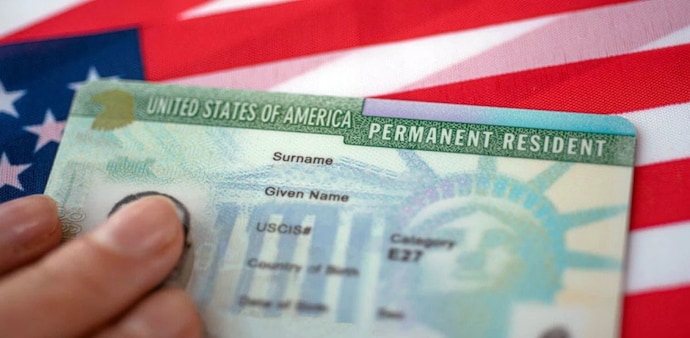
For spouses of US citizens, a Green Card is often seen as the most direct path to permanent residence. Under US law, immediate relatives, including husbands and wives of American citizens, are eligible to apply for permanent residency, formally known as a Permanent Resident Card, which allows them to live and work in the United States.
According to the US Citizenship and Immigration Services, a spouse of a US citizen falls under the category of an “immediate relative of a US citizen.” That classification removes numerical caps on visas, but it does not guarantee approval.
Under the administration of Donald Trump, marriage-based Green Card applications are being examined more closely, with officials placing greater emphasis on whether a marriage is genuine rather than merely legal on paper.
A US immigration attorney has flagged one factor that has become particularly decisive. “Being in a relationship does not get you a Green Card. Living together gets you a Green Card,” said Bernstein, who has over 30 years of experience and is part of the legal team at the Law Offices of Spar & Bernstein.
Bernstein warned that couples who are married but living apart face immediate risk. If spouses do not share a home, “then their Green Card case is already going down,” he said. In a video posted on Facebook, he explained that for marriage-based applications, “immigration officers do not care why you live apart, and they do not care if it’s for work, school, money, or convenience.”
What matters, he stressed, is cohabitation. US officials “only care whether you actually live together as husband and wife,” Bernstein said.
He added that immigration rules treat a bona fide marriage as one in which the couple lives together daily. “So if you're not living in the same house every day, immigration is going to start questioning the marriage. And once they question it, they're investigating, and once they come knocking on your door, they're looking to deny you. So if you want a marriage green card, you live together. Period,” he said.
According to Bernstein, living separately is among the fastest ways to trigger heightened scrutiny, marriage fraud investigations, interview complications and outright denials. “If you’re married and not living together full-time, you need legal guidance before you file anything,” he advised.
USCIS, however, looks beyond addresses alone. Its policy framework says officers evaluate the entire relationship to determine whether a couple entered the marriage in good faith and not solely for immigration benefits. The agency states that a marriage may meet formal legal requirements but still fail if the parties had “no good faith, intent to live together as spouses and intended to circumvent immigration laws.”
For spouses of US citizens, a Green Card is often seen as the most direct path to permanent residence. Under US law, immediate relatives, including husbands and wives of American citizens, are eligible to apply for permanent residency, formally known as a Permanent Resident Card, which allows them to live and work in the United States.
According to the US Citizenship and Immigration Services, a spouse of a US citizen falls under the category of an “immediate relative of a US citizen.” That classification removes numerical caps on visas, but it does not guarantee approval.
Under the administration of Donald Trump, marriage-based Green Card applications are being examined more closely, with officials placing greater emphasis on whether a marriage is genuine rather than merely legal on paper.
A US immigration attorney has flagged one factor that has become particularly decisive. “Being in a relationship does not get you a Green Card. Living together gets you a Green Card,” said Bernstein, who has over 30 years of experience and is part of the legal team at the Law Offices of Spar & Bernstein.
Bernstein warned that couples who are married but living apart face immediate risk. If spouses do not share a home, “then their Green Card case is already going down,” he said. In a video posted on Facebook, he explained that for marriage-based applications, “immigration officers do not care why you live apart, and they do not care if it’s for work, school, money, or convenience.”
What matters, he stressed, is cohabitation. US officials “only care whether you actually live together as husband and wife,” Bernstein said.
He added that immigration rules treat a bona fide marriage as one in which the couple lives together daily. “So if you're not living in the same house every day, immigration is going to start questioning the marriage. And once they question it, they're investigating, and once they come knocking on your door, they're looking to deny you. So if you want a marriage green card, you live together. Period,” he said.
According to Bernstein, living separately is among the fastest ways to trigger heightened scrutiny, marriage fraud investigations, interview complications and outright denials. “If you’re married and not living together full-time, you need legal guidance before you file anything,” he advised.
USCIS, however, looks beyond addresses alone. Its policy framework says officers evaluate the entire relationship to determine whether a couple entered the marriage in good faith and not solely for immigration benefits. The agency states that a marriage may meet formal legal requirements but still fail if the parties had “no good faith, intent to live together as spouses and intended to circumvent immigration laws.”