
Pakistan, Bangladesh agree on visa-free entry for officials raising alarm in New Delhi
The development, announced on Wednesday following a high-level meeting in Dhaka, is likely to be watched closely by New Delhi, which has deep strategic stakes in the region
- Jul 25, 2025,
- Updated Jul 25, 2025 9:59 AM IST
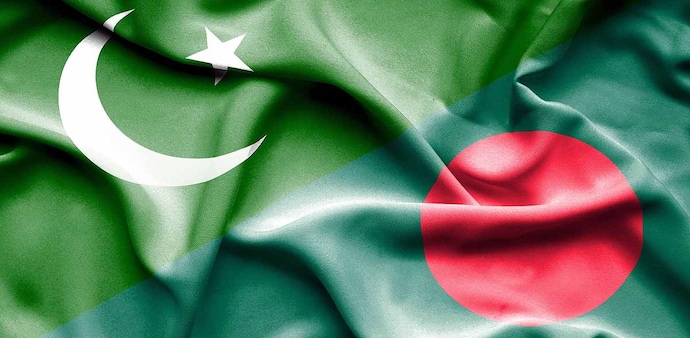
In a move that signals a significant thaw in decades of frosty ties, Pakistan and Bangladesh have agreed to grant visa-free entry to holders of diplomatic and official passports. The development, announced on Wednesday following a high-level meeting in Dhaka, is likely to be watched closely by New Delhi, which has deep strategic stakes in the region.
According to state-run Radio Pakistan, the decision came after talks between Pakistan’s Interior Minister Mohsin Naqvi and his Bangladeshi counterpart Lieutenant General (Retd) Jahangir Alam Chowdhury. The two sides also discussed greater cooperation in internal security, police training, anti-narcotics efforts, anti-human trafficking, and counter-terrorism initiatives, including exchange programmes between police academies.
Calling the visit “extremely important to promote bilateral cooperation,” Chowdhury thanked Naqvi for Pakistan’s offer to train Bangladeshi police officials.
A broader reset in Dhaka-Islamabad ties
The agreement is part of a broader diplomatic reset between the two South Asian countries, especially following the installation of the interim government led by Nobel laureate Muhammad Yunus in Bangladesh. Yunus, seen as a critic of Prime Minister Sheikh Hasina’s pro-India policies, has allowed greater diplomatic flexibility toward Islamabad.
To institutionalise the renewed engagement, Pakistan has formed a joint committee, headed by Interior Secretary Khurram Agha, to deepen ties with Bangladesh. A high-level Bangladeshi delegation is expected to visit Islamabad soon to study Pakistan’s Safe City Project and the National Police Academy.
India on alert over strategic implications
While the diplomatic overtures mark a new chapter in Pakistan-Bangladesh relations, India has expressed concerns over the implications of the visa-free arrangement.
Security analysts in New Delhi worry the new regime may enable greater access for Pakistan’s Inter-Services Intelligence (ISI) in Dhaka under the cover of official visits. Officials believe this could potentially lead to a resurgence of anti-India Islamist extremist activity within Bangladesh, with risks of spillover into India’s northeastern states.
The easing of movement for Pakistani officials is being viewed in Delhi’s strategic circles as a red flag, given the region’s volatile security dynamics and historical sensitivities dating back to Bangladesh’s Liberation War in 1971, which saw Pakistan’s defeat and India’s direct military involvement.
In a move that signals a significant thaw in decades of frosty ties, Pakistan and Bangladesh have agreed to grant visa-free entry to holders of diplomatic and official passports. The development, announced on Wednesday following a high-level meeting in Dhaka, is likely to be watched closely by New Delhi, which has deep strategic stakes in the region.
According to state-run Radio Pakistan, the decision came after talks between Pakistan’s Interior Minister Mohsin Naqvi and his Bangladeshi counterpart Lieutenant General (Retd) Jahangir Alam Chowdhury. The two sides also discussed greater cooperation in internal security, police training, anti-narcotics efforts, anti-human trafficking, and counter-terrorism initiatives, including exchange programmes between police academies.
Calling the visit “extremely important to promote bilateral cooperation,” Chowdhury thanked Naqvi for Pakistan’s offer to train Bangladeshi police officials.
A broader reset in Dhaka-Islamabad ties
The agreement is part of a broader diplomatic reset between the two South Asian countries, especially following the installation of the interim government led by Nobel laureate Muhammad Yunus in Bangladesh. Yunus, seen as a critic of Prime Minister Sheikh Hasina’s pro-India policies, has allowed greater diplomatic flexibility toward Islamabad.
To institutionalise the renewed engagement, Pakistan has formed a joint committee, headed by Interior Secretary Khurram Agha, to deepen ties with Bangladesh. A high-level Bangladeshi delegation is expected to visit Islamabad soon to study Pakistan’s Safe City Project and the National Police Academy.
India on alert over strategic implications
While the diplomatic overtures mark a new chapter in Pakistan-Bangladesh relations, India has expressed concerns over the implications of the visa-free arrangement.
Security analysts in New Delhi worry the new regime may enable greater access for Pakistan’s Inter-Services Intelligence (ISI) in Dhaka under the cover of official visits. Officials believe this could potentially lead to a resurgence of anti-India Islamist extremist activity within Bangladesh, with risks of spillover into India’s northeastern states.
The easing of movement for Pakistani officials is being viewed in Delhi’s strategic circles as a red flag, given the region’s volatile security dynamics and historical sensitivities dating back to Bangladesh’s Liberation War in 1971, which saw Pakistan’s defeat and India’s direct military involvement.