
'Privilege, not a right': Trump tightens US citizenship rules with 'moral, loyalty tests'
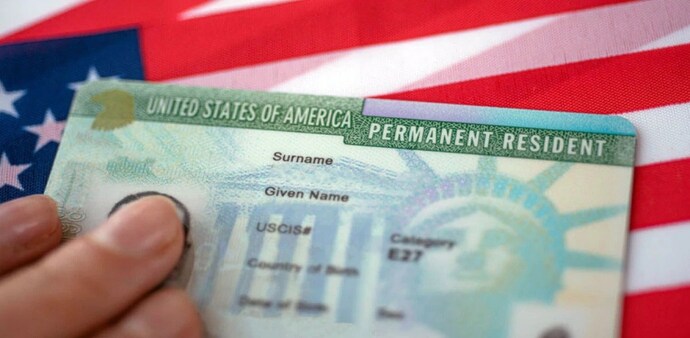
Traditionally, green card holders could apply for citizenship after three or five years by passing English and civics tests and showing a clean legal record.
- Aug 21, 2025,
- Updated Aug 21, 2025 8:05 AM IST
Calling US citizenship a privilege “reserved for the best of the best,” the Trump administration has unveiled sweeping changes that make it harder for legal immigrants to qualify for naturalization—dramatically tightening the long-standing “good moral character” requirement and adding ideological screenings for signs of “anti-Americanism.”
The updated policy, announced Friday by US Citizenship and Immigration Services (USCIS), expands officers’ authority to evaluate a legal immigrant’s behavior, values, and community ties beyond criminal records. “US citizenship is the gold standard of citizenship,” USCIS spokesman Matthew Tragesser told CBS News, adding that it should be offered only to “those who embrace America's culture, history, and language” and who “demonstrate Good Moral Character.”
Traditionally, green card holders could apply for citizenship after three or five years by passing English and civics tests and showing a clean legal record. But the new rules now require “a holistic assessment” of an applicant’s life—including adherence to societal norms and evidence of “positive contributions.”
Officers are directed to weigh factors like community involvement, caregiving, education, steady employment, and tax compliance—while also scrutinizing minor infractions such as reckless driving, traffic violations, or aggressive behavior, which could now count against an applicant.
The guidelines instruct officials to give “greater scrutiny” to conduct that, while not criminal, suggests poor character. The policy also considers signs of rehabilitation for those with past issues, such as probation completion, tax repayments, or community support letters.
In a parallel move, the administration has also introduced ideological screening for anti-American sentiments. Under the new rule, USCIS will examine whether applicants have “endorsed, promoted, supported, or otherwise espoused” anti-American, antisemitic, or terrorist views.
“America’s benefits should not be given to those who despise the country and promote anti-American ideologies,” said Tragesser. “Immigration benefits... remain a privilege, not a right.”
USCIS did not define what constitutes “anti-Americanism,” raising concerns about how the rule will be enforced.
While attention has largely focused on Trump’s crackdown on illegal immigration, the administration has steadily rolled back access to legal pathways—cutting refugee admissions, axing visa programs, tightening vetting, and expanding social media reviews.
Each year, between 600,000 and 1 million immigrants become US citizens, according to USCIS data.
Calling US citizenship a privilege “reserved for the best of the best,” the Trump administration has unveiled sweeping changes that make it harder for legal immigrants to qualify for naturalization—dramatically tightening the long-standing “good moral character” requirement and adding ideological screenings for signs of “anti-Americanism.”
The updated policy, announced Friday by US Citizenship and Immigration Services (USCIS), expands officers’ authority to evaluate a legal immigrant’s behavior, values, and community ties beyond criminal records. “US citizenship is the gold standard of citizenship,” USCIS spokesman Matthew Tragesser told CBS News, adding that it should be offered only to “those who embrace America's culture, history, and language” and who “demonstrate Good Moral Character.”
Traditionally, green card holders could apply for citizenship after three or five years by passing English and civics tests and showing a clean legal record. But the new rules now require “a holistic assessment” of an applicant’s life—including adherence to societal norms and evidence of “positive contributions.”
Officers are directed to weigh factors like community involvement, caregiving, education, steady employment, and tax compliance—while also scrutinizing minor infractions such as reckless driving, traffic violations, or aggressive behavior, which could now count against an applicant.
The guidelines instruct officials to give “greater scrutiny” to conduct that, while not criminal, suggests poor character. The policy also considers signs of rehabilitation for those with past issues, such as probation completion, tax repayments, or community support letters.
In a parallel move, the administration has also introduced ideological screening for anti-American sentiments. Under the new rule, USCIS will examine whether applicants have “endorsed, promoted, supported, or otherwise espoused” anti-American, antisemitic, or terrorist views.
“America’s benefits should not be given to those who despise the country and promote anti-American ideologies,” said Tragesser. “Immigration benefits... remain a privilege, not a right.”
USCIS did not define what constitutes “anti-Americanism,” raising concerns about how the rule will be enforced.
While attention has largely focused on Trump’s crackdown on illegal immigration, the administration has steadily rolled back access to legal pathways—cutting refugee admissions, axing visa programs, tightening vetting, and expanding social media reviews.
Each year, between 600,000 and 1 million immigrants become US citizens, according to USCIS data.