
'Puts USA at risk': OPT visas, an Indian favourite, may be next in Trump’s crackdown after H-1B
“DHS needs 2 stop issuing work authorisations 2 student visa holders who compete against Americans,” Grassley posted on X, blasting the Department of Homeland Security.
- Sep 25, 2025,
- Updated Sep 25, 2025 6:45 AM IST
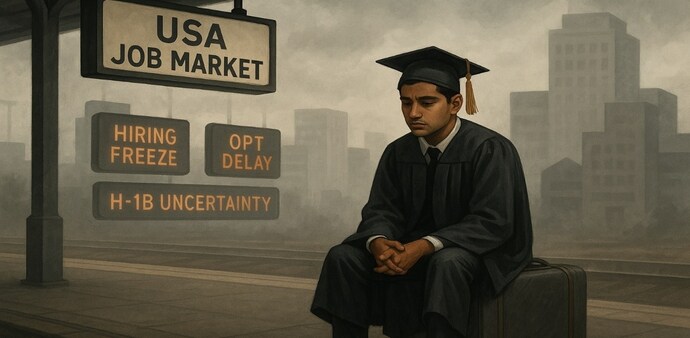
The American Dream is slipping and Washington’s making the drop steeper. In a fresh blow to Indian students, Republican Senator Chuck Grassley has demanded a halt to work permits for student visa holders, calling them a threat to American jobs and national security.
“DHS needs 2 stop issuing work authorisations 2 student visa holders who compete against Americans,” Grassley posted on X, blasting the Department of Homeland Security. He claimed the policy violates U.S. law and “puts USA at risk of tech and corporate espionage.”
The Iowa senator’s demand targets programs like Optional Practical Training (OPT), which currently allows international students — including tens of thousands of Indians — to work in the U.S. for up to three years post-graduation.
If implemented, this would cut off a critical pathway to U.S. employment for graduates, particularly in STEM fields where Indian students dominate.
The timing is brutal. The Trump administration just triggered outrage by hiking the H-1B visa application fee to $100,000 — a move the White House dubbed “one-time” but which analysts say will price out thousands of early-career tech workers, many of them Indian.
India is the biggest source of international students in the U.S., with over 331,000 currently enrolled. But fresh data suggests the tide is turning. New student arrivals dropped sharply this summer, and fall 2025 enrollment could plunge by 50% — with Indian students leading the retreat.
Trump’s crackdown is having an effect. Indian students, once the bedrock of America’s grad schools and tech talent pool, are now questioning the viability of their U.S. plans. “95% of the people…” begins a widely shared post from the Indian diaspora, trailing off into growing uncertainty.
U.S. government figures show India accounted for 71% of all H-1B approvals in 2024. But with visa fees soaring and post-study work options on the chopping block, that pipeline is now under real threat.
The American Dream is slipping and Washington’s making the drop steeper. In a fresh blow to Indian students, Republican Senator Chuck Grassley has demanded a halt to work permits for student visa holders, calling them a threat to American jobs and national security.
“DHS needs 2 stop issuing work authorisations 2 student visa holders who compete against Americans,” Grassley posted on X, blasting the Department of Homeland Security. He claimed the policy violates U.S. law and “puts USA at risk of tech and corporate espionage.”
The Iowa senator’s demand targets programs like Optional Practical Training (OPT), which currently allows international students — including tens of thousands of Indians — to work in the U.S. for up to three years post-graduation.
If implemented, this would cut off a critical pathway to U.S. employment for graduates, particularly in STEM fields where Indian students dominate.
The timing is brutal. The Trump administration just triggered outrage by hiking the H-1B visa application fee to $100,000 — a move the White House dubbed “one-time” but which analysts say will price out thousands of early-career tech workers, many of them Indian.
India is the biggest source of international students in the U.S., with over 331,000 currently enrolled. But fresh data suggests the tide is turning. New student arrivals dropped sharply this summer, and fall 2025 enrollment could plunge by 50% — with Indian students leading the retreat.
Trump’s crackdown is having an effect. Indian students, once the bedrock of America’s grad schools and tech talent pool, are now questioning the viability of their U.S. plans. “95% of the people…” begins a widely shared post from the Indian diaspora, trailing off into growing uncertainty.
U.S. government figures show India accounted for 71% of all H-1B approvals in 2024. But with visa fees soaring and post-study work options on the chopping block, that pipeline is now under real threat.